Finding the right guitar tuition book can accelerate progress and keep practice engaging. This guide highlights five widely used options, showing who each is best for and why. If you’re a student seeking structured lessons, a parent choosing for a child, or a self-taught musician aiming to expand repertoire, these selections offer clear paths from fundamentals to classic songs.
Summary of chosen products
| Product | Best For | Key Benefit |
|---|---|---|
| Essential Elements for Guitar Book 1 | Beginners and teachers | Structured method with chords, TAB, theory, and songs |
| First 50 Songs You Should Play on Electric Guitar | Electric guitar newbies and intermediate players | Classic rock riffs and solos for practical play |
| Selections from Rolling Stone Magazine’s 500 Greatest Songs of All Time: Guitar Classics Volume 2 | Players seeking easy arrangements | Large repertoire of iconic songs in easy guitar TAB |
| Guitar for Kids Book 1 | Young learners | Fun songs with standard notation for early development |
Best Structured Guitar Method For Beginners

Essential Elements for Guitar Book 1 offers a complete beginner program that blends chords, TAB, and music theory with practical songs. It is well-suited for students who thrive in a guided, classroom-style approach or parents who want a teacher-backed curriculum at home. The book includes cross-curricular activities and a wide song catalog, making it easier to keep practice varied and engaging. Best for: absolute beginners and early intermediate players who benefit from a structured lesson path led by a teacher or parent.
Why selected: Its step-by-step progression and integrated theory help new players build a solid foundation, including note reading and rhythm. Cautions: Some learners may want additional technique drills beyond the core content to accelerate fluency on the fretboard.
First 50 Songs You Should Play on Electric Guitar

This book is best for electric guitarists who want quick wins and practical repertoire. It targets beginners and intermediate players, focusing on classic rock riffs, solos, and chords from major artists. The included arrangements are designed to be approachable without sacrificing a distinctive rock sound, making it an ideal bridge from simple chords to more expressive playing. Best for: players who learn effectively by playing familiar songs and who want a solid playlist for practice sessions.
Why selected: The selection emphasizes iconic riffs and approachable solos, supporting confidence-building through recognizable tunes. Cautions: Some songs may showcase stylings that require a bit of lifting technique beyond basic chords, so learners should pace themselves.
Selections From Rolling Stone’s 500 Greatest Songs Of All Time: Guitar Classics Volume 2
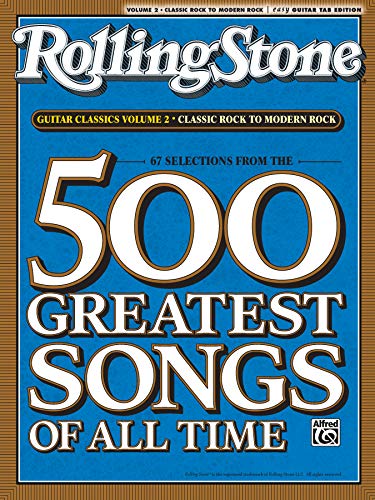
This collection presents classic and modern rock songs in easy guitar TAB, with lyrics included. It’s best for players who want a broad playlist spanning several decades and genres, all arranged for simpler performance without losing the essence of the original songs. Best for: players who prefer a large, varied repertoire to practice rhythm, phrasing, and chord changes across familiar titles.
Why selected: The easy arrangements allow quick progress and ongoing motivation, especially for those who enjoy sing-alongs with guitar. Cautions: Lyrics are included, so be mindful of audience-appropriate settings when practicing in shared spaces.
Guitar For Kids Book 1

Guitar for Kids Book 1 is a beginner-friendly option designed for younger learners. It introduces 16 songs with standard notation and child-friendly content. The method emphasizes accessibility and early success, helping kids stay excited about practice. Best for: children starting guitar who benefit from a visually engaging, song-centered approach.
Why selected: The combination of chords, songs, and simple notation supports early reading skills and a gradual transition to more advanced material. Cautions: It may require parental guidance for some younger children to maintain correct technique and posture.
Buying Guide
What should I look for in guitar tuition books?
Choose a book that matches your experience level, whether you’re a complete beginner or moving from basic chords to more complex arrangements. Look for clear progression, integrated music theory, and a repertoire that motivates ongoing practice. A teacher-friendly structure helps if you are pairing with lessons, but self-learners can benefit from song-centered layouts.
Which format is best for different learners?
Structured method books suit parents and teachers seeking a clear path, while song-centric volumes work well for players who learn by playing recognizable tunes. For kids, consider books with engaging visuals and simple notation. Adults may prefer a blend of theory and popular songs that stretch both technique and musicality.
How important are song selections?
Song choices influence motivation and practical skill-building. Look for a mix of chord progressions, riffs, and melodies that align with your favorite genres. A broad repertoire supports rhythm development, fluency with chord changes, and ear training.
What about difficulty progression?
Progress should feel natural. Early sections should reinforce fundamentals: open chords, strumming patterns, and reading basics. As you advance, seek books that gradually introduce barre chords, scales, and more complex rhythms without abrupt jumps in difficulty.
Availability and accessibility
Given the popularity of these titles, check for updated editions or aligned teacher resources if you are taking a class. Digital editions or accompanying audio tracks can enhance practice sessions, though not all books include these features. Consider whether you want a physical copy or a digital version for portable practice.
Who should avoid certain books?
Avoid titles that lack clear progression or rely heavily on either tablature or notation without bridging the gap between them. If you learn better with diagrams and hands-on exercises, prioritize books that combine multiple learning methods and include songs you enjoy.
FAQ
- Are these books suitable for adults? Yes. While several target beginners, their fundamentals and song selections are accessible to adult learners too.
- Can I use these books with a teacher? Yes. They work well as a structured curriculum to accompany lessons or as a standalone self-study resource.
- Do they include audio or video resources? Some editions offer accompanying audio tracks; check each product page for availability.
- Which book is best for kids? Guitar For Kids Book 1 focuses on engaging songs and notation suitable for children, with age-appropriate content.
- Should I start with TAB or standard notation? Beginners often benefit from a mix: start with TAB to learn rhythm and fingerings, then introduce standard notation for reading fluency.
- Is a large song catalog advantageous? A broad catalog helps maintain motivation and exposes you to diverse rhythms and styles, aiding long-term development.