Answering how to choose the best ancestry test kit starts with understanding what you want to learn. If you seek broad geographic roots and DNA relatives, some brands excel. If you want health or trait insights alongside ancestry, other options fit better. The following selections balance geographic depth, ease of use, and family history features for American buyers. This guide highlights five top kits, who they’re best for, and why they stand out. A quick buying table summarizes each option to compare at a glance.
| Product | Best For | Key Benefit | Notes |
|---|---|---|---|
| AncestryDNA + Traits | People seeking broad origins and trait insights | 75+ genetic traits and deep ancestry | Great for trait-curious users; data control emphasized |
| 23andMe Ancestry Service | Detailed geographic breakdowns and family connections | 4,500+ regions; DNA Relative Finder | Timely genetic trait and timeline features |
| AncestryDNA + World Explorer | Family historians wanting extra records | 3-month World Explorer membership | Integrates with Ancestry for records |
| FamilyTreeDNA Family Finder | Researchers who want chromosome-level data | Chromosome Painter and ancientOrigins | Strong for deep genealogical work |
| MyHeritage DNA | Affinities with European and global regions | 2,114 regions and robust matching | Clear ethnicity breakdowns and relative matching |
AncestryDNA + Traits Genetic Test Kit

The AncestryDNA + Traits kit focuses on origin details from 3,600+ places and adds 75+ trait reports. This makes it a strong option for buyers who want both ancestry depth and personal trait insights. Users control their data and decide what to share. Best for those who want a clear link between genetics and everyday traits, such as appearance or preferences. A potential limitation is that trait information is supplementary to ancestry and may feel ancillary for some researchers.
23andMe Ancestry Service
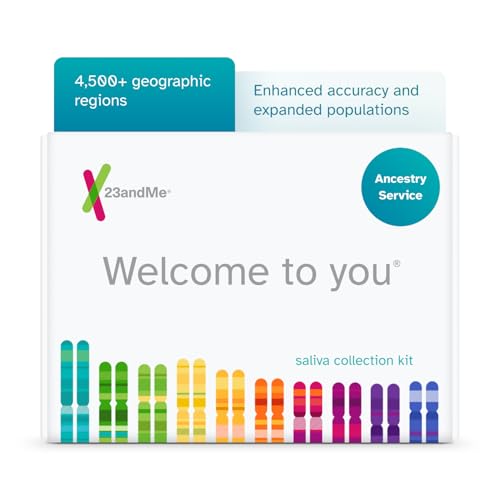
23andMe Ancestry Service offers a broad geographic breakdown across 4,500+ regions and adds DNA Relative Finder and an automatic family tree view for relationships. This kit is ideal for buyers who want a detailed regional map of their origins plus tools to find living relatives. It’s a solid pick for curiosity about distant migrations and historical groups. One limitation is that its depth hinges on user engagement with the relative-finder and family tree features.
AncestryDNA Genetic Test Kit + 3-Month World Explorer
This bundle blends ancestry testing with a 3-month World Explorer membership, offering access to billions of records. It’s best for users who want immediate genealogical context and the ability to explore historical records alongside DNA results. The World Explorer membership is a strong companion for active genealogists. A caveat: the membership is redeemable during activation and may auto-renew if you choose to continue.
FamilyTreeDNA Family Finder Kit
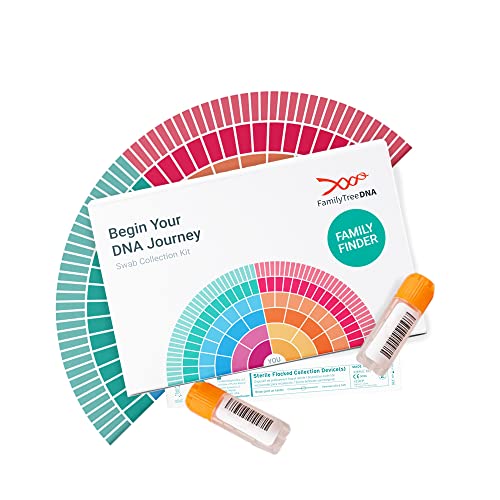
FamilyTreeDNA emphasizes chromosomal data with features like the Chromosome Browser and myOrigins Painter. It’s best for serious genealogists who want to visualize which genome segments derive from which populations and who may investigate ancient roots. It can be especially helpful for those who want to trace deep ancestry and compare ancient origins. A limitation is that the depth of regional reporting may not match every user’s expectations compared with some other large ancestry databases.
MyHeritage DNA Test Kit

MyHeritage DNA offers a broad ethnicity breakdown across 2,114 regions and strong DNA matching to relatives. This kit is well-suited for users seeking a balance of geographic detail and family discovery, especially for those with ties to European ancestry. It’s a straightforward option for those new to DNA testing who want reliable relative matching. A limitation is that some users may want deeper health or trait data, which this kit prioritizes differently than health-focused services.
Buying Guide
What should I consider when choosing an ancestry test?
Geography depth varies by kit. If you want the most geographic coverage, look for 4,000+ regions and a robust Relative Finder feature. For broader family history access, consider a package that includes a membership or access to extensive record collections.
Do I want personal trait reports in addition to ancestry?
Some kits include trait reports that explain how genes may influence appearance, tastes, or tendencies. If trait insights matter to you, choose AncestryDNA + Traits or similar options. If you primarily want ancestry and health information, weigh health-focused services carefully.
How important are health and pharmacogenetics features?
Health-oriented reports can provide health predispositions and carrier status. These features are optional for many buyers and often require careful consideration of how results may affect privacy, insurance, and personal decisions. Review clear test-info pages before buying.
What is the value of a membership or family-history access?
Members gain access to billions of records and historical data, which can accelerate building a family tree. If you’re actively researching genealogy, a kit that includes a world explorer or similar membership is advantageous.
Data privacy and control
Most brands offer data-sharing controls. Decide who can access your data and how it’s used. Look for clear statements about data ownership and the ability to delete data if needed.
Which kit is best for beginners?
For newcomers, kits with straightforward interfaces and strong relative matching, such as AncestryDNA or 23andMe, provide intuitive paths to discover relatives and build a family tree.
Which kit is best for advanced genealogists?
A kit with chromosomal tools and Plus features for deep ancestry, like FamilyTreeDNA, appeals to advanced researchers needing segment-level analysis and ancient origins.
Summary of recommended choices
- Best for broad origins with trait insights: AncestryDNA + Traits
- Best for comprehensive geography and relative matching: 23andMe Ancestry Service
- Best for records-heavy genealogists: AncestryDNA + World Explorer
- Best for chromosomal detail and ancient roots: FamilyTreeDNA Family Finder
- Best value with strong regional diversity: MyHeritage DNA
Frequently asked questions
- What is the main difference between ancestry-only and health-focused tests?
- Can I use more than one kit to broaden my results?
- Do these tests require a saliva sample or cheek swab?
- Will results be updated as more data becomes available?
- How secure is my genetic data and who can access it?
- Is one kit better for finding living relatives than another?
FAQ Answers
- Most ancestry-only tests emphasize geographic origins and relative matching; health-focused tests add medical insights and risk factors.
- Using multiple kits can broaden your reference pool and improve relative matching, but consider data privacy and how to merge results.
- All listed kits generally use cheek swabs or saliva samples as the collection method.
- Some services provide ongoing data updates as reference databases grow, which can refine ethnicity estimates and relative connections.
- Data security varies by provider; review privacy policies and options to delete data or restrict sharing.
- Relative-finder and tree-building features differ; choose based on how important live relative connections are to you.