For new tarot readers, the right deck can simplify learning and grow confidence quickly. This guide highlights beginner-friendly Tarot card sets that emphasize clear meanings, helpful guidebooks, and durable construction. Each option is suited to different learning styles—whether you want on-card meanings, traditional Rider-Waite imagery, or visually rich designs. Use the summaries to compare what each deck offers for solo study or classroom-style practice.
Summary table of selected products:
| Product | Best For | Key Feature |
|---|---|---|
| KLEDERY Tarot Cards for Beginners | Absolute beginners who want on-card meanings and reliable quality | Meaningful upright/reversed references directly on cards |
| The Rider Tarot Deck by U.S. Games | Learners seeking classic Waite imagery with an instructional booklet | Standard Rider-Waite deck with included instruction |
| Fofeadm Tarot Cards with Guide Book | Speed learners who prefer concise front-of-card explanations | On-card keyword explanations and comprehensive information |
| Myripoly Pink Tarot Cards | Beginners who appreciate quick-reference keywords on each card | Keywords, numerology, planetary and zodiac cues on cards |
| Witchy Cauldron Tarot Cards | Students wanting a Rider-Waite style with expanded reference tools | Printed meanings on cards plus a bundled guidebook and charts |
KLEDERY Tarot Cards for Beginners

The KLEDERY deck is built on the classic Waite framework, offering familiar symbolism with a modern, durable build. It appeals to beginners who want quick reference to meanings on the cards themselves, including upright and reversed interpretations, zodiac, elemental symbols, and numerology. The 350GSM card stock and compact 4.72″ x 2.75″ size make shuffling comfortable for daily practice. Best for readers who want a self-contained learning tool embedded in the deck itself.
Best for: Absolute newcomers who prefer to learn by reading the card surfaces and who appreciate a well-reviewed, durable deck. Choose this if you value on-card meanings and a familiar Waite-style system. Caution: While robust, some users may still benefit from a separate guidebook for deeper explorations beyond quick meanings.
The Rider Tarot Deck
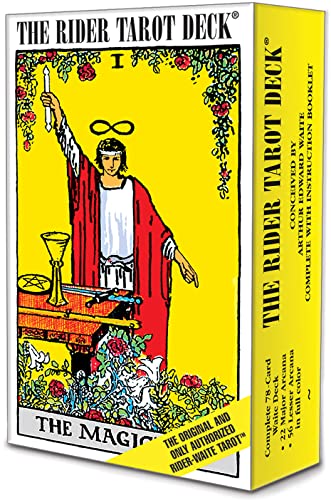
The Rider Tarot Deck by U.S. Games Systems is the quintessential Waite-type deck, widely recognized for its classic imagery that underpins many beginner lessons. Accompanied by an instructional booklet, this option helps learners cross from intuition to structured interpretation. It’s best for those who want the historical standard in a compact package with guided learning.
Best for: Beginners who want a trusted, traditional Rider-Waite experience with a formal instruction component. Better for: learners who later plan to explore multiple decks due to its enduring relevance in tarot education. Caution: The deck relies on traditional symbolism; new readers may benefit from additional modern interpretation resources beyond the booklet.
Fofeadm Tarot Cards with Guide Book

The Fofeadm deck emphasizes beginner-friendly learning with on-card keywords and a comprehensive guidebook. The 400 GSM stock offers durability for frequent handling, and the included linen carry bag supports portable study. This deck suits learners who want immediate, accessible meanings on each card, along with a consolidation of essential symbols and numerology.
Best for: Learners who want fast, on-card guidance and a bundled carrying solution. Better for: readers who prefer a deck that minimizes constant booklet consulting. Limitation: While the front-of-card data aids quick interpretation, deeper insights may require supplementary resources.
Myripoly Pink Tarot Cards

The Myripoly Pink deck is designed for quick learning with meanings, keywords, numerology, planetary and zodiac cues printed on each card. It offers a visually engaging set with a velvet bag bonus, which can help with practice sessions and personal study routines. It’s well-suited for those who want fast, on-card references and a touch of style.
Best for: Beginners who want a visually appealing deck with ready-made keywords for rapid interpretation. Better for: readers who prefer a compact, all-in-one learning tool. Caution: The stylized design may diverge slightly from traditional Waite symbolism, which could affect early-stage accuracy if strict adherence is needed.
The Original Tarot, Deck of 78 Cards

Da Brigh’s Original Tarot mirrors the Pamela Colman Smith artwork from 1909 and pairs 350 gsm art paper with a linen finish. The included 86-page guidebook covers upright and reversed meanings, plus beginner-friendly spread explanations. This deck is a strong foundation for learners who want to study traditional imagery with structured guidance.
Best for: Those who want to learn from a historically influential deck and a detailed beginner guidebook. Better for: readers who plan to perform classic spreads and reference traditional interpretations. Caution: Some users may prefer a more modern aesthetic or additional on-card references for faster learning.
Smoostart Tarot Cards for Beginners

The Smoostart deck includes extensive on-card keywords and a guidebook, plus a holographic, laser-cut finish for a premium feel. It emphasizes multiple learning axes—upright and reversed meanings, elements, planets, zodiac signs, numerology, and more. The design aims to support both beginners and more experienced readers expanding their toolkit.
Best for: Learners who want a robust, multi-faceted reference on each card. Better for: readers who enjoy visual differentiation by color and element cues. Limitation: A more complex deck may require more study time to leverage all features effectively.
Witchy Cauldron Tarot Cards

The Witchy Cauldron deck follows a Rider-Waite framework with added on-card features and an accompanying guidebook. Printed meanings cover upright and reversed readings, plus planetary, zodiac, chakra, and affirmation references. This edition includes charts that summarize symbols for quick lookup during practice. It suits learners who want a comprehensive learning bundle in a single purchase.
Best for: Beginners who benefit from on-card references and supplementary charts. Better for: readers who prefer a Rider-Waite style with enhanced educational tools. Caution: The added reference content may require gradual acclimation for absolute new readers who still prefer minimalist decks.
Buying Guide: Key Considerations For Selecting A Beginner Tarot Deck
- On-card vs. off-card meanings: Do you prefer meanings printed on the card itself or rely on a separate guidebook?
- Artwork style: Classic Rider-Waite imagery or modern, colorful designs? Choose based on which visual cues help your memory.
- Card stock and durability: Heavier stock (like 350–400 GSM) lasts longer for frequent shuffles and daily practice.
- Included learning aids: Guides, spreads, and reference charts can accelerate early proficiency.
- Deck size and handling: Standard tarot size fits most hands; consider comfort if you practice long sessions.
- Expansion potential: If you plan to explore other decks later, start with a traditional Waite-based deck for easier adaptation.
- Storage and portability: A box or bag helps protect the deck between practice sessions, especially for travel.
Frequently Asked Questions
- What’s the easiest tarot deck for beginners? Decks with on-card meanings and clear upright/reversed guides tend to be easiest—for example, decks based on the Waite-Smith system.
- Should beginners use a guidebook or rely on card meanings alone? Both help; on-card meanings speed up learning, while a guidebook supports deeper interpretation over time.
- Is a traditional Rider-Waite deck better for beginners? Yes, because many tutorials and courses reference this standard imagery and structure.
- Do deck aesthetics matter for learning? Visual contrast and keyword clarity can aid memory, but substantive content and practice quality matter more.
- Can I mix decks during learning? It’s fine to study in stages, but start with one consistent system to build a solid foundation before exploring variations.
- What features indicate a beginner-friendly deck? Look for on-card meanings, a durable stock, a concise guidebook, and clear symbol references.