Answering your question about the best DNA testing for ancestry, these top kits help you uncover origins, ethnicity estimates, and possible relatives. They’re suitable for people curious about deep ancestral roots, family history researchers, and those who want to build a family tree with DNA connections. The listed options emphasize user control, clear ethnicity reporting, and access to global databases. Below, you’ll find five strong picks with quick notes on who each is best for and why. A concise buying table is included for quick comparison.
| Product | Best For |
|---|---|
| AncestryDNA | People seeking broad worldwide origins and direct relative connections |
| AncestryDNA + Traits | Curious about genetic traits alongside ancestry |
| 23andMe Ancestry Service | Detailed regional breakdowns and family networking |
| AncestryDNA With World Explorer Membership | Integrated family history research with three months of record access |
| FamilyTreeDNA Family Finder | Deep lineage tracing and chromosome-level relative insights |
AncestryDNA

Best for: newcomers to genetic ancestry who want a wide global view and extensive relative matching. This kit covers 3,600+ regions and emphasizes connections to living relatives, making it a strong foundation for building a family tree.
Why selected: It offers broad geographic coverage and a straightforward activation process. Data control is highlighted, with clear options over what to share and with whom. The six-week result window provides timely insights.
Caution: Some users may desire deeper trait or health reporting, which this kit does not primarily emphasize.
AncestryDNA + Traits

Best for: users who want to combine ancestry results with a catalog of 75+ genetic traits, such as physical attributes and preferences. This helps connect DNA with visible characteristics.
Why selected: Adds a trait layer to the ancestry narrative, aiding in personalizing the genetic story. It complements standard ethnicity reports with trait-based insights.
Caution: Trait results are probabilistic and may be influenced by sample variation; interpret with the standard ancestry data in mind.
23andMe Ancestry Service
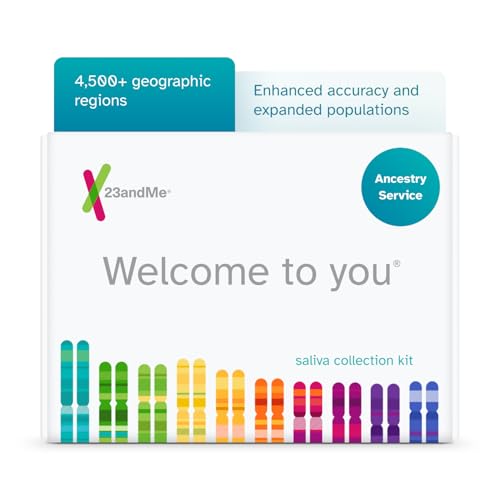
Best for: users seeking a detailed geographic breakdown and access to ancestry timelines, Neanderthal ancestry, and a DNA Relative Finder to connect with others.
Why selected: It covers 4,500+ geographic regions and includes features to explore historical migrations and maternal/paternal lines. It also offers an established network for connecting with relatives.
Caution: The kit emphasizes privacy choices; review data sharing settings during setup to align with personal preferences.
AncestryDNA Genetic Test Kit + World Explorer
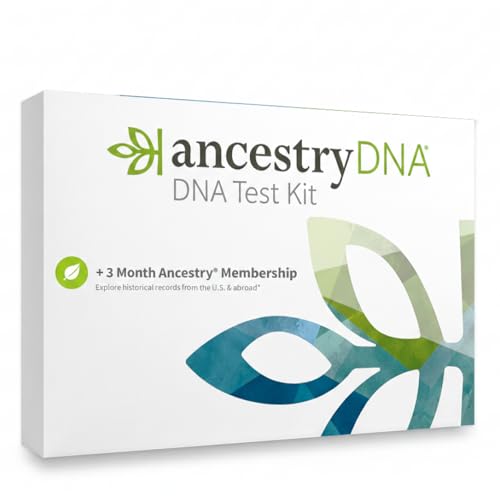
Best for: researchers who want a built-in pathway to explore family history through a 3-month World Explorer membership, accessing billions of history records.
Why selected: Combines DNA testing with a powerful research gateway, enabling a broader look at ancestors and historical records during activation. It supports expanding family trees beyond genetic data alone.
Caution: The World Explorer membership is time-limited; plan to leverage membership perks early after activation.
FamilyTreeDNA Family Finder
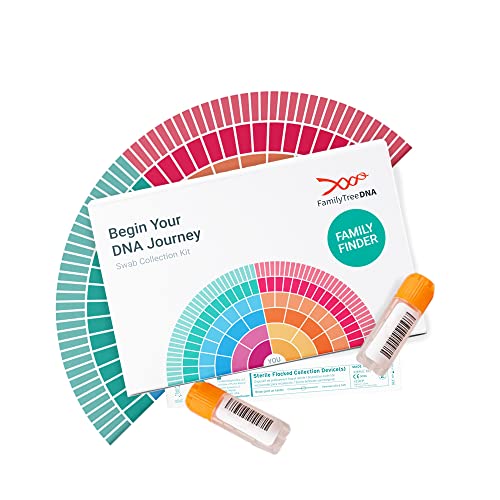
Best for: serious genealogists who want deep lineage tracing, chromosome painting, and access to multiple tools for connecting with genetic relatives.
Why selected: The kit emphasizes advanced features like interactive family matching and the Chromosome Browser, alongside ancientOrigins for insights into ancient DNA roots.
Caution: For casual users, the depth of tools may require more time to interpret; consider whether you need chromosome-level detail or a broader ancestry overview.
Buying Guide
What should you consider when choosing a DNA ancestry test?
- Geographic depth: If you want the broadest regional breakdown, prioritize kits with 4,000+ or 3,600+ regions and strong relative matching.
- Family history integration: If linking DNA to records is important, look for options offering access to historical records or memberships.
- Trait and health reporting: For insights into appearance or health-related traits, choose kits that include trait reports or health pathways, while noting privacy considerations.
- Data privacy and sharing: Consider how you control data sharing and with whom. Some brands emphasize user-controlled sharing settings.
- Ease of use and turnaround: Activation steps, sample return, and result timing can influence the overall experience; pick a kit with clear timelines.
- Relatives network: If connecting with relatives is a priority, select brands with robust relative finder features and large databases.
Practical decision paths:
- New to ancestry research: Start with a broad kit like AncestryDNA for global coverage and relative matching.
- Curious about traits: Consider AncestryDNA + Traits to add a trait layer to your story.
- Deep genealogical work: Pair ancestry results with a World Explorer membership for extensive historical records.
- Chromosome-level analysis: If you want detailed relative mapping, FamilyTreeDNA offers intricate tools for deep tracing.
Frequently Asked Questions
- What is the main difference between AncestryDNA and 23andMe for ancestry?
– AncestryDNA emphasizes broad regional breakdowns and large relative networks, while 23andMe provides a deep geographic map and an emphasis on historical matches and timelines. - Can I access my DNA relatives across these services?
– Yes. Most services offer relative finders, but the size of the connected network varies by company. - Do these tests include health information?
– Some kits offer health or trait reports; check the product features to understand what is included and how data is used. - Is there a free or trial period for memberships tied to ancestry kits?
– Some bundles include temporary access to historical records; verify activation terms for any time-limited perks. - How long does it take to receive results?
– Typical timelines range from several weeks to about six weeks after sample return, depending on the kit.