Looking for the best writing pads for fountain pen users? This guide highlights five top options that balance smoothness, bleed resistance, and portability. Whether you’re a calligrapher, a student, or a professional note-taker, these pads suit different needs—from archival-quality stationery to everyday practice sheets. The selections favor pads that work well with fountain pen ink, minimize feathering, and provide clean writing surfaces for legible handwriting.
| Product | Key Benefit | Best For |
|---|---|---|
| Clairefontaine Tablets “Triomphe” | Ultra-smooth Vélin 90g, extra white, lined guide | Fine correspondence, calligraphers |
| Strathmore 500 Series Writing Pad | Natural white, woven finish, durable | Everyday notes, small projects |
| BAZIC 100-Sheet Writing Pad | Reliable, easy-tear, portable 6×9 | Office, school, on-the-go notes |
| Tomoe River FP Paper Pad (SANZEN) | Very light 52gsm, minimal ghosting | Fountain pen ink lovers, travel journaling |
| Amazon Basics Wide Ruled Pads | Budget-friendly, perforated sheets | Daily home or office use |
Clairefontaine Tablets Triomphe Stationery
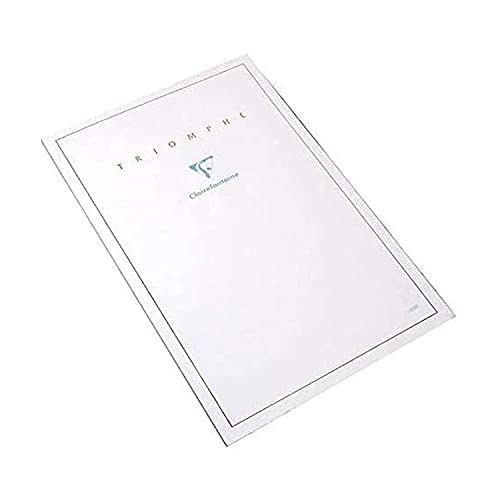
Best for: Calligraphers, fountain pen users, and fine correspondence. Clairefontaine’s Vélin velouté 90g paper offers an exceptionally smooth finish and extra white color, reducing feathering with fountain inks. The built-in lined guide page keeps handwriting orderly, making it ideal for formal letters and practice scripts. Its French stationery heritage appeals to those who value elegant presentation and archival quality.
Selected for its combination of ultra-smooth surface and crisp ink rendering, this pad minimizes bleed-through when using fountain pens. It’s particularly suitable for people who write longhand with fine nibs and want clean, professional results. A small caution: the ruled pages add structure, but ink colors with very wet nibs may still show through on the back of the page.
Strathmore 500 Series Writing Pad
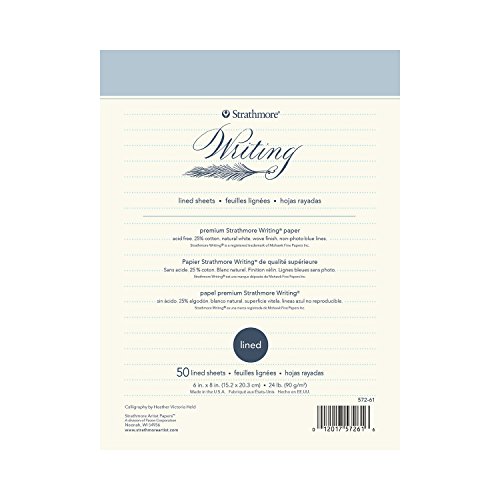
Best for: Students, note-takers, and light journaling. The 500 Series pad uses natural white paper with a woven finish, and a flip-over cover for easy use. The 6×8 inch size offers handy portability while keeping enough writing area for clear, legible notes. The paper’s surface works well with a variety of fountain pen inks, delivering minimal show-through and crisp lines.
Why chosen: It provides a reliable balance between price, practicality, and ink compatibility. A potential limitation is the smaller page size, which may not suit long-form writing or larger cursive layouts.
BAZIC 100-Sheet Writing Pad

Best for: Office and classroom use where practical reliability is key. This pad offers 100 sheets of smooth, ruled paper with easy-tear top sheets, facilitating quick updates and task listings. Its 6×9 inch footprint stays portable, while the bright white surface supports clean ink lines for handwriting and quick notes.
Why chosen: Easy-tear design boosts efficiency in busy environments. Limitation: The cover and backing are basic, so it may not provide the premium feel some users want for formal correspondence or long writing sessions.
Tomoe River FP Paper Pad (SANZEN)

Best for: Fountain pen enthusiasts who value feathering resistance and minimal bleed-through. Tomoe River paper at 52gsm is exceptionally thin yet highly ink-friendly, with smooth, almost glassy ink laydown. The 8.27 x 11.7 inch A4 size suits letter-writing, journaling, and field notes.
Why chosen: The ultra-lightweight stock reduces bulk in travel packs and preserves ink integrity on most fountain pen inks. Caution: Very wet inks may still ghost even on Tomoe River; balance nib choice and ink density accordingly.
IDEANATEGRATE Rocker Blotter

Best for: Fountain pen users who want quick-drying, smudge-free results between writing and signing sessions. This blotter tool uses aluminum alloy and wood for durability, and its compact size makes it easy to place on a desk or in a notebook sleeve. It helps preserve neat handwriting by absorbing excess ink fast.
Why chosen: It provides a practical drying solution, reducing smudges on delicate inks. Limitation: It’s a tooling accessory rather than a standalone writing pad, so users may still rely on a separate pad for long-form writing tasks.
Amazon Basics Wide Ruled Pads

Best for: Everyday note-taking, schoolwork, and home office tasks. These wide-ruled pads provide generous line spacing for larger handwriting, making them accessible for younger writers or those who prefer extra room for annotations. The perforated sheets aid quick removal and organization.
Why chosen: A budget-friendly option that covers daily needs with reliable performance. Limitation: The paper quality is adequate for most inks but may not satisfy users seeking premium stationery for archival writing or formal correspondence.
Buying Guide
What should I consider when choosing a writing pad for fountain pens?
Ink compatibility is essential. Look for smooth, non-bleed paper that handles fountain pen ink without feathering. Evaluate weight (measured in gsm or lb), surface texture (smooth vs. laid or woven), and whether the pad includes a guide or ruled lines for neat handwriting.
Which features matter most for different uses?
- Calligraphy or letter-writing: Smooth, ivory or extra-white paper with minimal ghosting; consider a ruled guide for consistent script.
- Daily notes and meetings: Durable pads with easy-tear sheets and portable sizes; a clean white surface aids readability.
- Travel or field use: Lightweight, small formats that resist ink bleed and are easy to transport.
What trade-offs should buyers expect?
Higher-quality pads may cost more but provide better ink handling and a more premium feel. Very light-weight papers reduce bulk but might ghost with saturated inks. For busy environments, easy-tear sheets can boost efficiency but may sacrifice some rigidity.
How do I compare options quickly?
- Best for crisp letters: Clairefontaine Triomphe.
- Best for everyday notes: Strathmore 500 Series or Amazon Basics wide-ruled pads.
- Best for fountain pen inks with minimal bleed: Tomoe River pads.
- Best budget option with portability: BAZIC or Amazon Basics ranges.
What about sizes and portability?
Smaller pads (6×8 or 6×9) are easy to carry but offer less writing space. Large pads (8.5×11 or A4) suit desk work but are less portable. Choose based on your typical writing sessions and where you’ll use the pad most often.
Frequently Asked Questions
- Q: Are there pads that work well with all fountain pen inks? A: Most premium pads like Clairefontaine and Tomoe River perform well across many inks, but nib size and ink density can affect feathering and bleed.
- Q: Does paper weight matter for fountain pens? A: Yes. Heavier papers generally resist ink bleed better, but some very light papers can be feather-prone with wet nibs.
- Q: Should I use a blotter with fountain pen writing pads? A: Blotters help reduce smudging on fast-drying inks, especially on larger pages or busy writing sessions.
- Q: Are there pads designed specifically for calligraphy practice? A: Some pads include grids or ruled lines that guide ink flow; dedicated calligraphy papers are often optimized for nibs and strokes.
- Q: Can I use regular notebooks for fountain pens? A: Regular notebooks may feather or bleed through; test a small area first or choose pads designed for fountain pen use.