Finding the right unit studies can help homeschool families cover essential subjects with structure and flexibility. This guide focuses on foundational social studies, science, and inquiry-based activities aligned with common standards and grade bands from elementary to middle school. Each selection below offers printable or consumable formats, clear activities, and opportunities for student-led exploration, experiment, and discussion. Use these resources to build cohesive units that blend practice, critical thinking, and real-world connections.
Summary of selected products:
| Product | Brand | Key Focus |
|---|---|---|
| Core Skills Social Studies, Grade 4 | HOUGHTON MIFFLIN HARCOURT | Fourth-grade social studies skills |
| Spectrum Grade 4 Science Workbook | Spectrum | Scientific method and cross-disciplinary science |
| Mark Twain Forensic Investigations Workbook | Mark Twain Media | Hands-on deduction, labs, interpretation |
| Mark Twain Grades 5-8 General Science Workbook | Mark Twain Media | Physical, earth, space, and life science practice |
| Carson Dellosa The 100 Series: Biology Workbook | Carson Dellosa Education | Biology foundations and vocabulary |
Core Skills Social Studies, Grade 4

The Core Skills Social Studies guide for Grade 4 provides a structured approach to essential topics such as geography, civics, and early history. Designed to reinforce literacy in social studies, the workbook format supports steady practice, note-taking, and independent review. Students encounter maps, timelines, and reading passages that connect to core standards while allowing teacher-led or student-led pacing. The content emphasizes critical thinking, source analysis, and comprehension checks that align with common core and state expectations in many U.S. classrooms.
Features and approach: a clear sequence of activities, short reading passages, and practice exercises help learners build foundational skills in identifying cause-and-effect, using a map, and describing communities. Teachers and homeschool parents can use the materials for daily warm-ups or integrated weekly units. While compact, the workbook supports extended projects by pairing with local history prompts and hands-on activities to deepen understanding of civic life and geography.
Spectrum Grade 4 Science Workbook
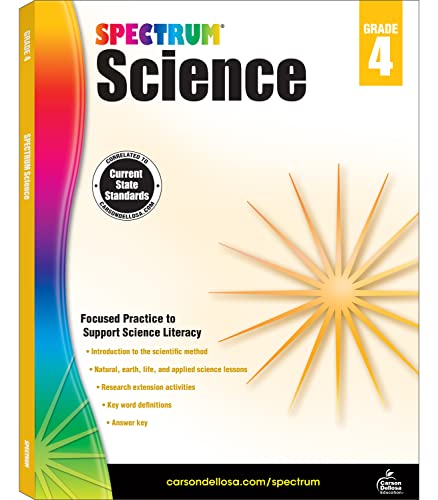
The Spectrum Grade 4 Science Workbook focuses on the scientific method and investigations across natural, earth, and life sciences. It offers activities that align with state standards and supports both independent study and guided lessons. The collection uses a friendly layout, with hands-on tasks, diagrams, and everyday science connections to engage students while building core literacy around scientific concepts. It’s well-suited for homeschool units that blend inquiry with structured practice and review.
Key strengths include a structured progression from hypothesis formation to data interpretation, diverse experiment ideas, and discussion prompts that encourage students to articulate reasoning. The workbook serves as a practical backbone for a science unit or as a supplement to broader science curricula, helping students gain confidence in documenting observations and drawing conclusions.
Mark Twain Forensic Investigations Workbook

The Mark Twain Forensic Investigations Workbook is a hands-on exploration of science through crime-themed scenarios. Students practice deductive reasoning, evidence analysis, and interpretive skills through activities like handwriting analysis, fingerprinting, and body language interpretation. The scenarios often present multiple plausible outcomes, encouraging discussion and collaborative problem-solving. This unit naturally integrates science with logic, reading, and writing tasks suitable for homeschool groups or individual learners.
Pedagogical value lies in guiding students to form evidence-based conclusions while considering multiple perspectives. The workbook supports inquiry-based learning by prompting questions, experiments, and data collection. It’s a strong match for units centered on inquiry, ethics in forensics, and real-world application of scientific methods.
Mark Twain Grades 5-8 General Science Workbook

This general science workbook covers multiple domains—physical, earth, space, and life science—targeted at Grades 5-8. It provides practice problems, structured activities, and review exercises that reinforce NSE-aligned standards. The breadth makes it suitable for unit studies that transition from middle elementary concepts toward more comprehensive science exploration. Teachers can assign chapters as weekly modules, with hands-on activities to illustrate key principles in areas like weather, energy, and ecosystems.
Educators can pair the workbook with experiments, graphic organizers, and cross-curricular connections to math or technology. The resource supports independent study as well as guided lessons, making it versatile for hybrid homeschool schedules or multi-student cohorts in a home classroom setting.
Carson Dellosa The 100 Series: Biology Workbook
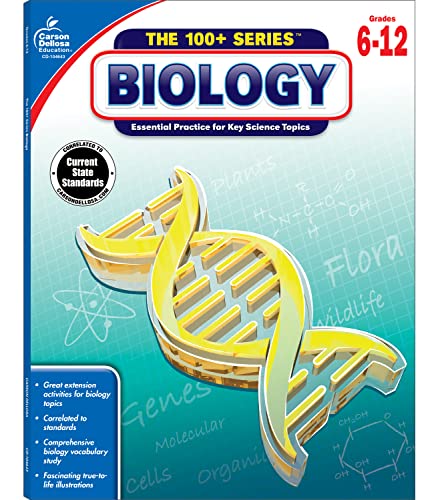
The 100 Series Biology Workbook from Carson Dellosa provides a practical set of biology-focused activities for Grades 6-12. It emphasizes core vocabulary, standard-aligned concepts, and extended practice in topics such as matter, cells, genetics, and basic chemistry. The workbook is designed for classroom or homeschool use, offering extension activities that reinforce understanding while enabling teachers to scale lessons for different ability levels. It’s a solid resource for building a comprehensive biology unit with a balanced emphasis on concept mastery and vocabulary building.
Teachers and homeschoolers can leverage the included vocabulary study as a foundation for reading comprehension and lab notes. Combined with hands-on labs and field observations, this workbook supports a deeper grasp of biology fundamentals across multiple grade bands.
Buying Guide: Key Purchase Considerations
When selecting unit studies for homeschool use, consider how each resource fits your learner’s pace, interests, and your teaching approach. Below are common considerations to compare across titles and series.
- Grade alignment and scope: Ensure the materials cover the core standards you target and provide progression from basic to advanced concepts within the unit.
- Format and flexibility: Look for a mix of printable worksheets, reading passages, quick labs, and discussion prompts. A modular design helps you assemble units quickly or expand them as needed.
- Inquiry and critical thinking: Favor resources that encourage evidence gathering, analysis, and explanation, not just fact memorization.
- Cross-curricular opportunities: Units that integrate literacy, math, and technology can enhance engagement and reinforce skills across subjects.
- Teacher support and notes: Curated answer keys, rubrics, and suggested activities save planning time and improve consistency in assessment.
- Assessment approaches: Look for diagnostic checks, practice tests, and progress tracking to monitor mastery and adjust pacing.
- Age and reading level: Ensure the text complexity matches your learner’s reading ability and that activities are accessible without excessive scaffolding.
- Durability and format: For homeschool use, consider whether a workbook, loose-leaf pages, or digital access suits your setup and storage space.
- Supply needs: Some science units require basic lab supplies; verify what you already have and what you’ll need to run activities safely.
- Cost and longevity: If planning long-term use across siblings, prioritize resources with lasting value and versatility.
Choosing a balanced mix—one solid social studies backbone, plus science-focused investigations and biology practice—helps create cohesive homeschool units. Consider pairing the workbooks with local field studies, library resources, and online simulations to extend learning beyond the pages. Finally, tailor each unit to your learner’s interests, whether that means adding hands-on projects, writing prompts, or creative presentations to demonstrate understanding.