Finding hands-on science materials that resonate with homeschool learners can transform lessons from routine to riveting. The following selections combine inquiry, experimentation, and visual learning to support core topics from biology to chemistry, Earth science, and investigative reasoning. Each product below is chosen for its ability to foster curiosity, collaboration, and practical understanding outside of a traditional classroom.
style=”font-weight:bold;”>Summary Table of Chosen Products
| Product | Key Focus | Ideal For |
|---|---|---|
| Mark Twain Forensic Investigations Workbook | Critical thinking, crime-scene activities, handwriting and fingerprint analysis | Middle school, group or individual projects |
| 32 Set of 59 Educational Posters | Visual learning across science, math, geography, and more | Classroom or homeschool decor, visual study aids |
| Carson Dellosa The 100 Series: Biology Workbook | Biology concepts, vocabulary, standards-aligned practice | Upper elementary to high school biology extensions |
| The Everything Kids’ Science Experiments Book | Hands-on experiments, exploring physics, chemistry, and earth science | Independent projects, family science fun |
| merka Science Flash Cards | Memorable science facts for earth, space, anatomy and geography | Quick review, spaced repetition, pocket study |
Crime-Scene Themed Science For Curious Minds

This workbook guides middle school learners through deductive reasoning using forensic-inspired activities. Students encounter scenarios where multiple plausible outcomes exist, encouraging divergent thinking and evidence-based interpretation. Activities include interpretive handwriting analysis, body language cues, fingerprinting, and other classic crime-solving tasks. The format supports both independent work and collaborative investigations, helping students articulate logical conclusions while respecting multiple reasonable interpretations. The hands-on nature makes abstract scientific concepts tangible, linking science process skills with real-world problem solving.
Recommended use: integrate short investigative sessions into weekly science or language arts blocks, or assign as a capstone project for a unit on biology, chemistry, or critical thinking. The workbook also serves as a strong foundation for discussing ethics in science, evidence quality, and the limitations of forensic science.
A Comprehensive Set Of Visual Learning Posters

The 32 poster collection offers a broad spectrum of topics designed to bolster classroom and home study. Posters cover essential subjects including the Periodic Table, the Solar System, the Water Cycle, world maps, and key math and language concepts. With 59 colorfully illustrated elements, these posters act as constant visual anchors, helping students connect new content to familiar graphics. The set includes both horizontal and vertical formats, allowing flexible placement in learning spaces. Posters are printed on a durable, flat sheet suitable for homeschooling rooms and classroom walls alike.
Best practice involves pairing posters with active activities: label parts of a diagram while performing a related experiment, or use map posters during geography projects to chart locations of scientific study areas. This visual reinforcement supports memory and retrieval of complex terms and processes.
Biology Core Concepts And Practice
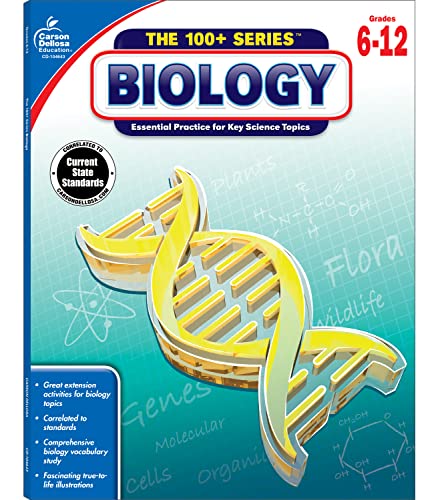
The Biology Workbook from Carson Dellosa aligns with standard biology curricula while offering practical vocabulary and review. It emphasizes core concepts in matter, atoms, cells, genetics, elements, and bonds, providing both explanations and extension activities suitable for homeschooling. The workbook acts as a solid bridge between foundational science concepts and more advanced topics, helping students build fluency with scientific terms and processes. It is particularly useful for reinforcing classroom lessons with structured practice, quizzes, and vocabulary drills.
Use this resource to supplement experiments by reinforcing the language of biology: describe cellular processes, distinguish between physical and chemical changes, and explain how atoms bond to form molecules. Teachers and homeschooling parents can build a modular unit that combines reading comprehension, diagram labeling, and short answer tasks to deepen mastery.
Hands-On Science Experiments For Curious Kids
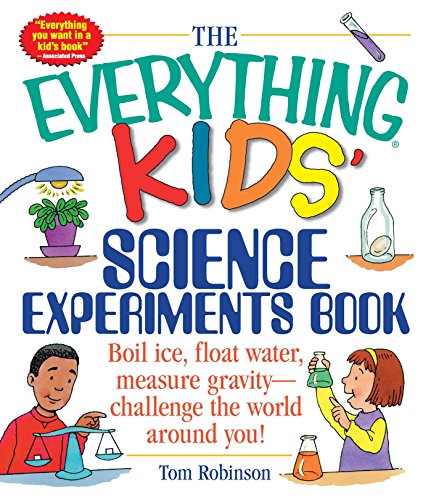
This widely known compilation offers 70+ experiments that span physics, chemistry, astronomy, and earth science. It emphasizes accessible materials and clear, kid-friendly instructions, making it ideal for independent projects or guided group work. The experiments encourage observation, measurement, and hypothesis testing, fostering a scientific mindset in homeschool settings. The book also introduces basic scientific concepts such as states of matter, buoyancy, and the scientific method through engaging activities.
For homeschooling use, pair experiments with a lab notebook to document hypotheses, procedures, results, and reflections. This approach supports literacy development while reinforcing scientific reasoning and data interpretation in a structured, reflective way.
Durable Science Flash Cards For Quick Review

Merka’s 90-card science flash deck covers a broad spectrum of topics, including the solar system, human anatomy, and geography. The cards are waterproof and made from tear-resistant cardstock, designed for active use in homes, classrooms, or field trips. Each card uses vivid imagery and concise text to support quick recall and reinforcement of key facts. The double-sided design enhances study options, enabling quick reviews in short sessions or longer study blocks.
In a homeschooling context, flash cards work well as warm-ups, exit tickets, or quick refreshers between experiments. They also serve as a portable study tool for family learning sessions or car trips, enabling continuous engagement with science topics outside of formal lessons.
Buying Guide: Key Considerations For Homeschool Science Purchases
- Age and skill alignment: Choose resources that match the student’s current grade level and scientific literacy, with room to grow into more complex topics.
- Curriculum integration: Look for materials that complement your existing science framework—whether biology, physics, chemistry, or earth science—and provide practical activities that reinforce concepts.
- Hands-on versus visual learning: Balance practical experiments with visual aids (posters, flash cards) to address different learning styles and reinforce memory through multiple modalities.
- Durability and reuse: For physical materials, prioritize durable formats that withstand repeated handling, especially in group settings or shared spaces.
- Assessment opportunities: Prefer resources that include or align with standards-based vocabulary and inquiry skills, enabling simple formative assessments and progress tracking.
- Flexibility and portability: Materials that allow solo or group work, as well as flexible scheduling, can better accommodate varying weekly routines and homeschooling structures.
- Value and scope: Consider how a resource’s breadth (number of activities, range of topics) provides long-term utility beyond a single unit or project.
- Safety and materials: Ensure any experiments use safe, readily available materials and comply with your household’s safety practices and guidelines.
The selected items offer a mix of investigative practice, visual reinforcement, and hands-on experiments. Combined, they can support a well-rounded science program that emphasizes critical thinking, evidence-based reasoning, and a curiosity-driven approach to learning.