Discover engaging, age-appropriate science projects that spark curiosity in 4th graders. The right kits blend fun with learning, covering Earth science, chemistry, physics, and engineering. This guide highlights five standout options with clear, kid-friendly instructions and realistic tools. Each choice encourages hands-on exploration, teamwork, and critical thinking—helping young learners build a solid science foundation while staying motivated to experiment.
| Product | Brand | What It Teaches |
|---|---|---|
| UNGLINGA 150 Experiments Science Kit | UNGLINGA | Earth science, chemistry, physics basics; many projects |
| The Everything Kids’ Science Experiments Book | Simon & Schuster | Hands-on experiments across multiple topics with guided steps |
| National Geographic Earth Science Kit | Blue Marble | Earth science, geology, crystals, volcanoes |
| National Geographic Stunning Chemistry Set | National Geographic | Chemistry concepts, reactions, safe lab activities |
| UNGLINGA 70 Lab Experiments Science Kit | UNGLINGA | Varied experiments including volcanoes, circuits, and reactions |
UNGLINGA 150 Experiments Science Kit

The UNGLINGA 150 Experiments Science Kit offers a wide range of activities that introduce 4th graders to earth science, surface tension, chemistry, and physics. The step-by-step manual is designed to be easy for kids to follow with visual guides, making at-home science both accessible and engaging. The kit includes tools and materials suitable for younger scientists, and goggles are encouraged for a hands-on, real-lab feel. With many projects using common household items, it supports up to broad, curious exploration.
Key features enable diverse learning: a large experiment set, clear instructions, and kid-friendly equipment. It supports independent work or small-group exploration, helping students practice hypothesis testing, observation, and data recording. The breadth of topics also allows teachers and parents to tailor activities to what’s most relevant to a lesson plan or a family science night.
What to know: parents should supervise early projects to ensure safe handling of chemicals and tools. The sheer number of experiments means some projects may be more advanced than others. This kit is best for curious kids who enjoy trying new ideas and building confidence through repeat experimentation.
The Everything Kids’ Science Experiments Book
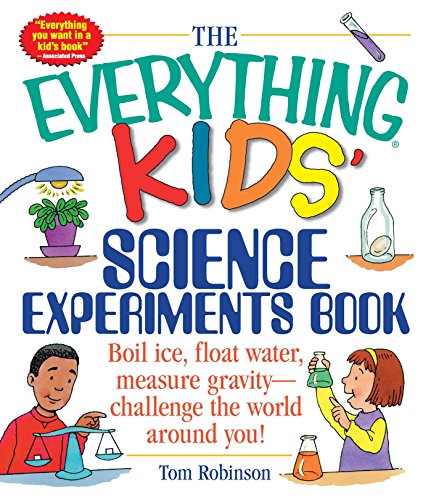
This book compiles a wide catalog of kid-friendly experiments designed to be approachable for 4th graders. It covers topics from physics to chemistry and earth science, with activities that emphasize observation, measurement, and data interpretation. The structured projects come with clear instructions and simple materials, making it a practical companion for classroom centers or weekend science sessions.
Highlights include approachable explanations and engaging challenges that align with curiosity-driven learning. The book format makes it easy to pull activities by topic or by the time available, such as a short classroom experiment or a longer science fair project. While it’s not a single kit, it serves as a reliable repository for ongoing science exploration and home-school enrichment.
Considerations: some experiments require basic household items, while others rely on common classroom supplies. It’s helpful to pair this with a minimal toolkit to support a range of activities without frequent shopping trips.
National Geographic Earth Science Kit

The National Geographic Earth Science Kit focuses on geological and environmental themes. With activities such as volcano building, crystal growth, and rock collection, it provides a structured path through core Earth science concepts. The included Learning Guide helps explain the science behind each experiment, which supports retention and curiosity as students connect observations to real-world processes.
Pros include a large number of activities that can accommodate group learning, family participation, or classroom demonstrations. The kit’s fossil and mineral specimens add a tangible dimension to understanding earth materials, while the guided experiments emphasize safe, hands-on exploration. It’s well-suited for budding scientists who enjoy collecting and categorizing specimens as part of their study.
Tip: use the guide to scaffold lessons on erosion, rock cycles, and volcanic activity. Pair with a notebook for students to log hypotheses, observations, and conclusions as they rotate through stations.
National Geographic Stunning Chemistry Set

The National Geographic Stunning Chemistry Set invites young scientists to explore chemistry through safe, easy experiments. With 45 experiments, students can build and erupt a volcano, create geysers, and observe a range of chemical reactions. Clear, kid-friendly instructions help students follow steps and anticipate outcomes, while the experiments emphasize observation and explanation of why reactions occur.
Strengths include a comprehensive introduction to chemistry concepts and a strong emphasis on safety and procedure adherence. The kit’s activities encourage prediction, testing, and communication of results, which aligns well with elementary science standards. It serves as a solid foundation for a science fair project or a unit on matter and reactions.
Possible enhancements: integrate related reading material on chemical safety or simple lab notebook templates to reinforce scientific writing and data recording skills.
5 Set Individual STEM Kit By BeAndge

This bundle from BeAndge presents five wind-powered car kits designed for younger builders. The set emphasizes engineering, physics, and problem solving through hands-on assembly. Each kit includes complete accessories and a dedicated screwdriver, helping kids learn fundamentals of science, technology, engineering, and math through a practical build-and-test approach.
Strengths include focused attention on mechanical design and motion, plus safe, eco-friendly materials. The wind-powered cars activity teaches energy transfer and simple circuits in an approachable format. It’s particularly suitable for classroom stations, science clubs, or family STEM nights where collaborative problem solving is encouraged.
Notes: some kits may require AA batteries (not included) for certain components. The set is adaptable for varying skill levels, making it a good choice for mixed-age groups and early engineering exploration.
Buying Guide: Key Purchase Considerations for 4th Graders
- Learning goals: Choose kits that balance science concepts with hands-on activities. Look for a mix of Earth science, chemistry, and engineering to cover core topics.
- Safety and supervision: Ensure materials and tools are age-appropriate. Some experiments may require adult oversight, especially those involving chemicals or small parts.
- Materials and accessibility: Prefer kits that include most needed tools and clear, illustrated instructions. Some items work with household supplies, which can reduce ongoing costs.
- Group vs. individual use: Consider whether the kit is designed for solo exploration or collaborative learning. Group-friendly options support classroom or family science nights.
- Learning supports: Look for kid-friendly guides, diagrams, and experiment logs. A companion notebook or digital resources can enhance retention and reporting.
- Progression and challenge: Pick a mix of simple and more complex projects so motivated learners can advance without frustration.
- Durability and reuse: Reusable tools and high-quality materials let kids revisit concepts and build confidence through repeated experiments.
- Budget and storage: Consider the storage space required for kits and whether the price aligns with the number of activities and long-term value.