Discover top resources that help high school students plan, present, and execute compelling science fair projects. This guide highlights five products that support idea generation, project display, and rigorous experimentation. Each section provides practical details on features and how they help with planning, data collection, and presentation. A Buying Guide at the end covers key considerations to compare when selecting materials, boards, and reference books for high school science fairs.
| Product | Focus |
|---|---|
| The Everything Kids’ Science Experiments Book | Hands-on experiments, foundational science concepts |
| 129Pcs Planet Space Science Fair Board Supplies | Space-themed display materials, borders, titles |
| PerKoop 36 Sheets Science Fair Board Supplies | Labels, subtitles, and stickers for organized boards |
| 22 Sheets VinTS Colorful Self Adhesive Boards | Colorful presentation boards and titles |
| 43 Colorful Sheets Science Fair Board Supplies | Subtitle and title stickers, personalization options |
The Everything Kids’ Science Experiments Book
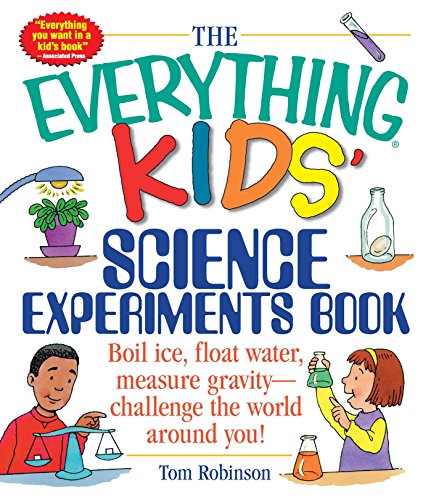
By Simon & Schuster, this book offers a broad collection of kid-friendly experiments designed to spark curiosity and strengthen inquiry skills. For high school projects, use the experiments to brainstorm variables, craft testable hypotheses, and develop a clear procedure. The accessible format helps students explain concepts such as gravity, buoyancy, and chemical reactions in simple terms, which can support both experimental design and presentation narratives.
129Pcs Planet Space Science Fair Board Supplies

This space-themed set includes letter stickers, project titles, space borders, and presentation borders. The varied shapes and sizes allow students to create clearly labeled sections for hypothesis, methods, results, and conclusions. The package supports a professional, cohesive display that helps judges quickly navigate an experiment’s key elements while adding visual interest to the board.
PerKoop 36 Sheets Science Fair Board Supplies

The PerKoop kit provides a balanced mix of subtitles, titles, and letter stickers with sizes comparable to standard display boards. The materials are described as durable and fade-resistant, making them suitable for multi-board projects or extended school-based science fairs. Use these elements to label sections distinctly and maintain a clean, professional look that aligns with high school-level research presentation conventions.
22 Sheets VinTS Colorful Self Adhesive Galactic Boards

VinTS offers a value-packed option with colored presentation subtitles, project titles, and mixed letter/number stickers. The color variety helps students segment sections (e.g., background, procedure, data analysis) in visually appealing ways. The kit’s versatility makes it useful for both simple and more complex science fair boards, enabling quick customization without sacrificing readability.
Mark Twain Forensic Investigations Workbook

For high school projects requiring data interpretation and evidence-based reasoning, this workbook offers crime-scene-inspired activities, including handwriting analysis and fingerprinting. Such exercises help students practice constructing logical arguments from evidence, an essential skill for presenting a rigorous science fair project. The workbook supports critical thinking without needing advanced equipment or measurements.
Trifold Poster Board 36″ x 48″ White

This large, self-adhesive tri-fold board provides a sturdy foundation for high school science fair presentations. Its size supports detailed visual displays, including large graphs, step-by-step procedures, and multiple data visuals. The included subtitles help create a clean, organized display and reduce time spent on layout during project preparation.
Buying Guide: Key Considerations For High School Science Fair Projects
When selecting materials for a high school science fair, consider how each item supports the project lifecycle—from idea generation to final presentation.
- Project ideation and planning: Reference books and guided experiments help students develop testable hypotheses and robust procedures. A mix of hands-on activities and structured worksheets fosters critical thinking and methodical documentation.
- Display quality and readability: A well-organized board with clear headings, labels, and color-coding improves judge comprehension. Choose boards and sticker sets that offer legible typography and durable materials.
- Visual appeal vs. clarity: While colorful displays attract attention, ensure that visuals do not overwhelm data. Balance color with legible fonts and concise captions for graphs and results.
- Durability and reuse: Durable boards and fade-resistant stickers reduce wear during handling and transport. For students presenting multiple projects, consider reusable display elements.
- Accessibility and affordability: Look for sets that provide essential components (titles, subtitles, stickers) in value packs to minimize last-minute purchases. Consider age-appropriate resources that align with curriculum standards.
- Ethics and documentation: Ensure students document procedures, data, and sources clearly to support reproducibility and academic integrity. Supplemental workbooks can guide evidence-based reasoning without requiring specialized equipment.
In practice, integrate reference materials with display supplies by first mapping the project’s sections (Abstract, Hypothesis, Methods, Data, Analysis, Conclusion). Use subtitle stickers to clearly delineate sections, and reserve title stickers for the project’s subject or goal. A space-themed border or color variety can help separate data charts from narrative text, improving judge navigation while maintaining a professional appearance.