Discover top science books that fit second graders’ curiosity and reading levels. This guide highlights practical workbooks, science-friendly daily practice, and spelling and language resources that reinforce science concepts through reading and activities. The selected titles come from trusted publishers and are designed to build science literacy, inquiry skills, and hands-on learning for ages 7 to 8.
Quick Reference: Chosen Products
| Product | Brand | Highlights |
|---|---|---|
| School Zone Big Second Grade Workbook | School Zone | Word problems, reading comprehension, science, math |
| Evan-Moor Daily Science, Grade 2 | Evan-Moor Educational Publishers | Daily science practice |
| Spectrum Spelling Workbook Grade 2 | Spectrum | Phonics, spelling patterns, handwriting, context |
| Spectrum 8th Grade Science Workbooks | Spectrum | Science literacy across natural, earth, life science |
| Evan-Moor Skill Sharpeners Grammar and Punctuation | Evan-Moor Educational Publishers | Grammar focus with real-world practice |
School Zone Big Second Grade Workbook

The School Zone workbook covers a broad range of subjects designed for 7 to 8-year-olds, with sections that reinforce reading comprehension and phonics alongside math and science activities. The format supports independent practice and at-home review, which can help strengthen foundational science vocabulary and critical thinking through problem-solving. The inclusion of science-related activities aligns well with core second-grade science standards, making it a practical workbook for school-day practice and weekend reinforcement.
Features include durable pages and age-appropriate tasks aimed at building confidence in reading and numeracy. Since the book is designed for the 2nd-grade level, it can serve as a bridge to more complex scientific inquiry while sustaining student engagement through varied activities that emphasize understanding and application of science concepts.
Evan-Moor Daily Science, Grade 2

This title offers daily science activities designed for second graders, promoting consistent engagement with science concepts. The daily format helps teachers and parents structure brief lessons that reinforce inquiry, observation, and scientific vocabulary. The content aligns with typical state standards and includes varied topics that encourage curiosity about the natural world, technology, and everyday science in a concise, approachable format for young learners.
Ideal for quick classroom routines or home practice, this resource supports ongoing science literacy without overwhelming students who are building foundational investigative skills. It serves as a practical companion to broader science curricula and can complement hands-on experiments with short, focused readings and activities.
Spectrum Spelling Workbook Grade 2
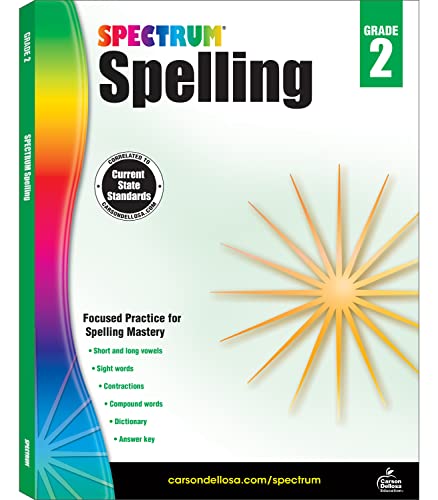
The Spectrum Spelling Workbook supports early literacy by reinforcing spelling patterns, phonics, and handwriting in a way that relates to science learning. By integrating spelling practice with vocabulary related to science terms, students can better comprehend science passages and explanations. The workbook is aligned with state standards and emphasizes practice in meaningful context, which aids retention and comprehension of scientific terminology used in readings and experiments.
With 208 pages of targeted activities, this workbook helps students develop accuracy in written communication, an essential skill when recording observations, explanations, and conclusions during science work. The clear structure makes it suitable for at-home reinforcement or classroom stations focused on language and science integration.
Spectrum 8th Grade Science Workbooks

Although labeled for an older grade, this Spectrum title offers a broad science literacy foundation that can support higher-level exploration for advanced second graders who are ready for more challenging material. It covers natural, earth, and life sciences with a focus on understanding concepts and connecting ideas through inquiry and activities. The workbook helps students build a strong science vocabulary and develop skills in reading, analyzing data, and drawing conclusions from scientific information.
Use this resource to introduce or reinforce cross-disciplinary concepts—connecting science with reading comprehension, science writing, and collaborative projects that align with standards across major science domains.
Evan-Moor Skill Sharpeners Grammar and Punctuation

This Evan-Moor workbook emphasizes grammar and punctuation skills that support clear writing about science topics. The included activities focus on noun and verb usage, sentence structure, and practical writing tasks that require students to form coherent explanations and observations. While not exclusively science-focused, strong language skills are integral to interpreting science texts, recording data, and communicating findings effectively in science journals or reports.
Designed for practice and reinforcement, the book offers real-world application through exercises that mirror everyday writing tasks. It helps students express scientific ideas with accurate grammar, punctuation, and structure, which can improve overall science communication and literacy.
Buying Guide: Key Purchase Considerations
When selecting science-focused materials for 2nd graders, consider how the resources support core competencies: scientific inquiry, reading comprehension, vocabulary, and writing. Look for materials that:
- Balance reading, writing, and hands-on activities to sustain engagement while building essential science skills.
- Align with state standards or common core goals to ensure relevance in the classroom and at home.
- Offer clear explanations and age-appropriate explanations of scientific concepts to prevent confusion.
- Provide opportunities for independent practice, spaced repetition, and short daily routines for consistency.
- Include varied topics within life, earth, physical, and environmental sciences to foster broad curiosity.
Choosing Between Workbooks and Daily Practice
Workbooks deliver structured lessons and practice, great for routine study and assessment. Daily practice resources promote regular, brief exposure to science concepts, which can support long-term retention. Combining both types can provide a balanced approach, reinforcing reading and writing alongside scientific inquiry.
Integrating Language Skills with Science
Resources that blend spelling, grammar, and reading with science vocabulary can help students interpret scientific texts more effectively. Emphasize activities that require students to explain concepts in writing, describe observations, and answer why/how questions to strengthen comprehension and communication.
Accessibility and Differentiation
Choose titles with clear instructions, visual supports, and adjustable difficulty to accommodate diverse learners. For students who need extra practice, pair workbook activities with hands-on science experiments, guides, or digital resources to reinforce understanding and engagement.