Choosing the right science books for a 6th-grade classroom or homeschool can boost understanding of core concepts while building essential inquiry skills. The following selections are organized to cover foundational biology, general science, and practical activities that align with common standards. Each entry includes a quick look at features and how it supports learners at this pivotal stage. Use this guide to compare focus areas, activities, and how each book complements classroom lessons or independent study.
Overview of selected products:
| Product | Brand | Key Focus | Format |
|---|---|---|---|
| Book GR 6 Daily Science | Evan-Moor Educational Publishers | Daily science activities, classroom ready | Workbook |
| Biology Workbook—Grades 6-12 | Carson Dellosa Education | Biology concepts, vocabulary, standards-aligned | Workbook |
| General Science WorkBook, Grades 5-8 | Mark Twain Media | Multi-discipline science practice | Workbook |
| Spectrum 8th Grade Science Workbooks | Spectrum | State standards-based science review | Workbook |
| Spectrum Spelling Workbook Grade 6 | Spectrum | Spelling for science literacy and context | Workbook |
Book GR 6 Daily Science

The Book GR 6 Daily Science offers classroom-ready activities designed to reinforce daily science concepts. It emphasizes routine practice, making it a practical resource for reinforcing vocabulary, inquiry prompts, and hands-on exercises. With a focus on consistency, it helps students build confidence in scientific reasoning and observation, supporting teachers who rotate between topics and need reliable warm-up or review materials.
Biology Workbook for 6th Grade and Beyond
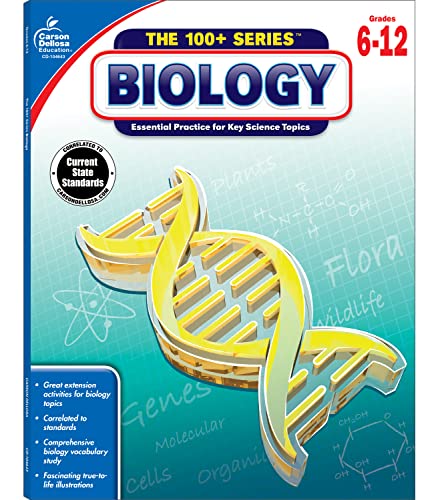
This workbook covers biology topics suitable for upper elementary and early middle school, including matter, cells, genetics, and basic chemistry concepts. It provides curated activities and a solid vocabulary component, with potential alignment to common core or state standards. It’s a useful extension for students who crave deeper exploration or who need structured review to reinforce classroom lessons.
General Science WorkBook, Grades 5-8

Mark Twain Media’s General Science WorkBook spans topics across Earth, life, physical science, and the solar system. It emphasizes NSE standards alignment and offers extra practice to reinforce skills students encounter in their science curricula. The broad scope makes it a solid resource for comprehensive review or for supplementing inquiry-based learning with targeted exercises.
Spectrum 8th Grade Science Workbooks

Spectrum’s 8th Grade Science Workbooks provide a comprehensive review of natural, earth, and life science concepts with practical activities. The program is designed to support science literacy, offering engaging facts and varied exercises that align with current state standards. It’s a strong option for reinforcement, unit closure activities, or independent practice that mirrors classroom expectations.
Spectrum Spelling Workbook Grade 6

Although primarily a language-focused resource, the Spectrum Spelling Workbook for Grade 6 supports science literacy by strengthening decoding and vocabulary skills critical to understanding scientific texts. It features spelling patterns, root words, prefixes, and suffixes linked to meaning and context, which helps students engage more deeply with science materials and terminology.
Buying Guide: Key Purchase Considerations
To choose the best science book set for 6th grade, consider these perspectives:
- Curriculum Alignment: Look for materials aligned to state or national science standards and compatible with your current curriculum goals. They should reinforce core topics like biology, earth science, and scientific inquiry.
- Skill Depth vs. Breadth: Decide whether you want comprehensive coverage across multiple science domains or a focused, in-depth treatment of a few topics. The right balance depends on student needs and instructional time.
- Practice Type: Favor resources that mix hands-on activities, vocabulary work, and critical thinking questions. Variety helps address different learning styles and maintains engagement.
- Difficulty Level: Ensure the text matches 6th-grade rigor, with scaffolding that supports struggling readers while challenging advanced learners.
- Teacher Support: Resources with teacher guides, answer keys, and extension activities save planning time and help maintain consistency across lessons.
- Homeschool vs. Classroom Use: Some books are well-suited for independent study, while others function best as teacher-led materials or group activities. Check item descriptions for suitability.
- Durability and Format: Paperbacks with clear diagrams and durable pages are ideal for daily use. Consider whether digital or printable components are included if you prefer hybrid formats.
- Assessment Compatibility: Look for materials that provide quizzes, review sections, or rubrics that align with common assessment practices.
- Cost and Availability: While not listing prices, evaluate total quantity of practice pages and potential reuse year over year to maximize value.
The selections above offer a spectrum of formats and focus areas, from daily science routines to broader science practice and literacy support. They are designed to complement science instruction, helping 6th-grade students develop both content knowledge and essential scientific thinking skills.