Choosing the right early reading program helps toddlers, preschoolers, and kindergartners build essential literacy skills. This guide highlights four top-rated, kid-friendly options that focus on phonics, sight words, and interactive learning. Each program blends engaging visuals with structured progression to support reading development at home or in classrooms.
| Product | Brand | Key Focus | Notes |
|---|---|---|---|
| Early Reading Program for Baby, Toddler, Preschool, Kindergarten | Little Champion Reader | Alphabet, vowels, 200+ sight words, 3-level progression | DVDs, flash cards, story sequences |
| First Little Readers Parent Pack: Guided Reading Level B | Scholastic | Beginning readers, level-appropriate books | 25 books for guided reading |
| CVC Word Magic: Montessori Reading Game | Hulats | Phonics mastery, CVC word reading, sight words | Wooden letters, flash cards, durable design |
| Gojmzo Wooden CVC Word Spelling Games | Gojmzo | Reading letters, CVC words, 50 flash cards | Wooden blocks, boards, storage box |
Below are concise, objective summaries of each option, highlighting what makes them suitable for early literacy development and how they compare in core learning approaches.
Little Champion Reader Reading Kit

The Early Reading Program for Baby, Toddler, Preschool, Kindergarten combines alphabet instruction, vowel phonics, and 200+ sight words to form a comprehensive pre-reading foundation. It includes 800+ words, 250+ high-frequency phrases, and 250+ story sentences, reinforcing decoding and early fluency. With nine educational DVDs, the program uses flashcards, animated nursery rhymes, Aesop stories, and other clips to engage different learning channels. The curriculum progresses through three levels—words, then phrases, then sentences—culminating in independent book reading. This structure supports gradual skill-building and measurable milestones for young learners.
First Little Readers Parent Pack

The First Little Readers Parent Pack provides 25 irresistible books designed for starting readers. This Scholastic collection emphasizes guided reading, helping parents and educators introduce phonics, basic vocabulary, and sentence structure in approachable increments. The leveled approach aligns with early literacy benchmarks and supports daily reading routines, making it a strong choice for households and classrooms focusing on foundational decoding and fluency.
CVC Word Magic: Montessori Reading Game

This Montessori-inspired phonics game focuses on CVC word decoding and sight word recognition. It includes 26 wooden letters and 50 double-sided phonics flash cards with vivid, hand-painted illustrations. The set aims to help kids segment, blend, and read simple words like “fox” and “bat,” while tracing and sliding activities support fine motor and letter-sound connections. The durable beechwood components are designed for repeated use in homes or classrooms, encouraging long-term engagement with early literacy.
Gojmzo Wooden CVC Word Spelling Games
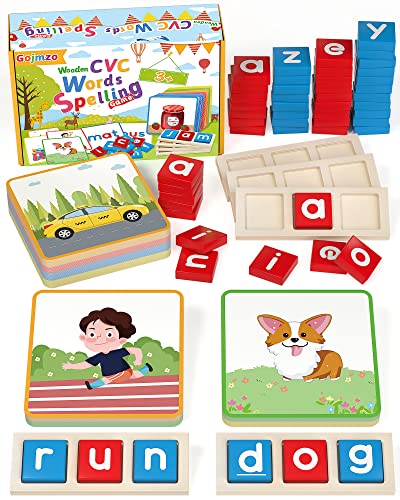
The Gojmzo wooden CVC Word Spelling Games kit provides a tactile, hands-on approach to early reading. It includes 50 double-sided phonics flash cards and 53 wooden lowercase letter blocks, along with five spelling boards and a sturdy storage box. This set supports classroom and home use, enabling students to practice letter sounds, blending, and spelling of simple CVC words. The physical components promote interactive learning and help maintain engagement during literacy activities.
Buying Guide: Key Purchase Considerations For Early Reading Programs
Selecting the right program for toddlers and young readers involves balancing content quality, instructional approach, and practicality. Consider these perspectives to choose the best fit for your child or classroom.
- Learning style and modality: Look for a mix of visual, auditory, and kinesthetic elements. DVDs and animated clips support auditory and visual learners, while wooden letters and flash cards appeal to hands-on learners. A balanced kit reduces reliance on a single mode of instruction.
- Phonics versus sight words: Programs emphasizing phonemic awareness and decoding (CVC words, letter sounds) build foundational reading skills. Others that prioritize sight words can accelerate early fluency but may require complementary phonics practice.
- Progression and pacing: A clear three-level or staged progression helps measure progress and maintain motivation. Ensure the program gradually increases difficulty without overwhelming the learner.
- Durability and age suitability: Wooden or durable materials withstand daily use by toddlers, preschoolers, and kindergartners. Check recommended age ranges and ensure safety standards for small parts if applicable.
- Parental involvement and guidance: Programs that include guided-reading tips, activity suggestions, and progress tracking support caregiver involvement and consistent practice at home.
- Content variety and engagement: A mix of stories, phonics exercises, and interactive activities (games, flash cards, books) keeps learners engaged and supports transfer of skills to independent reading.
- Portability and storage: Compact kits with organizers are easier to use in small spaces. Consider whether the set includes a storage solution for daily use.
- Cost and value: Compare the number of books, cards, and learning tools relative to the price. Durable, reusable components often offer longer-term value for multiple children or repeated use across the year.
When evaluating these options, align the program’s core strengths with your child’s current reading level, attention span, and interest in books. A blended approach—combining phonics-focused activities with engaging story-based literacy—often yields the most consistent progress in early readers.