Choosing the right psychology textbooks can help high school students explore the science of behavior, cognition, and development with clarity. The following selections are aligned with standard curricula and offer strong foundational knowledge, practical activities, and engaging explanations. Each entry includes a brief overview of features to help educators and students compare options.
| Product | Brand | Key Features |
|---|---|---|
| Psychology (High School Version) | Worth Publishers | Introductory content; study-ready format; used condition |
| The Power of the Adolescent Brain | ASCD | Strategies for teaching teens; brain-based insights |
| Biology Workbook (The 100 Series) | Carson Dellosa Education | Biology vocabulary; standards-aligned; extensions for biology concepts |
| Mindset: The New Psychology of Success | Ballantine Books | Growth mindset concepts; motivation and achievement |
Psychology (High School Version) – Worth Publishers

This edition aims to present psychology concepts in accessible language suitable for high school learners. It covers core topics such as biological bases of behavior, sensation and perception, learning, memory, motivation, development, and personality. The accompanying materials are designed to support classroom discussion, lab-like activities, and homework that reinforce foundational theories. The format is practical for teachers seeking a traditional textbook experience with modern examples. For students, it provides a clear roadmap through introductory psychology without overwhelming detail, making it a solid core text for survey courses.
The Power of the Adolescent Brain

This book targets educators and students interested in how adolescence shapes learning and behavior. It emphasizes brain development during teen years and offers practical, research-backed strategies for teaching middle and high school students. Topics include executive function, risk assessment, decision-making, and social dynamics in classrooms. The content is structured to translate neuroscience into actionable teaching practices, with examples and frameworks that can be adapted to diverse classroom contexts. It serves as a valuable companion to psychology curricula that focus on cognition, development, and learning processes during adolescence.
Biology Workbook (The 100 Series) – Carson Dellosa
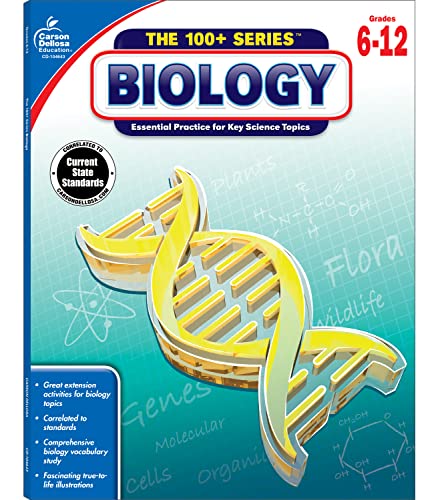
While primarily a biology workbook, this resource enriches understanding of scientific concepts relevant to psychology, including matter, atoms, cells, genetics, and bonds. The workbook format promotes vocabulary building, standard-aligned activities, and practical exercises suitable for classwork or independent study. It provides a structured approach for students who benefit from hands-on practice and cross-disciplinary integration, making it a strong complement to psychology topics that touch on biological bases of behavior and physiological processes.
Mindset: The New Psychology of Success

This widely cited book explores the growth mindset concept and its impact on achievement, motivation, and resilience. It discusses how belief systems influence learning, how failure can be reframed as a learning opportunity, and how teachers and students can foster a more adaptive mindset in educational settings. While not a traditional textbook, it provides essential psychology perspectives on motivation and behavior that can enrich discussions and projects in high school psychology courses. It pairs well with classroom activities that encourage reflective thinking and goal setting.
Buying Guide: Key Purchase Considerations
- Curriculum alignment: Evaluate how well each text maps to your course standards, including core topics in introductory psychology and science connections.
- Student accessibility: Consider readability, glossaries, and visual aids. For mixed-ability classes, choose books with clear explanations and plenty of practice opportunities.
- Teaching support: Look for companion resources such as instructor guides, quizzes, and activity ideas to save planning time.
- Brain-based and developmental content: Books like The Power of the Adolescent Brain provide practical strategies for teen learners, which can complement theoretical material.
- Interdisciplinary value: Texts that link psychology with biology, education, and social-emotional learning offer broader applicability across subjects.
- Edition and condition: For used books, assess condition and any access to updated content or digital resources.
- Cost and longevity: Consider whether a workbook or text accommodates ongoing use across semesters or a single-year course.
Overall, these five selections provide a balanced mix of classic introductory psychology content, adolescent development insights, biology-linked context, and motivational psychology. Schools may opt for a primary textbook supplemented by targeted readings from Mindset or The Power of the Adolescent Brain to enrich lesson plans. When selecting, consider classroom goals, student needs, and the instructional approach that best supports comprehension and engagement in psychology topics.