Choosing the right preschool reading program helps build foundational literacy skills for ages 3–6. This guide highlights five high‑quality options designed to support early phonics, sight words, letter recognition, and basic reading comprehension. Each product is best for different learning styles—hands‑on activities, flash‑card spelling, or comprehensive workbooks. Use the table below to compare core features and ideal learners at a glance.
| Product | Best For | Key Focus | Format |
|---|---|---|---|
| School Zone Get Ready for Preschool Workbook | Young Readers & Pre‑Kers | Alphabet, numbers, colors, patterns | Workbook |
| Wooden CVC Word Spelling Games (Gojmzo) | Hands‑on Learners | CVC words, phonics, flash cards | Wooden blocks + cards |
| School Zone Thinking Skills Workbook | Young Problem Solvers | Logic & reasoning | Workbook |
| School Zone Big Preschool Workbook | Curriculum Builders | ABCs, phonics, early math | Extensive workbook |
School Zone Get Ready for Preschool Workbook

The School Zone Get Ready for Preschool Workbook focuses on foundational literacy and early math concepts. It covers ABCs, numbers, colors, counting, rhyming, phonics, patterns, and matching. This 48‑page pre‑K workbook helps new readers recognize letters and sounds while building memory of basic concepts. Best for caregivers seeking a compact, structured practice resource that can be used at home or in small group settings.
Who it’s best for: parents and teachers working with preschoolers ages 3–6 who need guided, short practice sessions. Why chosen: it offers a balanced blend of language and early math skills in a portable format. Caution: some activities may feel repetitive for advanced early readers.
Wooden CVC Word Spelling Games (Gojmzo)
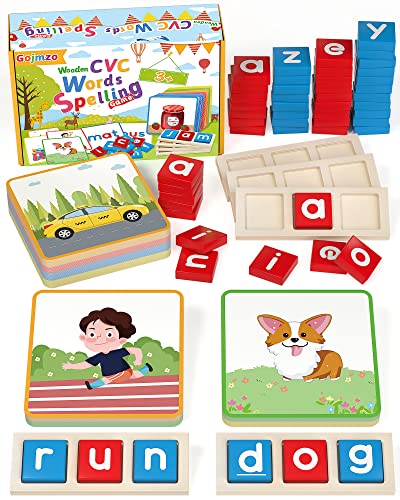
This kit provides a tactile approach to early reading. It includes 50 double‑sided phonics flash cards, 53 wooden lowercase letter blocks, five spelling boards, and a storage box. The set is designed to help children form CVC words by matching sounds to letters, a key step in decoding and encoding words. Best for: hands‑on learners who benefit from physical letter manipulation. Better for: small group or homeschool use. Caution: some letters are omitted to match the included word cards, which may limit letter inventory in some sessions.
School Zone Thinking Skills Workbook

The Thinking Skills Workbook emphasizes logic, problem solving, and early critical thinking for preschoolers. While focusing on reasoning, it also reinforces essential cognitive skills helpful for reading and math readiness. Best for: children who enjoy puzzles and pattern recognition. Why selected: complements phonics work by building mental flexibility. Limitation: may require adult guidance for some activities to ensure engagement and correct approach.
School Zone Big Preschool Workbook

The Big Preschool Workbook is an extensive 320‑page resource covering writing, colors, shapes, alphabet, basic phonics, numbers, and early math. It’s designed to provide a broad foundation and plenty of practice for children graduating from preschool to kindergarten. Best for: families and classrooms needing a thorough, wide‑coverage program. Why chosen: its depth can reduce gaps in early literacy and numeracy. Caution: the sheer volume may be overwhelming for some learners without paced guidance.
Buying Guide: Key Considerations for a Preschool Reading Program
What should you look for when selecting a program for a preschooler?
- Learning style alignment: prefer tactile activities, flash cards, or comprehensive workbooks? Choose accordingly to maintain motivation.
- Scope and depth: determine whether you need quick daily practice or a complete curriculum spanning reading, writing, and math skills.
- Progress tracking: look for age‑appropriate activities with clear outcomes to monitor literacy growth over weeks and months.
- Durability and usability: for younger children, sturdier materials and simple layouts support independent work and motor development.
- Parent/teacher guidance: consider whether the program offers guidance or structured activities that adults can lead effectively.
Frequently Asked Questions
- What is the best age to start a preschool reading program?
Many programs begin around ages 3 to 4, aligning with early literacy milestones like letter recognition and phonemic awareness. - Should I choose a workbook or hands‑on kit for my child?
Choose based on your child’s learning style. Workbooks reinforce skills through written practice, while hands‑on kits support kinesthetic learners. - How long should daily practice last?
Short, consistent sessions (10–20 minutes) often work best for maintaining attention and steady progress. - Can these products be used in homeschooling?
Yes. Most items are suitable for home use and small classroom settings, with structured activities and clear objectives. - Is one program better for foundational reading than another?
Programs with a balanced mix of phonics, letter work, and word recognition tend to support broader literacy development. - How do I avoid overwhelm for my child?
Introduce new concepts gradually, mix different activity types, and allow ample practice with repetition at a comfortable pace.