Middle school is a pivotal time for building social skills, critical thinking, and collaborative problem-solving. The following selections highlight engaging, curriculum-friendly games and activities designed to support tweens and early teens in classrooms, counseling sessions, and at home. Each option fosters communication, empathy, and decision-making while aligning with middle school developmental needs.
Summary of Selected Products
| Product | Brand | Focus |
|---|---|---|
| 52 Essential Social Dilemmas: Skills for Kids & Teens to Thrive in Middle School | Mind Brain Emotion | Social scenarios, discussion prompts, problem solving |
| Face to Face Transitions Card Game (Middle to High School Edition) | Harvest Time Partners | Transition readiness, decision-making, communication |
| CHATTER CHANCE School: Conversation Card Games | CHATTER CHANCE | Conversation skills, classroom social bonding |
| Preteens are Human | 140 Conversation Cards | Parents Are Human | Relationship building, empathy, middle school topics |
| Numli – Math Booster Game | Niche Nation Games | Math fluency, number sense, classroom activity |
52 Essential Social Dilemmas For Middle School

This card-based resource is designed to help middle school students discuss and navigate real-life social situations. It focuses on transitions, friendships, gossip, peer pressure, and conflict resolution. The included prompts encourage shy students to participate and guide discussions toward problem-solving and ethical decision-making. Teachers and counselors can use it in groups or individual sessions to build social competence and emotional maturity.
Features emphasize practical scenarios, productive conversations, and reflective thinking. The game format supports engagement during class or counseling sessions, helping students articulate feelings, thoughts, and outcomes. It’s a versatile addition to social-emotional learning curricula and family discussions alike.
Face to Face Transitions Card Game (Middle to High School)
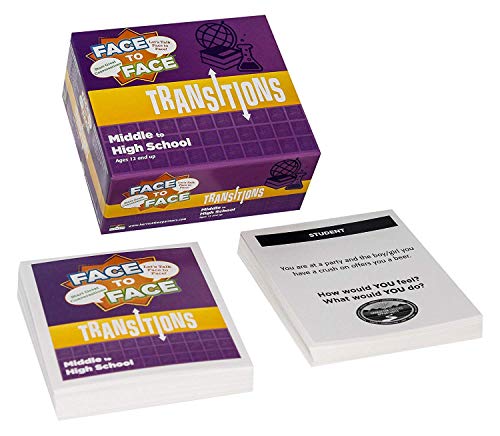
This edition targets important life transitions, guiding middle-to-high school students through thoughtful decision-making and character-building exercises. By focusing on respect, loyalty, honesty, responsibility, and commitment, the game supports authentic face-to-face communication and deeper conversations. It is suitable for classroom discussions, counseling sessions, and family engagement to prepare students for evolving social dynamics.
With 96 real-life scenarios, the game helps adolescents practice communicating in person, reducing reliance on digital interactions. Educators can incorporate it into lesson plans or group activities to reinforce essential social and ethical skills during a pivotal developmental period.
CHATTER CHANCE School: Conversation Card Games

Chatter Chance offers an engaging set of 80 thought-provoking questions designed to spark meaningful conversations among elementary and middle school students. The topics cover educational, social, emotional, and personal areas, encouraging students to share perspectives and build trust with peers and teachers. The format supports the development of listening skills, empathy, and collaborative thinking in a low-pressure environment.
Educators can leverage this tool to form structured social skills groups, run mindfulness activities, or support classroom community-building efforts. The balanced mix of question types helps accommodate diverse learners and fosters inclusive dialogue during advisory periods or SEL blocks.
Preteens are Human | 140 Conversation Cards

This card set is designed to strengthen connections with early adolescents aged 11-13 and above. It includes 100 questions and 40 activity prompts aimed at sparking meaningful discussions, empathy, and mutual understanding. The content supports middle schoolers in articulating feelings, values, and perspectives, which helps foster a sense of belonging and trust in relationships with peers, teachers, and family members.
Designed by experts, the cards are suitable for individual reflection, small-group conversations, and family-time dialogue. They provide a structured, approachable way to navigate common middle school topics while promoting emotional literacy and communication skills.
Numli – Math Booster Game

Numli turns math practice into a competitive and collaborative activity. Each card pair is linked by a number, encouraging players to uncover connections quickly. The game emphasizes number sense, estimation, and fluency, making it a dynamic addition to classroom math centers, indoor recess, or STEM activities. It supports active engagement while reinforcing essential arithmetic and reasoning skills central to middle school math.
Suitable for both classroom settings and family game nights, Numli combines strategy with fast thinking, offering a hands-on way to strengthen mathematical thinking beyond traditional problem sets. It complements broader math curricula and enables teachers to differentiate activities for diverse learners.
Buying Guide: Key Considerations for Middle School Games
Choosing the right game or activity for middle school students involves balancing engagement, educational value, and alignment with social-emotional learning goals. Consider the following perspectives:
- Social-Emotional Learning (SEL) Focus: Prioritize tools that build empathy, communication, conflict resolution, and teamwork. Cards that prompt reflection and discussion tend to support SEL outcomes.
- Curriculum Alignment: Look for activities that complement existing SEL or advisory programs, as well as core subjects like language arts or math where applicable.
- Accessibility and Inclusion: Choose materials with clear instructions, varied question types, and inclusive content that engages a wide range of learners, including shy or reluctant participants.
- Classroom Practicality: Consider the number of students per session, required materials, and time per activity. Quick-start games that fit into short instructional blocks work well in busy school days.
- Versatility: Favor resources that support both group discussions and individual reflection, enabling teachers to differentiate for diverse needs and settings.
- Feedback and Assessment: Opt for tools that provide observable outcomes or discussion prompts you can track, making it easier to measure social and cognitive growth over time.
- Digital vs. In-Person: While card games encourage direct interaction, consider hybrids or printable options for remote or blended environments when needed.
In sum, the best middle school plays blend engaging conversation with practical skill-building. The selections above offer varied approaches—from scenario-based discussions to cooperative challenges—to support students as they navigate middle school transitions, friendships, academics, and personal development.