Whether you’re returning to the keys after years away or starting fresh as an adult learner, the right piano theory book helps you build solid fundamentals and apply them to real playing. This guide highlights five accessible options that pair theory with practical playing ideas, tailored for adult students. Each pick emphasizes clear explanations, progression in complexity, and practical exercises. The buyer when seeking structure, even and steady progress, will find these titles particularly helpful.
| Product | Why It Matters |
|---|---|
| Alfred’s Basic Adult Theory Piano Book: Level One | Solid foundation with reinforced past concepts and essential tips for chord progressions. |
| Adult Piano Adventures: All in One Course – Book 1 | Comprehensive method with extensive songs illustrating key theory and technique concepts. |
| Alfred’s Basic Adult Theory Piano Book Level Two | Continues concepts from Level One and aligns with the lesson books for cohesive learning. |
| Alfred’s Basic Adult Theory Piano Book, Level 3 | Progressive theory content for advancing students needing more depth. |
| Accelerated Piano Adventures: Theory Book 1 | Beginner theory designed for older students with clear, practical notation and concepts. |
Alfred’s Basic Adult Theory Piano Book: Level One

Key focus: Reinforces past concepts and introduces essential tips for chord progressions, with standard notation. Best for adult beginners who need a gentle, structured start and clear linkages to earlier piano experiences. This Level One title is a practical entry point for adults who want to connect theory with immediate playing ability. A limiting factor is that it intentionally covers foundational material; advanced theory topics appear in later levels.
Adult Piano Adventures: All in One Course – Book 1

This book combines theory with repertoire, offering over 90 songs that illustrate important theory and technique concepts. It’s best for adult learners who want a blended approach: learn concepts through notation and then see them in context through melodies and arrangements. The inclusion of digital audio resources can aid self-guided practice, though some readers may prefer a heavier emphasis on theory before performance.
Alfred’s Basic Adult Theory Piano Book Level Two

Best for students who have completed Level One or possess a solid grasp of basic theory concepts. The book reinforces previous concepts, correlates with the lesson books, and adds useful tips on chord progressions. It’s a natural progression for adults seeking a cohesive, laddered learning path. A potential limitation is that it assumes familiarity with the Level One material, so new learners may require additional bridging resources.
Alfred’s Basic Adult Theory Piano Book, Level 3

The Level 3 book advances to ongoing theory concepts, offering deeper exploration suitable for more capable adult students. It’s best for learners who have completed Levels One and Two and want to extend their understanding of harmony and structure. A limitation is that it may be more challenging for absolute beginners without guided practice or supplementary explanations.
Accelerated Piano Adventures: Theory Book 1
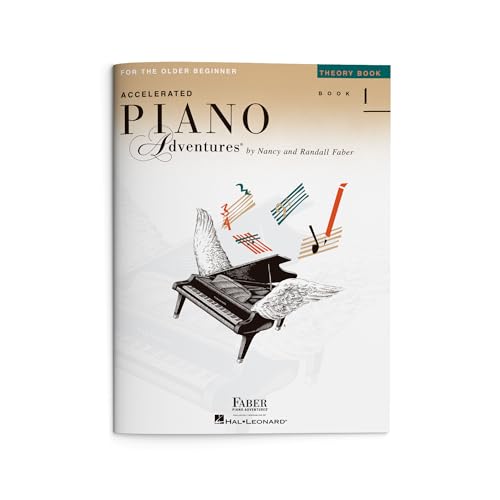
Designed for older students, this theory book emphasizes an accelerated approach with practical music notation and concept explanations. It’s a strong pick for those who want a direct route to understanding harmony and rhythm while still engaging with playable material. Avoid this if you need a slower, more foundational pace or if you require extensive beginner-friendly drills before approaching theoretical topics.
Buying Guide: Key Considerations For Adults Seeking Piano Theory
What level should you start at? Choose Level One if you’re new to theory or returning after a long break. If you’ve practiced before, Level Two or Level Three can provide a smooth progression without overwhelming you. Consider All-in-One formats if you prefer theory and repertoire together, which can speed up comprehension by applying concepts immediately.
- Learning style: Do you prefer direct explanations with plenty of practice, or a song-based approach that teaches through pieces?
- Supplemental resources: Digital audio, accompany sheets, or online practice aids can enhance retention and motivation.
- Progression and pacing: Look for a series that gradually builds harmony, rhythm, and notation skill to avoid gaps.
- Notational complexity: Ensure the book aligns with your current reading ability in standard notation and rhythm counting.
- Practical application: Seek titles that tie theory to performance-ready pieces, not just abstract concepts.
Frequently Asked Questions
- Which piano theory book is best for complete beginners? — The Level One books from Alfred’s Basic Adult Theory Piano set are designed for beginners and provide a solid foundation in standard notation and chord progressions.
- Can I use these books with a self-guided practice plan? — Yes. Several titles include or align with audio resources and clear practice steps to support independent study.
- Should adults start with a song-based approach or pure theory? — A blended approach (like All in One Course titles) can help you see how theory applies in real music quickly, which benefits many adult learners.
- Is progression through levels necessary for adults? — Progression helps ensure concepts are mastered before moving on, reducing confusion and building confidence over time.
- Are these books suitable for self-taced learning? — They are designed for self-guided practice, but pairing with a teacher or tutor can accelerate understanding and correct mistakes early.
- Do these books cover rhythm and sight-reading equally? — Most titles integrate rhythm with notation and practical examples, though some focus more on theory and harmony than intensive sight-reading drills.