Exploring the best piano scales books helps players strengthen finger independence, improve technique, and expand repertoire. The following selections emphasize major and minor scales, arpeggios, and practical exercises that suit beginners through intermediate players. Each title in this guide offers structured drills, clear instruction, and accessible layouts to practice efficiently at home or in class. Below is a quick overview of the chosen titles and how they support progress across technique, theory, and musical expression.
| Product | Author / Brand | Pages | Instrumentation | Highlights |
|---|---|---|---|---|
| Scales and Finger Exercises for Piano | G. Schirmer, Inc. | 64 | Piano | Major and minor scales, finger exercises, classical technique |
| Czerny – Practical Method for Beginners On Pianoforte, Op. 599 | G. Schirmer, Inc. | 56 | Piano | Beginner method, scales, technique building |
| Piano Adventures: Lesson Book Level 3A | Faber Piano Adventures | — | Piano | Chromatic scale, arpeggios, time signatures, engaging pieces |
| Walter MacFarren – Scale and Arpeggio Manual | G. Schirmer, Inc. | 112 | Piano | Scale and arpeggio study, technique focus |
Scale and Finger Exercises for Piano — Classic Collection

This 64-page collection from G. Schirmer, Inc. centers on essential scales and finger exercises designed for both beginners and intermediate players. The material emphasizes major and minor scales, along with practical technique drills that promote even finger action, rhythm accuracy, and smooth transitions between keys. The layout is straightforward, with clear notation and progression that supports consistent daily practice. Students can use the book to reinforce scale patterns in major/minor tonalities while integrating simple melodic lines to cultivate touch and dynamic control. The compilation serves as a solid foundational tool for routine technique work within a broader piano program.
Czerny Practical Method For Beginners Op. 599

G. Schirmer, Inc. presents Czerny’s Practical Method for Beginners On Pianoforte, Op. 599, a classic instructional volume designed to establish early technique and confident hand coordination. The book features piano solo exercises aimed at developing finger independence, steady tempo, and accurate pitch reading. With 56 pages, it offers a compact, structured approach that fits into short daily practice sessions and complements broader method books. The Op. 599 selection is well-suited for students who are transitioning from beginner to intermediate levels, providing scalable challenges that gradually increase in tempo and complexity while reinforcing fundamental scales and patterns.
Piano Adventures: Lesson Book Level 3A
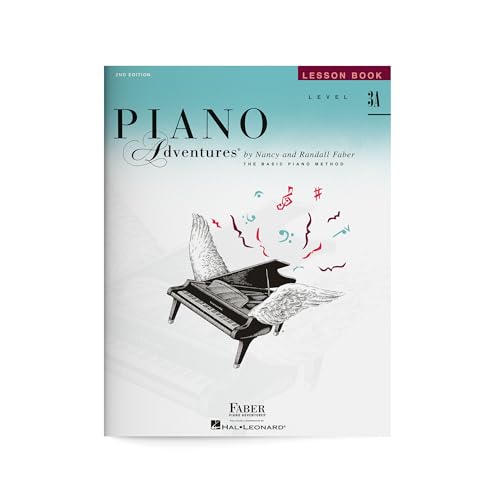
The Piano Adventures Level 3A lesson book by Faber Piano Adventures integrates methodical scales practice with engaging repertoire. This edition introduces 3/8 and 6/8 time signatures, the triplet, and the chromatic scale, along with one-octave arpeggios. The book emphasizes reading fluency, rhythm accuracy, and expressive playing through a varied set of pieces such as Amazing Grace and Eine Kleine Nachtmusik adaptations. It is designed for intermediate players, including kids and teens, to bridge technical drills with musical expression. The structured lessons aim to reinforce scale patterns, arpeggios, and the practical use of scales within musical contexts.
Walter MacFarren Scale and Arpeggio Manual

The Walter MacFarren Scale and Arpeggio Manual, part of Schirmer’s Library of Musical Classics, presents a focused study on scales and arpeggios as core pianistic techniques. With 112 pages, the manual offers progressively challenging material that reinforces finger patterns, hand coordination, and tonal balance across major and minor keys. It serves as a thorough reference for students aiming to solidify foundational technique while expanding their repertoire with scale-based passages. The book’s methodical approach supports structured practice and long-term skill development for both classroom and independent study.
Buying Guide: Key Purchase Considerations
- Skill level alignment: Choose titles that match current proficiency (beginner, late beginner, or intermediate) to ensure appropriate challenge without frustration.
- Scope of scales and arpeggios: Look for books that cover major/minor scales, arpeggios, and practical finger exercises to build a well-rounded technique.
- Progression and pacing: Structured progression, clear difficulty ramps, and included repertoire help sustain motivation and measurable improvement.
- Supplementary materials: Reputable editions often include explanations, fingerings, and optional audio tracks or teacher guides to reinforce learning.
- Repertoire integration: Books that incorporate familiar tunes or pedagogical pieces help connect technical work with musical expression.
- Book length and layout: Consider page count and exercise density to fit short daily practice sessions and avoid fatigue.
- Editorial quality: Clear notation, reliable fingering suggestions, and consistent print quality support efficient practice sessions.
- Compatibility with method books: If you are following a broader method (e.g., Faber, Czerny), select scales-focused volumes that complement existing curricula.