Answering the question “which paper is best for note taking,” this guide highlights five top options that balance Cornell-style organization and traditional notepads. These papers are best suited for students, office professionals, and anyone who wants organized, legible notes with minimal bleed and easy binder compatibility. Each pick emphasizes clear cue and summary sections, good writing surfaces, and reliable binding compatibility. Use this list to compare layout, size, and durability at a glance, then choose the one that fits your routine, binder system, and writing preferences.
Overview at a glance: the following table summarizes key details to help quick comparisons. Printing note: product names link to their Amazon pages for easy reference.
| Product | ||||
|---|---|---|---|---|
| OKWUYiK 200 Sheet Colored Cornell Notes | Cornell Loose Leaf | 200 sheets | 3-ring binder | |
| Oxford FocusNotes 50 Sheets | Guided Note Pad | 50 sheets | Notebooks | |
| Five Star Loose Leaf Paper + Study App | College ruled filler | 80 sheets | 3-hole binder compatible | |
| Ctosree 400 Sheets Cornell Notes | Cornell Loose Leaf | 400 sheets | 3-hole binder | |
| gisgfim 100 Sheets Cornell Notes | Cornell Loose Leaf | 100 sheets | 3-hole binder |
OKWUYiK 200 Sheet Colored Cornell Notes Loose Leaf Paper

Best for color-coded organization and binder users who want a complete Cornell system on the go. Each inner page uses a Cornell layout with a cue column and summary area, with color highlights to visually separate sections. The 8.5 x 11 inch US Letter size fits standard binders and notebooks, making it a practical refill for daily use in school, office, or home study. The paper is pre-punched with three holes for easy insertion into three-ring binders.
Who it’s for: students who benefit from color cues, professionals who want quick visual references, and anyone maintaining organized research notes. Limitations: limited page count per pack if you write heavily every day; best when paired with a compatible binder system.
Oxford FocusNotes Writing Pad

Guided note-taking that centers on three sections: notes, cues, and a summary. This layout supports better focus, comprehension, and long-term retention, making it ideal for lectures and training sessions. The generous 8.5 x 11 inch pages provide ample writing space for diagrams and explanations, while perforated pages enable easy removal from the pad when needed. The design is simple, predictable, and easy to adopt for consistent study habits.
Who it’s for: students who prefer a steady, guided approach to note-taking and professionals who need clear after-action summaries. Caution: not a binder format; suitable when you’re desk-based or using a separate folder for loose sheets.
Five Star Loose Leaf Paper + Study App
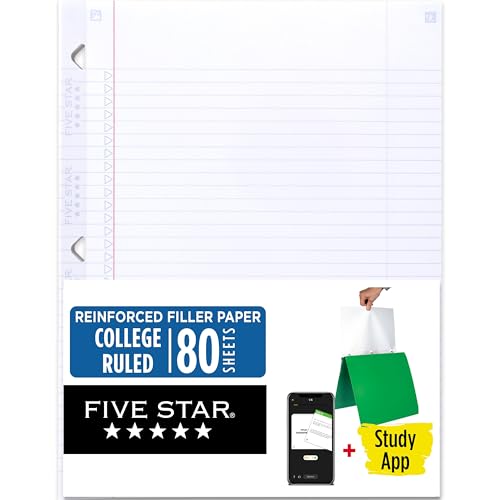
This college-ruled filler paper provides reinforced durability and a larger sheet size. It’s designed to withstand heavy note-taking and use throughout the school year, with a practical 8.5 x 11 inch format that fits standard binders. The combination of durability and ample writing space makes it suitable for long, continuous notes and worksheets. The included Study App supports organization beyond paper, if you use digital backups.
Who it’s for: students who need thicker, long-lasting pages and binder compatibility, or office professionals who jot frequent notes. Limitation: no built-in Cornell cue-and-summary sections, so users may need to create their own structure.
Ctosree 400 Sheets Cornell Notes Loose Leaf Paper

Best for bulk note-taking and sharing, this 400-sheet pack uses the classic Cornell layout with a three-hole punch for easy binder insertion. The paper is designed for smooth writing with a two-sided format that supports cue, notes, and summary sections. It’s an economical choice for classrooms, training sessions, or team projects where many pages are needed fast.
Who it’s for: classrooms and offices that require high-volume note-taking. Caution: when carrying many sheets, consider a sturdy binder or folder to prevent paper misalignment.
gisgfim 100 Sheets Cornell Notes

Compact but complete, this 100-sheet set uses the classic Cornell format with a 3-hole punch that fits standard binders. The 80gsm paper offers a smooth writing surface with a cue column, notes area, and summary section. This option is ideal for daily note-taking in school or office environments where a lighter, more portable pack is preferred.
Who it’s for: students and professionals who want reliable Cornell notes in a smaller batch. Limitation: smaller quantity may require more frequent reorders for heavy use.
Ctosree 200 Sheets Cornell Notes Loose Leaf Paper
This 200-sheet pack balances quantity and portability, featuring a Cornell layout with a 3-hole punch for easy binder insertion. It suits daily note-taking at school or in the office, offering enough pages to cover multiple topics without bulk. The paper is designed for smooth writing and organized content with a cue column, notes area, and a summary section.
Who it’s for: students who want a reliable, mid-size refill and professionals who prefer a consistent Cornell structure. Caution: ensure your binder has three-ring holes aligned with the pages to avoid misfit.
Buying Guide: How To Choose The Right Note-Taking Paper
What format do you prefer for notes? Cornell-style pages with a cue column and summary section are great for systematic study and quick reviews. If you often transfer notes into a binder, ensure a 3-hole punch and standard letter size (8.5 x 11 inches). For portable or on-the-go needs, smaller pads or perforated sheets can be more convenient.
Binder compatibility and durability matter. Heavier-weight paper (70–80gsm) reduces bleed and ghosting, especially with fountain or gel inks. Check if the pages are pre-punched for three-ring binders or designed as loose-leaf fillers. If you value color-coding, look for papers with color accents that visually separate notes, cues, and summaries.
Sheet count and cost efficiency are practical considerations. Bulk packs (like 400 sheets) are economical for classrooms or teams, while smaller packs suit personal use. Consider whether you need perforated sheets for easy sharing or tearing without disrupting other pages.
Rely on your typical use. If you review notes frequently, a guided layout (cue and summary) can improve retention. If you take quick notes during meetings, a simple college-ruled or white-page pad may be faster to use. Balance writing surface size with page durability to avoid frequent replacements.
FAQ
- What is Cornell note-taking best for? It is best for structured reviews, with a cue column, main notes, and a summary to aid recall and exam prep.
- Are three-hole punched papers necessary? They’re important if you plan to organize notes in a standard 3-ring binder, enabling easy rearrangement.
- Is heavier paper better for ink bleed? Yes, 70–80gsm reduces bleed and ghosting, especially with gel or fountain ink.
- Can I mix different brands in one binder? Yes, as long as the page size and hole alignment match your binder’s configuration.
- When should I choose a pad over loose-leaf paper? Pads are portable and convenient for on-the-go notes, while loose-leaf offers tidier organization in binders.
- Do color accents help with learning? Color-coding can visually separate sections, potentially improving quick navigation and review.