Whether you’re gifting a curious child or starting a personal hobby, these beginner-friendly origami books and kits offer clear instructions, kid-friendly projects, and plenty of beautiful papers. The following five picks provide gradual skill-building—from basic folds to more intricate models—so learners can progress confidently. The list includes practical kits with guided books, classic Dover and Tuttle titles, and projects that cover cranes, boxes, flowers, and more. Use this guide to choose a set that matches the recipient’s age, interests, and patience level.
| Product | Brand | Format |
|---|---|---|
| hapray Origami Kit for Kids | hapray | Kids kit with 152 papers and a 96-page instruction book |
| Easy Origami (Dover Origami Papercraft) | Dover Publications | Book with 30 simple projects |
| Complete Origami Kit: 2 Books, 98 Papers, 30 Projects | Tuttle Publishing | Kit with two how-to books and 96 sheets |
| Amazing Origami Kit: 144 Papers & 17 Projects | Tuttle Publishing | Kit with foldable papers and project book |
| Dover Amazing Origami Boxes | Dover Publications | Book with 20 origami box designs |
hapray Origami Kit for Kids: Beginner Friendly

The hapray kit targets beginners with a structured approach and kid-friendly materials. It includes 152 papers in 72 patterns, plus an instruction book that runs through basic folds and simple projects. The papers are sized at 14 x 14 cm, a versatile dimension for a wide range of models. The 96-page tutorial and 10 pages on basic folding techniques give new folders a reliable road map toward more elaborate pieces, making it a strong starting point for children learning origami.
Easy Origami (Dover Origami Papercraft)
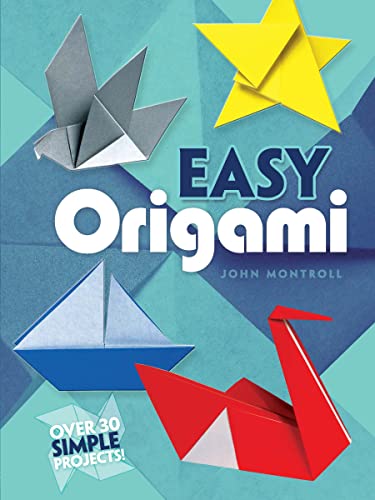
Dover’s Easy Origami presents a concise collection of more than 30 straightforward projects, ideal for beginners who want quick wins and steady progress. While not a kit, it emphasizes simplicity, clean diagrams, and repeatable folds that build confidence. This book is well-suited for learners who prefer a traditional, self-paced approach without extra materials beyond paper. It serves as a useful companion to any starter set, offering a broad range of beginner-friendly models.
Complete Origami Kit: 2 Books, 98 Papers, 30 Projects

The Complete Origami Kit from Tuttle Publishing bundles two instructional books with 98 sheets and 30 projects. It’s designed for beginners and gradually extends to more challenging models, including traditional figures like cranes and more complex items such as ships or animals. The dual-book format offers different teaching styles and step-by-step guidance, making it a versatile option for families or classrooms aiming to cultivate longer-term origami skills.
Amazing Origami Kit: 144 Papers & 17 Projects

This kit pairs traditional Japanese folding papers with a project set, offering 144 papers and 17 projects. Though listed as a used book in good condition, the combination of ample papers and a curated project list makes it a practical option for learners who want more variety in models without investing in multiple separate bundles. It supports progressive learning while keeping materials accessible.
Dover Amazing Origami Boxes

The Dover Amazing Origami Boxes book focuses on 20 original origami box designs, introducing a practical niche within origami. Box-building teaches precise folding and clean edges, translating well for learners who enjoy functional, decorative crafts. While the concept is specialized, the projects build spatial reasoning and patience, and the designs can be adapted for gifts or desk organization projects.
Buying Guide
- Skill progression: For absolute beginners, kits with guided books and many practice papers help build confidence. Choose sets that start with simple folds and gradually introduce more complex models.
- Paper quality and size: Look for uniform, sturdy origami paper that holds creases well. Common starter sizes are around 14 x 14 cm, but smaller sizes can be suitable for tiny models or travel practice.
- Included instructions: Clear, illustrated step-by-step diagrams or photographs are essential. Some learners benefit from bilingual or color-coded instructions to reinforce steps.
- Project variety: Seek a mix of traditional figures (like cranes) and practical items (like boxes) to sustain interest and demonstrate real-world uses of origami skills.
- Age appropriateness: For children, kid-friendly kits with large papers and simple patterns are ideal. For adults or older beginners, fuller books with a broader project range work well.
- Material bundles: Kits that include both papers and instruction books reduce the need for extra purchases and help maintain a consistent practice routine.
- Durability of practice: Reusable practice sheets or laminated tutorials can extend the life of learning materials, especially for beginners who practice repeatedly.
- Learning style: Some learners benefit from a book-heavy approach, while others prefer a kit with hands-on materials and guided folds. If possible, choose a set that offers both options.
Overall, the selections above provide a balanced mix of guided instruction, accessible projects, and ample paper supplies to support steady progress from simple to more complex origami designs. When selecting a starter set, consider the recipient’s age, interest level, and preferred learning method to maximize engagement and skill development.