Finding the right notebook can boost study habits, organization, and productivity for college life. This guide highlights five top notebooks suited to university workloads, with options for different preferences—from durable hardcovers to flexible composition books and bulk packs for group projects. Each pick targets students, writers, and planners who want reliable pages, legible lines, and easy portability.
Summary table of selected products
| Product | Best For | Format | Notes |
|---|---|---|---|
| Gwybkq A5 Lined Notebooks Bulk Journals | Budget-friendly bulk sets for students sharing supplies | 60 pages, college ruled, A5 | 16-color covers; portable |
| PAPERAGE Lined Journal Notebook, Hardcover | Premium feel for daily journaling and note-taking | 160 pages, lay-flat hardcover | Thicker paper, acid-free, durable |
| Oxford Spiral Notebooks, 2 Pack | Simple, reliable one-subject needs | 70 sheets, college ruled | Assorted colors, perforated pages |
| Five Star Spiral Notebook Plus Study App | Students who want digital integration | 100 sheets, 8.5″ x 11″ | Scan, organize, cloud sync |
| KOKUYO Composition Notebooks, 3 Pack | Simple, portable for quick notes | 80 sheets each, 3 pack | Lay-flat, pastel colors |
Gwybkq A5 Lined Notebooks Bulk Journals

Best for budget-minded students who need multiple notebooks for different courses or group projects. Each pack includes 16 A5 notebooks with 60 pages per book, college ruled at 7mm spacing, and eight bright color covers for quick category coding. The compact size fits backpacks and side pockets, making them great for commutes, libraries, and study lounges. Consider this option if you juggle many classes and want consistent, lightweight writing surfaces. A potential limitation is that 60 pages may be light for longer notes per session; plan to alternate or combine with a binder for deep coursework.
PAPERAGE Lined Journal Notebook, Hardcover

Best for students who prioritize premium paper quality and durability. This 5.6″ x 8″ hardcover journal offers 160 college-ruled pages, a thick ivory paper stock, an inner expandable pocket, labels, ribbon bookmark, and elastic closure. Its lay-flat design suits long note sessions, and the water-resistant vegan leather cover adds everyday resilience. Choose this if you value smooth writing with minimal ghosting, especially for pen-heavy notes. A caveat is the smaller size compared to standard notebooks, which might feel cramped for extensive writing sessions.
Oxford Spiral Notebooks, 2 Pack
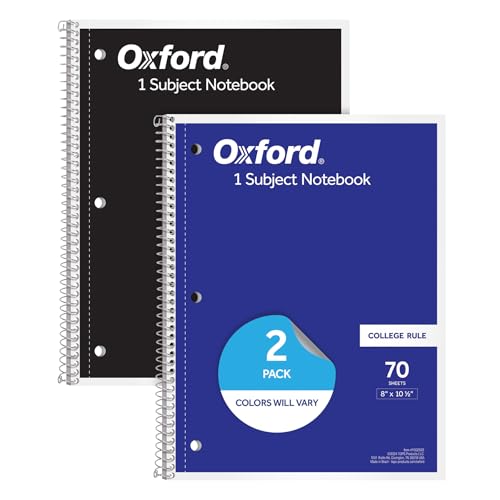
Best for students needing a dependable one-subject notebook with tear-out convenience. This 2-pack provides 70 sheets per subject in college-ruled format. The micro-perforated pages stay cleanly removable, which helps with organized submissions and easier sharing of notes. It’s a practical pick for lecture notes, lab write-ups, or quick drafts. The limitation is that a single subject per notebook may require multiple units for dense courses, increasing total weight in a heavy semester bag.
Five Star Spiral Notebook Plus Study App
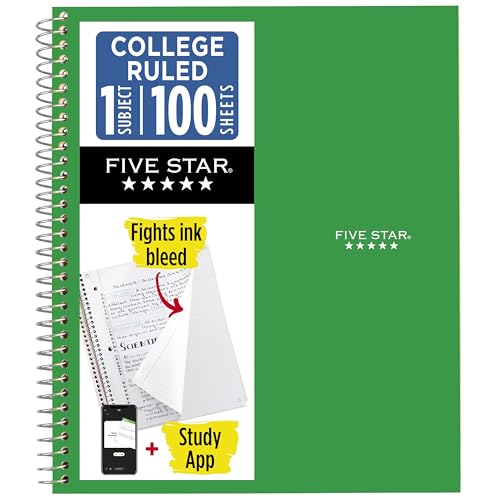
Best for students who want a bridge between physical notes and digital organization. This 1-subject notebook includes 100 double-sided, college-ruled sheets with perforation for easy removal. It integrates with the Five Star Study App, enabling instant flashcards and Google Drive synchronization. The advantage is streamlined study workflows and cloud access. A potential drawback is reliance on the app for full benefits; if you prefer offline-only notes, you may not use all features.
KOKUYO Composition Notebooks, 3 Pack

Best for students who want reliable, do-it-all notebooks with flexible writing space. The 3-pack features 9.75″ x 7.5″ composition notebooks with 80 double-sided sheets per book and a lay-flat binding. The pastel colors and dotted line guidance can aid precise notes, math work, or diagrams. It’s a solid choice for on-the-go study sessions and quick journal entries. A caution is that these are traditional composition notebooks with standard pages; if you require advanced features like bleed resistance for markers, look at other options in this guide.
Buying Guide: Notebooks That Match University Demands
- What size should I choose? Consider how much writing you do per class. A5 (roughly 5.5 x 8.3 inches) is highly portable, while 8.5 x 11 inches provides more writing space for long lectures. For field notes or lab worksheets, mid-size or larger notebooks often work best.
- Hardcover vs. paperback: Hardcover journals offer durability and a premium feel, good for daily use and long-term projects. Paperback and composition books are lightweight and budget-friendly, ideal for quick notes and category-specific organization.
- Paper quality and ruling: College-ruled lines balance neatness and space. Thicker, acid-free paper reduces bleed-through when using gel pens or markers. For artists or diagram-heavy courses, look for higher page density or dotted/grid options.
- Durability features: Lay-flat bindings, perforated pages, and reinforced spines help during long writing sessions and easy sharing of notes with peers.
- Digital integration: Some notebooks offer companion apps for scanning, flashcards, and cloud syncing. If you study across devices, this can save time and reinforce review sessions.
- Bulk and color coding: If you manage multiple courses or group projects, color-coded covers or bulk packs can simplify organization and reduce the time spent searching for the right notebook.
Frequently Asked Questions
- What size is best for commuting students? A5 notebooks strike a balance between portability and writing space for quick notes on the go.
- Do notebooks with thicker paper reduce ink bleed? Yes, thicker, 80–160 gsm-like paper or acid-free stock tends to resist ghosting and bleed-through from pens and markers.
- Is a study app worth it for a notebook? If you value quick digitization, flashcards, and cloud access, a notebook with app support can enhance study routines.
- Should I buy a bulk pack for a new semester? Bulk packs are cost-efficient for students sharing supplies or stocking department notebooks, but ensure the colors or formats match your course needs.
- Are composition notebooks suitable for class notes? Composition books are good for routine note-taking, journaling, and portable writing; they often offer plain or ruled pages with strong bindings.
- What is a lay-flat notebook? A lay-flat binding allows the notebook to stay open flat on a desk or desk-lab work, improving comfort for both hands and reducing page fatigue.