Architects rely on precise grids, clean lines, and reliable paper to capture concepts from rough sketches to final notes. The top five notebooks below are selected for grid- or graph-focused layouts, sturdy covers, and writing surfaces that resist bleed-through. They suit students, interns, and professionals who frequently draft layouts, diagrams, and design ideas. The summary table highlights what each product emphasizes to help you compare quickly.
| Product | Best For | Key Feature |
|---|---|---|
| RETTACY Graph Grid Paper Notebook | Daily sketches and engineering notes | 100 GSM paper, 180° lay-flat, leather hardcover |
| PAPERAGE Lined Journal Notebook | Formal journaling and planning | 100 GSM paper, lay-flat design, durable vegan leather |
| Maruman Mnemosyne Grid Notebook | Precise graphing and diagrams | 80 GSM, micro-perforated, lay-flat wire binding |
| Zaviko Graph Paper Pad | Technical sketches and curves | 4×4 grid, easy-tear perforations |
| le vent Grid Paper Large Spiral Notebook | Extended notes and calculations | 100 GSM, lay-flat, 8.5 x 11 |
RETTACY Graph Grid Paper Notebook

The RETTACY Graph Grid Paper Notebook uses a compact A5 size (5.7” x 8.3”) with 192 pages, designed for daily drafting and design notes. Its 2 ribbon bookmarks and inner pocket help organize reference materials and worksheets. The grid format (5 squares per inch) supports precision drawing and layout planning. The 100 GSM paper minimizes bleed-through, making it suitable for multiple pen types. The leather hardcover adds a premium feel while protecting entries. This notebook is best for students and entry-level professionals who want a portable, sturdy option for on-site sketching or meeting notes. A potential limitation is that the handwriting area is compact; larger diagrams may require wider paper rotation.
PAPERAGE Lined Journal Notebook

The PAPERAGE hardcover journal features 160 pages of 100 GSM, light ivory, acid-free paper with a durable vegan leather cover. Its lay-flat binding makes it easier to write across pages, which is ideal for drafting architectural notes, client ideas, and project planning. The journal includes an inner expandable pocket, sticker labels, ribbon bookmark, and elastic closure, adding practical organization for busy professionals or students. Choose this if you want a classic, professional-looking notebook with reliable paper quality; avoid this if you frequently need ultra-wide pages for large-scale sketches.
Maruman Mnemosyne Grid Notebook
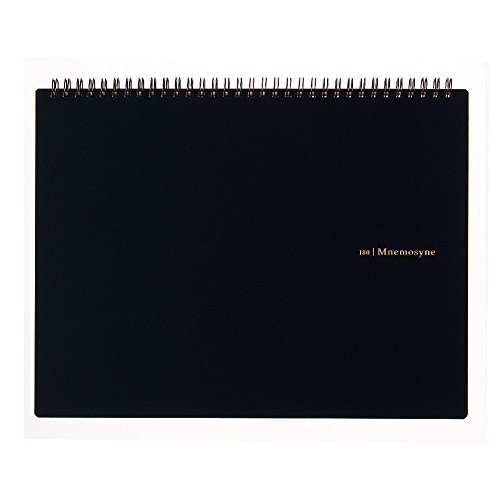
Maruman’s Mnemosyne Grid Notebook emphasizes premium Japanese paper and practical usability. It uses 80 g/m² acid-free pages with grid lines and micro-perforated pages for easy removal. The durable poly cover resists dirt and water, making this a good choice for on-the-go drawing and note-taking in studios or fieldwork. Best for architects who value a smooth writing surface and convenient page removal, with a caveat that the lighter paper weight may show ink bleed with certain fountain pen inks.
Zaviko Graph Paper Pad

Zaviko’s Graph Paper Pad provides 8.5 x 11 graphs with 4×4 grid lines on 70 GSM paper. It uses easy-tear perforations and a top-glue binding for quick page removal, suitable for drafting, note-taking, and professional sketches. The regular graph size helps with precise geometry and layout planning, but the lighter paper weight means it is best used with pen types that don’t bleed, or for short-term projects where frequent page removal is needed.
le vent Grid Paper Large Spiral Notebook

The le vent notebook comes in a large 8.5 x 11 size with 100 GSM thick paper across 200 pages in a dual-spiral binding. The quad-ruled grid supports engineering calculations, math problems, and detailed sketches. Lay-flat binding ensures comfortable writing across spreads, making it well-suited for architectural coursework, technical notes, and design development. A potential drawback is its larger footprint, which may be less portable for fieldwork or brief meetings.
Buying Guide
What grid layout best fits architectural work?
Choose grids that match your drawing needs: 4×4 or 5×5 grids support precise layout and sectioning. For quick sketching and brainstorming, a dot or lighter grid can be less distracting.
How important is paper weight and bleed resistance?
100 GSM or higher is preferred for ink-heavy writing, markers, and fountain pens. Higher weight reduces ghosting and bleed-through, which is critical when pages hold overlapping drafts or notes.
What cover and binding matter for field work?
A leather or synthetic hardcover with a durable binding protects entries during transit. Lay-flat or spiral bindings improve writing comfort when notes span two pages, which is common in project planning and diagramming.
Does portability matter for an architect on the go?
Compact sizes like A5 are easier to carry between sites, classrooms, and meetings. Larger sizes are beneficial for extended on-site work or studio use where bigger diagrams are needed.
What extras add value?
Elastic closure, ribbon bookmarks, an inner pocket, and perforated pages for easy sharing or planning can improve organization and workflow in busy environments.
Which notebook should you choose for a specific scenario?
- Best for on-the-go fieldwork: RETTACY Graph Grid Paper Notebook with leather cover and lay-flat design.
- Best for professional planning: PAPERAGE Lined Journal Notebook with durable cover and lay-flat pages.
- Best for precise graphing: Maruman Mnemosyne Grid Notebook with smooth paper and perforated pages.
- Best for quick, technical sketches: Zaviko Graph Paper Pad with easy-tear perforations.
- Best for extended notes and calculations: le vent Grid Paper Large Spiral Notebook with lay-flat binding.
FAQ
- What paper weight is ideal for architect sketches? – 90–100 GSM or higher to reduce ghosting across most pen types.
- Are grid notebooks better than plain notebooks for architecture? – Yes, grids help align lines, scale, and proportions when drafting.
- Is lay-flat binding important for drafting? – Yes, it provides a flat writing surface across two pages, improving accuracy.
- Should you buy a hardcover or softcover for field use? – Hardcovers offer durability; softcovers are lighter and more portable.
- When is perforated paper useful? – Perforations assist in sharing or handing off individual pages without damaging the rest.
- Do these notebooks work with fountain pens? – Most 100 GSM papers perform well, but check ink type to avoid bleed-through with very wet inks.