Finding the right Montessori-inspired books for preschoolers can support early literacy, fine motor skills, and independent play. The following selections focus on preassembled, interactive busy books that require minimal setup and offer hands-on activities ideal for 3-year-olds. These options emphasize color recognition, letters, numbers, shapes, and practical life skills in durable, travel-friendly formats.
| Product | Age Range | Key Benefit |
|---|---|---|
| Montessori Preschool Busy Book for Toddlers | 3-5 years | Preassembled, all-in-one learning themes |
| Preschool Learning Activities Tracing Books | 3-5 years | Letter tracing, shapes, numbers, dry-erase practice |
| NASHRIO Montessori Busy Book | 3-5 years | 12 themes, 12 drawing/writing pages |
| QUOKKA Montessori Busy Book | 3-5 years | Nearly 200 elements, 15 themes |
| Hadley Designs My First Busy Book | 3-5 years | 14 pages, 174 pieces, USA-made |
Montessori Preschool Busy Book for Toddlers

This fully preassembled busy book packs 14 educational themes into a single portable set, reducing setup time for caregivers and maximizing independent exploration. The activities promote memory, problem-solving, and hand-eye coordination through matching and recognition games. Designed for children aged 3 to 5, it supports early learning milestones while offering sensory-rich experiences that align with Montessori principles. Its travel-friendly format makes it a practical gift for holidays or birthdays and a useful addition to quiet-time routines.
Preschool Learning Activities Tracing Books
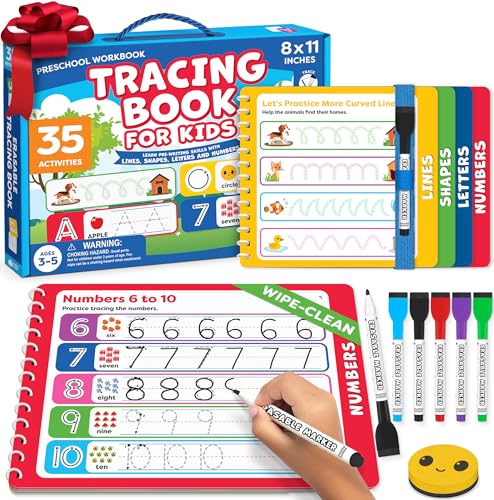
These tracing books offer a structured, device-free approach to early writing skills. The set includes six colorful markers and a dry-erase eraser, enabling repeated practice in a neat, organized package. Activities emphasize letter tracing, shapes, and numbers to build foundational handwriting and fine motor control. The durable design and included storage box support independent use, making it a solid option for home or homeschool settings and a thoughtful gift for 3-year-olds showing early interest in writing.
NASHRIO Montessori 24 Themes Busy Book

Edited for improved accuracy and reliability, this busy book offers 12 themes plus drawing and writing pages to build a broad educational foundation. Activities cover alphabet, numbers, colors, and shapes with engaging matching games and recognition tasks. The screen-free format supports concentration, memory, and problem-solving while encouraging creative expression through drawing and writing pages. Designed for travel and daily use, it serves as a versatile Montessori-inspired tool for toddlers to begin self-guided learning.
QUOKKA Montessori Busy Book for Toddlers 1-3

Designed as a comprehensive preschool workbook, this busy book bundles nearly 200 pre-attached elements and 15 essential learning themes. It covers basic literacy and numeracy, weather, days of the week, colors, and more, with a durable build intended for repeated play. The format is tailored for independent exploration while sustaining interest through varied pages and easily understood instructions. It is suitable for home, daycare, or homeschooling contexts and aims to cultivate cognitive development through engaging, hands-on tasks.
Huijing Montessori Preschool Learning Activities Busy Book
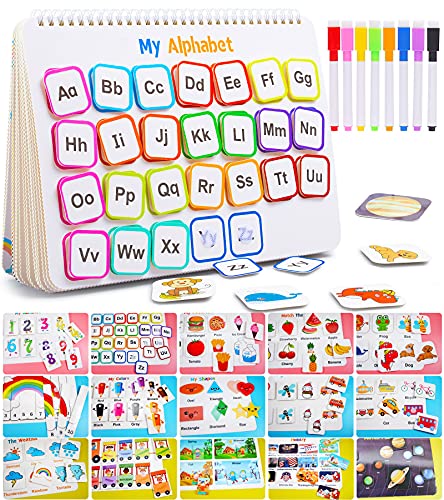
Huijing presents a multi-theme busy book with 15 topics and 14 drawing/writing pages, supported by eight colored pens. This resource encourages children to learn counting, alphabet recognition, and color identification while developing fine motor skills. The diverse activities include sensory play and problem-solving tasks, designed to foster verbal expression, memory, and logical thinking. The kit is positioned as suitable for toddlers aged over 3, with an emphasis on interactive, screen-free learning in a home or classroom setting.
Hadley Designs My First Busy Book

Hadley Designs offers a USA-made busy book with 14 pages and 174 interactive pieces designed specifically to hold a 3- to 5-year-old’s attention. The kit emphasizes independent learning, confidence, and school readiness through a structured, tactile curriculum. The number of elements and page variety supports a range of Montessori-inspired activities, from fine motor tasks to matching and basic problem solving. It is a practical option for parents seeking a comprehensive, durable travel companion that can support ongoing skill development at home.
Buying Guide: Key Considerations for Choosing Montessori Busy Books
When selecting Montessori-inspired busy books for a 3-year-old, consider the following perspectives to ensure the best fit for the child’s needs and family routines.
- Age appropriateness: Look for books clearly labeled for ages 3-5 to match a developing child’s cognitive and motor abilities. Avoid overly advanced pages that may cause frustration or disengagement.
- Durability and safety: Check that materials are sturdy, with child-safe fabrics and components. A well-made busy book resists tearing and can withstand daily handling during travel and at home.
- Set-up and portability: Preassembled options save time and enable immediate use. Compact sizes with carrying handles are ideal for car trips, doctor visits, and quiet-time corners.
- Multisensory engagement: Favor activities that combine visual, tactile, and kinesthetic learning. Elements such as zippers, buttons, and Velcro can strengthen fine motor skills and hand-eye coordination.
- Educational breadth: Ensure a mix of literacy, numeracy, shapes, and world concepts. A well-rounded book supports phonemic awareness, basic math, and cognitive flexibility.
- Organization and storage: Look for pages and components that stay attached or easily reattach, plus a practical storage method so the child can revisit activities without frustration.
- Care and maintenance: Dry-erase pages and easily washable surfaces extend lifespan and allow repeated practice, especially for handwriting goals.
- Family involvement: Consider how much caregiver participation is expected. Some busy books are designed for shared activity, while others encourage independent exploration.
- Cost versus value: Compare the number of themes, pages, and interactive pieces across options. A higher upfront cost may be justified by durability and breadth of activities.
- Educational alignment: If you prefer Montessori principles, prioritize materials that emphasize child-led exploration, practical life tasks, and self-directed learning rather than screen-based activities.
Each of the featured products aims to deliver a screen-free, hands-on learning experience suitable for 3-year-olds. The selections balance immediate usability with long-term skill development, offering varied themes and approaches to keep children engaged while supporting early literacy, numeracy, and fine motor growth.