Finding the right mental health journal can support daily reflection, mood tracking, and stress management. This guide highlights five highly-rated options designed for American readers who want practical prompts, structured entries, and lasting habits. Each pick is evaluated on usability, guided content, and how well it supports anxiety relief, mood awareness, and personal growth. Use this overview to compare formats, prompts, and tracking features that align with your self-care goals.
Summary of chosen products:
| Product | Key Focus | Tracking & Prompts | Format |
|---|---|---|---|
| Mental Health Mood Journal – Your Daily Self-Care Companion | Daily mood and anxiety tracking | Prompts for gratitude, sleep, stress, self-care | Spiral-bound journal |
| LIFTINSPIRE CO. Finding Balance Mental Health Journal | 6 months of guided entries | Daily, weekly, and monthly habit/mood tracking | Beige spiral journal |
| Worry for Nothing: Guided Anxiety Journal | Anxiety relief through CBT-informed prompts | Evidence-based exercises to reframe thoughts | Sleek, discreet format |
| Mental Health Journal for Women and Men | 91 days of mood and habit tracking | Daily logs, reflection prompts | Pink guided journal |
| Inside Then Out Better Every Day Journal | 365 pre-dated prompts for self-love and growth | Pre-dated prompts across themes | Self-care oriented daily journal |
Product Highlights
Below are five focused product sections. Each entry includes a clickable Amazon link, a visual reference, and a concise summary of features that support mental wellness goals. The sections are designed to help you compare formats, prompts, and tracking capabilities at a glance.
Mental Health Mood Journal – Daily Self-Ccare Companion
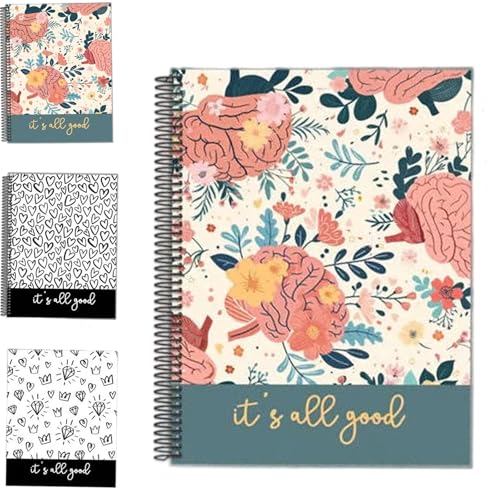
This all-in-one wellness journal combines gratitude tracking, mood monitoring, anxiety management, and daily planning. It includes prompts for sleep, energy, water intake, self-love moments, and stress patterns. The guided sections are designed to reduce blank-page anxiety and make daily reflection meaningful, even on challenging days. The 90-day structure supports building consistent mindfulness habits and recognizing emotional patterns over time.
LIFTINSPIRE CO. Finding Balance Mental Health Journal

Designed for a six-month journaling commitment, this guided notebook provides daily, weekly, and monthly entries to help users track emotions and identify patterns. It includes 26 structured prompts and a QR code for a free guided audio meditation. Habit and mood tracking are integrated to support consistent self-care routines and deeper self-understanding over time.
Worry for Nothing: Guided Anxiety Journal

This CBT-informed journal emphasizes mindfulness, trigger tracking, and evidence-based evaluation of automatic thoughts. It offers discreet design and professional backing, focusing on practical exercises to reframe worries, reduce stress, and empower readers to move toward more constructive thinking patterns without drawing unwanted attention.
Mental Health Journal For All: 91 Days of Mood & Habit Tracking

Geared toward both women and men, this 91-day journal combines daily logs with reflective prompts to deepen understanding of mood shifts and daily habits. It emphasizes the link between emotions and actions, offering practical space to document experiences, evaluate patterns, and plan positive changes with clarity and focus.
Inside Then Out Better Every Day Journal

This guided daily journal offers 365 pre-dated prompts focused on self-love, reflection, growth, gratitude, and mindfulness. Pre-dating makes it easy to start anytime, and the themed prompts encourage a steady routine of self-care, wellness, healing, and habit formation across a year.
Buying Guide
Choosing the right mental health journal depends on how you prefer to interact with prompts, how much structure you want, and your daily routine. Consider these angles to make a well-informed choice:
- Guided structure vs. flexible pages: If you appreciate a clear path with daily prompts, journals with structured layouts (90-day, 6-month, or 365 prompts) can reduce decision fatigue and support consistency. If you prefer open reflection, look for pages with space to write freely alongside prompts.
- Tracking scope: Look for journals that combine mood tracking, sleep, energy, water intake, and stress patterns with prompts. A broader data set helps identify correlations between daily habits and mood swings.
- Prompts and therapeutic approach: CBT-informed prompts help reframe thoughts, while mindfulness and gratitude prompts support calm and resilience. Decide which approach best matches your goals and comfort level.
- Duration and commitment: Shorter programs (30–90 days) can be effective for beginners, while 6-month or 12-month formats suit long-term habit formation. Consider whether you want a gradual introduction or a long-running practice.
- Discreet design: If you prefer privacy, select journals with a discreet exterior or a more neutral appearance. Some journals offer a simple aesthetic that won’t draw attention.
- Inclusion of extras: QR codes for guided meditations, pre-dated pages, or included prompts can add value. Check for extras that align with your preferred practice.
- Accessibility and language: Ensure the journal uses clear language and culturally relevant examples. This helps maintain engagement and reduces ambiguity in prompts.
- Format and portability: Spiral-bound or compact formats are easier to carry and use on the go. Consider whether you want a durable hardcover, a lightweight paperback, or a pocket size.
When selecting, align the journal’s structure with your mental health goals: daily mood awareness, anxiety management, or sustained mindfulness. A well-chosen journal becomes a reliable companion for tracking progress, recognizing patterns, and reinforcing self-care habits over time.