Finding the right early math resources helps youngsters develop number sense, fine motor skills, and confidence at a critical stage. This guide highlights five well-suited toddler math books and activities that combine tracing, counting, shapes, and interactive play. Each pick emphasizes hands-on learning, durability, and age-appropriate content, making them ideal for home use or preschool enrichment.
Summary of chosen products:
| Product | Brand | Key Benefit | Amazon Link |
|---|---|---|---|
| 123 Count With Me | Tiger Tales | Interactive tracing, flaps for discovery | View Product |
| LeapFrog Prep For Preschool Math | LeapFrog | Number exploration with touch pages and wipe-clean writing | View Product |
| School Zone Addition & Subtraction Workbook | School Zone | Structured practice on sums, place value, and strategies | View Product |
| Preschool Big Fun Workbook | Random House Books for Young Readers | Comprehensive preschool math, writing, shapes, and more | View Product |
| Preschool Learning Activities | Momo & Nashi | Tracing, shape recognition, and early writing with dry-erase reuse | View Product |
123 Count With Me: An Interactive Numbers Book

The Tiger Tales title blends counting with interactive elements to keep toddlers engaged. While described as used, the format emphasizes tracking numbers and tracing tracks, which supports early number sense and fine motor coordination. The flaps add a tactile component, inviting kids to reveal hidden numbers and practice one-to-one correspondence in a playful context. This book is suitable for short daily sessions or as a companion to larger math activities.
LeapFrog Prep for Preschool Math

LeapFrog’s interactive format draws toddlers into number exploration through three modes on 12 touch-sensitive pages. Activities cover counting, comparing, and shapes, while wipe-clean pages and an erasable marker support repeated practice. The narrative features Tad and Lily to maintain kid interest, and additional clues-based games encourage observation and early problem-solving. This option blends digital-like interaction with hands-on writing and tracing for a well-rounded approach.
School Zone Addition & Subtraction Workbook

This workbook introduces basic arithmetic concepts with a clear progression from simple sums to differences and place value. It provides structured activities across 64 pages, making it a practical choice for steady practice. The workbook format helps children focus on written math strategies, while the content is designed to suit first- to second-grade readiness, aligning with foundational preschool math goals and spelling out steps clearly for parents and teachers.
Preschool Big Fun Workbook

Designed for comprehensive preschool learning, this 256-page workbook covers math, writing practice, shapes, puzzles, and more. It’s a versatile resource that supports cognitive development through a broad set of activities, including early counting, number recognition, and basic writing skills. The wide range of topics makes it a useful supplement to daily routines and classroom-style learning for curious toddlers.
Preschool Learning Activities
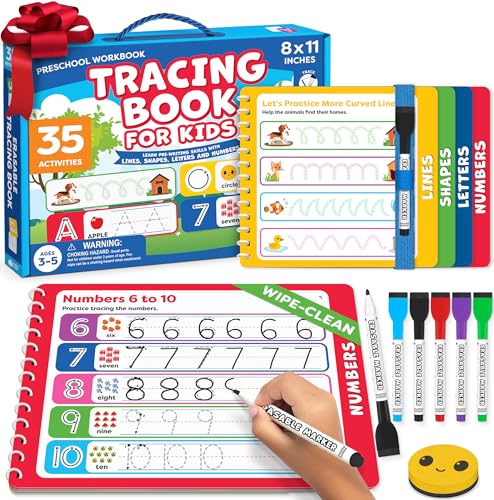
This tracing-focused book by Momo & Nashi emphasizes essential fine motor skills and early math readiness. The dry-erase design enables repeated practice without waste, and the included markers and accessories support independent play. Activities inside target letter tracing, shapes, lines, and numbers from 1 to 10, fostering steady progress toward writing and early math fluency in a homeschool or classroom setting.
Buying Guide: Key Purchase Considerations For Toddler Math Books
When selecting early math books for toddlers, consider how each option engages through a mix of tracing, counting, shapes, and basic operations. Durability matters for little hands, so look for sturdy pages and age-appropriate formats such as wipe-clean surfaces or flaps. Thematic framing, like story-based characters, can sustain attention, while interactive elements—whether digital-like touch pages or flaps—help maintain curiosity. Here are additional factors to weigh:
- Age-appropriateness: Ensure activities target 3- to 5-year-olds with clear progression from 1–10 counting to simple addition and number recognition.
- Learning style compatibility: Choose a blend of tracing, hands-on manipulation, and visual recognition to support different learning preferences.
- Durability and reuse: Dry-erase pages, laminated flaps, or sturdy cardboard pages extend the life of the book for repeated practice.
- Supplementary materials: Markers, erasers, or optional audio components can enhance engagement and reduce screen time.
- Teacher and caregiver guidance: Clear instructions and age-appropriate prompts help adults guide children through activities.
- Cross-curricular potential: Books that integrate writing, colors, shapes, and early literacy create a well-rounded learning experience.
- Availability and format variety: A mix of print-and-play options and wipe-clean formats can accommodate different settings, from home to daycare to classrooms.
Comparative Perspectives
In choosing between interactive and traditional formats, many caregivers value a balance. Interactive titles like LeapFrog Prep for Preschool Math emphasize engagement and repetition, potentially speeding early familiarity with numbers. Traditional workbook-style books, such as School Zone editions, provide structured practice and consistency, which can support cumulative skill-building. Flap-and-trace books encourage hands-on exploration, while dry-erase workbooks support repeated use. A multi-resource approach often yields broad exposure to counting, comparing, and basic arithmetic without overwhelming a toddler.
Practical use notes: integrate a 10–15 minute daily session mixing one tracing activity, one counting exercise, and a short shape or color task. Pair physical manipulation with verbal naming of numbers to reinforce memory. Rotate through the five options to keep sessions fresh and aligned with a child’s developing interests and attention span.