Finding the right math books for young learners can reinforce classroom lessons with engaging activities and steady practice. This guide highlights five beginner-friendly picks designed to strengthen addition, subtraction, basic multiplication, and core math fluency. Each item below is selected for age-appropriateness, clarity, and everyday usability at home or in homeschool settings. Use these resources to support daily practice, quick warm-ups, or targeted skill work, helping elementary students build confidence with numbers.
| Product | Brand | Key Features |
|---|---|---|
| School Zone Addition & Subtraction Workbook | School Zone | 64-page workbook; sums, differences, place value, regrouping; ages 6-8 |
| Everything You Need to Ace Math in One Big Fat Notebook | Workman | Comprehensive middle school study guide; broad math coverage |
| Channie’s One Page A Day Single Digit Addition & Subtraction Workbook | Channie’s | Daily single-digit practice; color-coded visuals; great for Pre-K to 1st grade |
| Carson Dellosa Common Core Math 4 Today 3rd Grade Workbook | Carson Dellosa Education | Common Core aligned; daily practice with weekly assessments |
Introduction (expanded): This article presents a carefully chosen set of beginner-friendly math books aimed at elementary students. Each book emphasizes foundational skills such as addition, subtraction, place value, and quick fluency while providing age-appropriate activities. The selections vary from targeted daily practice to broad study guides, ensuring options for homeschoolers, tutors, and teachers seeking supplemental materials. The focus is on practical, low-friction use—short sessions, clear instructions, and visual support to help young learners stay engaged and build mathematical confidence over time.
Addition & Subtraction Workbook For Early Elementary

The School Zone workbook offers structured activities focused on basic arithmetic operations and foundational concepts. With sixty-four pages, it provides practice in sums, differences, place value, and regrouping, designed for age-appropriate mastery. The format supports guided practice and independent work, making it suitable for daily routines or targeted review between lessons. Its varied activities can help young learners gain fluency while transitioning from concrete to abstract math concepts. The workbook’s breadth makes it a practical add-on for families and classrooms seeking steady progress in early math skills.
Big Fat Notebook Math Review

This resource aggregates essential math concepts in a study-guide format designed to simplify complex topics. While marketed toward middle school students, the content is accessible for late elementary readers who want a broad, consolidated reference. It covers topics across core domains—fractions, decimals, ratios, and algebraic thinking—in an approachable, example-rich style. Use this as a reference or as a companion for informal tutoring sessions, helping students see connections between different areas of math and build a cohesive understanding.
Single Digit Addition & Subtraction Practice

Channie’s workbook emphasizes single-digit arithmetic with visual cues to aid accuracy and alignment. The materials are designed for pre-kindergarten through first grade, making it ideal for early learners who benefit from color-coded blocks and guided layout. Each page presents problems with a consistent structure, supporting handwriting practice and quick feedback. This resource is well-suited for daily warm-ups, homeschooling routines, or targeted skill reinforcement, particularly for children who respond well to visual supports and structured repetition.
Common Core Math 4 Today For Third Grade
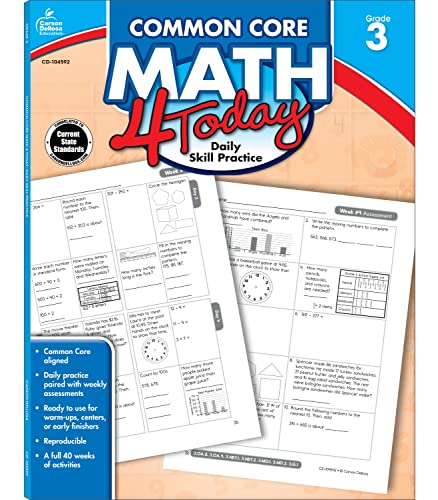
This workbook emphasizes daily practice with a focus on the Common Core standards. It pairs quick daily exercises with weekly assessments, helping students build routine and monitor progress over time. The ready-to-use format makes it simple for teachers to integrate into warm-ups or centers, while homeschoolers can structure consistent practice blocks. The concise daily tasks encourage steady participation and ongoing skill amplification in core math areas such as addition, subtraction, time, fractions, and basic multiplication concepts.
Buying Guide
Key purchase considerations for math books intended for elementary students include:
- Grade alignment and skill level: Ensure the material matches the child’s current grade and fills gaps without overwhelming them.
- Curriculum alignment: If your child follows a specific program (Common Core or state standards), choose resources that align with those guidelines.
- Practice variety: Look for a mix of quick daily exercises, longer activities, and hands-on or visual tasks to keep engagement high.
- Format and layout: Clear instructions, ample space for working, and colorful visuals support handwriting and attention.
- Progress tracking: Weekly or assessable components help monitor growth and adapt practice intensity.
- Durability and usability: For younger kids, sturdy pages and child-friendly binding reduce wear and tear during practice.
- Homeschool vs classroom use: Consider portability, ease of scheduling, and whether the book supports independent work or guided instruction.
- Supplementary resources: Some books pair with online content or answer guides—determine if additional materials are beneficial for your setting.
When selecting between daily practice workbooks and comprehensive study guides, weigh the child’s preference for visual aids against the need for broad topic coverage. For early elementary learners, a balance of targeted drills (for speed and accuracy) and conceptual explanation (for understanding why math works) often yields the best outcomes. Finally, consider a trial period with one or two items to assess engagement and observable improvements before expanding to additional resources.