Finding effective letter tracing tools for preschoolers sets a strong foundation for handwriting, fine motor skills, and early literacy. This guide highlights top-rated tracing aids from trusted brands, focusing on dry-erase, reusable, and sensory options that encourage independent practice, classroom success, and home-enrichment. Each pick supports step-by-step letter formation, motor control, and engaging play, helping children build confidence as they learn to write.
| Product | Brand | Key Benefit |
|---|---|---|
| Preschool Learning Activities – Tracing Books for Kids Ages 3-5 | Momo & Nashi | Dry-erase, all-in-one tracing with storage and markers |
| Letter Tracing Sensory Pad | hand2mind | Mess-free gel-filled pad for tactile letter formation |
| Alphabet Workbook: Get Ready! | School Zone | Structured tracing with early alphabet practice |
| Wooden Letters Practicing Board | hzsshb | Double-sided uppercase and lowercase tracing on wood |
| Double-Sided Magnetic Letter Board | GAMENOTE | Magnetic tracing with color-coded vowels/consonants |
Preschool Learning Activities Tracing Books
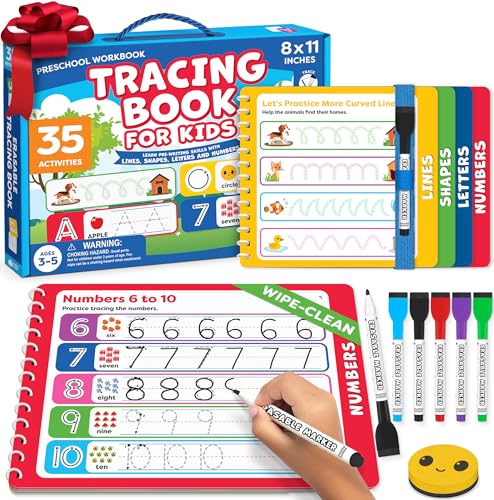
Designed for ages 3-5, this all-in-one tracing set emphasizes independent play and kindergarten readiness. The dry-erase format, included markers, eraser, and storage box support repeated practice without extra tools. Children trace letters, shapes, and numbers (1-10) to build stroke recognition, color sorting, memory, and coordination. The set is noted for promoting focus and device-free engagement, making it suitable for homeschool, daycares, or Montessori-inspired environments.
Letter Tracing Sensory Pad

This sensory pad uses thick, squishy gel inside a compact, travel-friendly design. The surface remains mess-free, allowing children to practice letter formation with a stylus that stays securely attached. The tactile feedback supports fine motor development and early writing confidence, making it a practical tool for classroom centers, travel, or quiet time activities.
Alphabet Workbook: Get Ready!

The School Zone Alphabet Workbook provides structured practice for early learners ages 3-5. With 64 pages focused on ABCs, tracing, and proper alphabetical order, this resource supports beginning readers and writers. While described as a used-book in good condition, it remains a reliable option for classroom use or home study, complementing other hands-on tracing activities in this guide.
Wooden Letters Practicing Board

This double-sided wooden tracing board features uppercase on one side and lowercase on the other. The groove and directional arrows help guide letter formation, while a natural wood construction provides durability for repeated use. It’s designed to support tracing practice, handwriting readiness, and fine motor development in toddlers and preschoolers.
Double-Sided Magnetic Letter Board

GAMENOTE’s magnetic board offers upper- and lower-case tracing in a single tool, with color-coded vowels (red) and consonants (blue) to support pronunciation and phonics. Students use a stylus to guide strokes and then erase with a finger. The attached magnetized beads provide sensory feedback, encouraging correct forms and seamless practice without pencil and paper clutter.
Asweets Montessori Alphabet Board

This double-sided wooden tracing board is crafted from natural bamboo wood and finished with an eco-friendly coating. It includes uppercase and lowercase letters with directional arrows for correct writing form. Its compact size makes it suitable for travel and classroom use, reinforcing hand-eye coordination, fine motor control, and early handwriting skills.
Buying Guide: Key Purchase Considerations For Preschools And Parents
- Material and durability: Wood-based boards tend to withstand frequent use, while dry-erase options offer quick reuse but require markers and erasers. Consider your learning environment and how often tracing will occur.
- Age appropriateness: Look for tools designed for ages 3-5 or 4-6, with clear directional cues and letters that align with early literacy goals.
- Learning emphasis: Decide whether you want focused letter formation, phonics support, or a broader set of tracing activities (numbers, shapes, etc.).
- Portability and storage: Compact pads and boards are ideal for travel or small desks; sets with included storage help keep materials organized.
- Mess management: Sensory pads with gel or magnetic boards minimize mess, making them suitable for classrooms, daycare centers, or car rides.
- Color and visual cues: Color-coded vowels and consonants or directional arrows assist memory and correct stroke order, especially for beginners.
- Maintenance and reuse: Dry-erase systems offer reusable practice; wooden boards require careful handling but often last longer and provide a tactile experience.
- Additional accessories: Some products include markers, styluses, erasers, or storage boxes—these features add value and reduce setup time for activities.
- Safety and non-toxicity: Check for non-toxic finishes and child-safe materials, particularly for younger children who may put objects in their mouths.
- Teacher and parent compatibility: Choose tools that integrate with classroom routines or home practice plans, ensuring consistent use and reinforcement.