Teaching toddlers to write sets a foundation for literacy and school readiness. This article highlights engaging tools and activity-focused products that support early handwriting skills, letter formation, and fine motor development. Each option below offers interactive features—from magnetic boards to reusable tracing pads and Montessori-inspired practice—to keep little hands busy and minds focused. Explore five top picks, then read a practical buying guide to choose the best fit for your child’s learning style and your household rhythm.
Summary of Selected Products
| Product | Brand |
|---|---|
| VTech Write and Learn Creative Center, White | VTech |
| hand2mind Letter Tracing Sensory Pad | hand2mind |
| hzsshb Wooden Letters Practicing Board | hzsshb |
| VTech Write and Learn Creative Center (Frustration Free Packaging) | VTech |
| KOABBIT Pencil Gripper Set | KOABBIT |
| QUOKKA Busy Book Handwriting Practice | QUOKKA |
VTech Write and Learn Creative Center
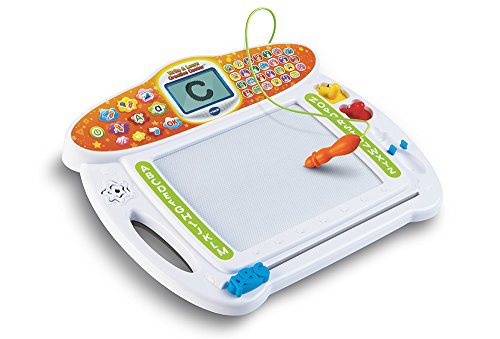
The VTech Write and Learn Creative Center combines a magnetic drawing surface with guided demonstrations that teach proper stroke order for uppercase and lowercase letters. Its interactive approach helps toddlers form letters through step-by-step tracing while providing opportunities to doodle and draw. An added feature, Doodler, lets caregivers personalize the center with a child’s name, reinforcing letter recognition and early writing habits. This product emphasizes a structured yet playful path to writing readiness, suitable for preschoolers who enjoy guided activities plus creative expression.
VTech Write and Learn Creative Center (Frustration Free Packaging)
This version mirrors the educational intent of the standard Creative Center with a frustration-free packaging design. It supports early literacy by offering engaging demonstrations for stroke order and letter formation, plus a customizable feature that guides children through tracing their own name. The compact, kid-friendly design makes it easy to integrate into daily routines or travel activities, helping toddlers transition from scribbling to deliberate letter formation.
hand2mind Letter Tracing Sensory Pad

The Letter Tracing Sensory Pad offers a tactile, mess-free way to practice alphabet formation. A thick, squishy gel surface provides a satisfying texture that keeps children engaged while they trace letter shapes. The pad is portable and paired with a securely attached stylus, making it a reliable choice for travel or classroom centers. This tool emphasizes fine motor development and muscle memory, which are crucial for later handwriting precision and confidence.
hzsshb Wooden Letters Practicing Board

The hzsshb Wooden Letters Practicing Board is a durable, double-sided tracing tool featuring uppercase letters on one side and lowercase on the other. The natural wood construction supports sensory-friendly learning while promoting visual memory and handwriting muscle development. Its guided arrows and smooth surface help children learn letter shapes and sequences, making it suitable for toddlers and early elementary-aged kids who are just starting to write.
KOABBIT Pencil Gripper Set

The KOABBIT Pencil Gripper Set focuses on handwriting posture and grip, offering tools designed to improve pencil control for beginners. These grips support both left- and right-handed writers and are versatile for pencils, crayons, and pens. By encouraging the correct grip early, this kit aims to reduce fatigue and improve precision as toddlers progress to more complex letters and words.
QUOKKA Busy Book Handwriting Practice

The QUOKKA Busy Book provides a multi-activity approach to handwriting. This set includes 24 tasks spread across two double-sided mats with four dry-erase markers, enabling repeated practice and immediate feedback. The Montessori-inspired layout emphasizes sequential learning, with activities focusing on numbers, shapes, letters, and colors. It is particularly useful for independent work, travel, and homeschool settings, helping toddlers build confidence in writing through structured, kid-friendly tasks.
Buying Guide: Key Considerations For Choosing Toddler Writing Tools
- Development stage alignment: Select tools that match your child’s current abilities—scribbling, tracing, or forming letters. Look for features that build fine motor skills without overwhelming the learner.
- Engagement and motivation: Toys that combine play with learning (interactive demonstrations, customizable names, colorful visuals) tend to sustain attention longer and encourage repeated practice.
- Portability and durability: For families on the go, compact and sturdy options (like travel pads or wooden boards) help maintain practice routines across environments.
- Mess management: Reusable, water-based or gel-based surfaces minimize mess, making cleanup quick and easy after practice sessions.
- Grip and ergonomics: Proper pencil grip tools and kid-friendly writing surfaces can reduce fatigue and improve handwriting form as children progress to writing more complex letters.
- Age range and safety: Ensure materials are age-appropriate, non-toxic, and durable, especially for younger children who tend to put items in their mouths.
- Progress tracking: Some tools offer guided progression (stroke order, name tracing) that helps caregivers monitor development and adjust practice accordingly.
- Cost per use: Consider long-term value—some sets include multiple activities or reusable surfaces, potentially offering more learning at a lower cost over time.
Comparative Perspectives: How These Tools Fit Different Learning Styles
Visual learners benefit from the demonstrations and color-coding in magnetic boards and tracing surfaces, while tactile learners gain confidence from textured pads and wooden boards. For children who need structured routines, the busy book and programmable name tracing offer predictable tasks with immediate feedback. Parents seeking portability may prioritize travel-friendly pads and compact boards. Combining several tools can create a balanced program that covers tracing, letter formation, grip development, and independent practice.
Final Notes On Selecting A Toddler Writing Toolkit
When choosing a set for your child, consider how each option aligns with your daily schedule, your child’s interest level, and your goals for early literacy. Tools that offer guided practice, repeatable activities, and opportunities for personalization typically provide a solid foundation for progressing from scribbles to recognizable letters. Always supervise initial use to ensure proper grip, posture, and safe handling of materials. Consistent, short practice sessions are more effective than long, sporadic ones for toddlers just starting to write.