Interactive books captivate early readers by combining tactile elements, pop-ups, flaps, and sensory features with engaging stories. Below are five highly regarded options that align with developmentally appropriate skills for three-year-olds, including language growth, fine motor Practice, and curious exploration. Each pick emphasizes safe, durable design and age-appropriate content to encourage independent reading time and parent–child interaction alike.
| Product | Brand | Key Feature |
|---|---|---|
| The Wide-Mouthed Frog (A Pop-Up Book) | Dial Books | Pop-up surprises, classic tale |
| Don’t Push the Button!: A Funny Interactive Book For Kids | Sourcebooks Jabberwocky | Humorous interactivity, button-press fun |
| Dear Zoo: A Lift-the-Flap Book | Little Simon | Lift-the-flap discovery, animal themes |
| Poke-a-Dot! Who’s in the Ocean? | Melissa & Doug | Pop sounds, ocean learning, durable board |
| Preschool Learning Activities – Tracing Books | Momo & Nashi | Tracing and handwriting foundations |
The Wide-Mouthed Frog (A Pop-Up Book)

The Wide-Mouthed Frog brings a playful twist to a well-known fable through engaging pop-up illustrations. This title combines vivid visuals with simple repetitive text, helping three-year-olds anticipate words and participate in the storytelling experience. The pop-ups invite hands-on exploration, supporting fine motor skills as children turn pages and reveal new scenes. While the book’s condition may vary in used copies, its durable format and interactive elements can sustain enthusiastic reading sessions and candid conversations about animals, sounds, and preferences.
Don’t Push the Button!: A Funny Interactive Book For Kids

This humorous interactive book invites toddlers to push the button and anticipate a playful consequence, driving engagement through cause-and-effect exploration. The narrative cadence and silly surprises keep three-year-olds guessing and laughing, while the sturdy board-and-paper structure supports repeated reading. Parents can extend play by asking questions about what the button does, encouraging language development, memory recall, and social interaction as children predict outcomes and describe their reactions.
Dear Zoo: A Lift-the-Flap Book

Dear Zoo is a beloved lift-the-flap title that invites toddlers to guess which animal is arriving behind each flap. The simple, repetitive text supports early sentence construction, while the flaps encourage fine motor precision and hand-eye coordination. The animal-themed pages present opportunities for color and shape identification, as well as discussions about labeling emotions and characteristics, making it a well-rounded choice for vocabulary building during shared reading sessions.
Melissa & Doug Poke-a-Dot! Who’s in the Ocean?

The Poke-a-Dot board book adds tactile interactivity with built-in buttons that emit satisfying “pop” sounds with every press. This design encourages sensory exploration while teaching early counting and ocean-themed vocabulary—creatures, colors, shapes, and letters. The chunky, child-friendly format supports independent exploration and fine motor practice, ensuring that reading time becomes an immersive, hands-on experience suitable for three-year-olds and their caregivers.
Preschool Learning Activities – Tracing Books
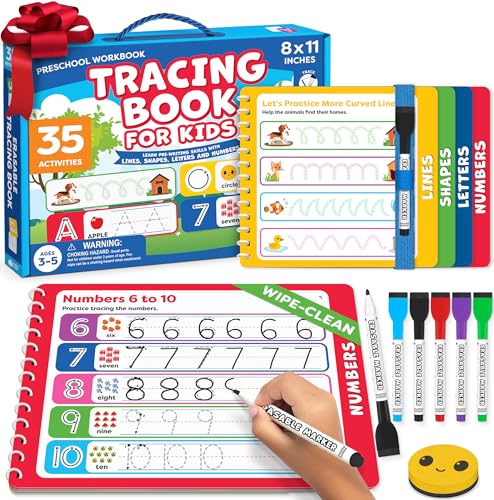
This tracing-focused set provides a practical path to early handwriting readiness with dry-erase materials and included markers. Kids ages 3-5 can practice shapes, lines, letters, and basic numbers through guided tracing activities, reinforced by removable write-and-erase tools. The durable, reusable design suits homeschool, daycare, or quiet-time practice, supporting fine motor development, pencil grip, and concentration while keeping learning enjoyable and low-pressure.
Buying Guide: Key Considerations for Selecting Interactive Books
Interactive books should balance engagement with age-appropriate skill development. Consider the following factors when choosing titles for a three-year-old:
- Age-appropriateness and content: Look for simple narratives, familiar concepts, and gentle humor that align with a child’s daily experiences (animals, daily routines, exploration).
- Interactivity type: Pop-ups, lift-the-flap elements, and sound buttons each offer distinct benefits. A mix can sustain interest while building vocabulary, memory, and fine motor skills.
- Durability and safety: Board pages and sturdy bindings are essential for little hands. Check for non-toxic materials and small parts that could pose choking hazards.
- Read-aloud potential: Choose books with rhythmic language and repetitive phrasing that support shared reading and language development.
- Independent vs. guided use: Some titles are designed for solo exploration, while others thrive with caregiver interaction. A balance supports confidence and bonding moments.
- Learning outcomes: Beyond reading, consider how the book supports counting, shapes, colors, letters, or early science concepts, depending on the child’s interests.
- Size and weight: Large, light items are easier for three-year-olds to handle; consider shelf space and portability for travel or daycare use.
When assembling a small collection, aim for a variety of interactivity styles and topics. For families seeking ongoing engagement, alternating between a pop-up adventure, a flap book, a sound-button title, and a tracing activity can promote sustained attention and broader cognitive development. Always supervise very young readers during interactive moments to ensure safe exploration and maximize learning opportunities.