Choosing the right indicators for option trading helps traders gauge volatility, price momentum, and risk. This guide reviews five notable resources that cover strategies, chart patterns, and analysis methods suited for options. Each item is selected for clarity, practicality, and relevance to American readers seeking actionable insights beyond generic tips.
| Product | Author/Brand | Format | Key Focus |
|---|---|---|---|
| Naked Forex: High-Probability Techniques for Trading Without Indicators | Wiley | Book | High-probability techniques, price action, risk control |
| Option Trading in Your Spare Time | Sphinx Publishing | Book | Practical options basics, time management, simple setups |
| Premium Stock Market Options Trading Mouse Pad | Trader Brag Stock | Desk Mat/Cheat Sheet | Cheat sheet with patterns, strategies, and charts |
| Technical Analysis of the Financial Markets | Penguin | Book | Comprehensive methods, chart patterns, and indicators overview |
Naked Forex: High-Probability Techniques for Trading Without Indicators
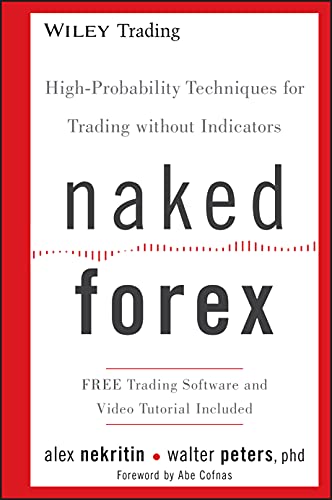
Norbert’s approach in Naked Forex centers on price action and market structure rather than relying on traditional indicators. While the title suggests removing indicators, the book emphasizes high-probability setups derived from observable price movements, support and resistance, and disciplined risk management. This resource helps option traders understand how to interpret price action in the context of options timing and volatility shifts, enabling more precise entries and exits without overreliance on indicator signals. Practical examples illustrate how to judge trend strength, consolidation, and breakout potential that align with option strategies such as calls, puts, or spreads.
Key takeaways include recognizing chart patterns that precede meaningful moves, calibrating risk per trade, and integrating price-based signals with option pricing realities. The author’s emphasis on probability and structure can improve decision-making when options timing intersects with expected volatility events, such as earnings or macro announcements. For option traders, this means translating price patterns into actionable option positions with clearly defined exit points.
Option Trading in Your Spare Time

This concise guide focuses on practical, time-efficient option trading for everyday investors. It covers fundamental concepts, simple strategies, and risk controls that fit into a busy schedule. For traders looking to employ indicators judiciously, the book emphasizes understanding probabilities, position sizing, and managing assignment risk. The approachable tone helps readers translate core ideas into repeatable actions, making it a reliable reference for learners who want to build confidence before moving to more complex strategies or multi-leg positions.
Readers can expect clear explanations of how options behave with changing volatility and time decay, plus practical tips for selecting strike prices, expiration dates, and trade adjustments. While not a deep-dive into every advanced technique, this resource offers a solid foundation for constructing straightforward, rule-driven trades that align with personal time commitments and financial goals.
Premium Stock Market Options Trading Mouse Pad

This comprehensive desk mat doubles as a quick-reference cheat sheet for options traders. It includes 12 detailed options strategies (spreads, straddles, iron condors, butterflies) and a breakdown of multi-leg concepts. The inclusion of candlestick chart patterns and 22 chart patterns tailored to options timing helps traders identify entry and exit opportunities with a visual framework. The product emphasizes risk management, scenario analysis, and practical guidance for applying strategies in real-time trading sessions.
In addition to strategy explanations, the pad highlights how different setups translate into risk-reward profiles, helping traders compare potential outcomes across positions. This makes it a useful companion for desk-based traders who appreciate quick inspiration, quick pattern recognition, and a tactile reminder of essential risk controls during volatile sessions.
Technical Analysis of the Financial Markets

This landmark reference provides a thorough overview of technical analysis fundamentals, including indicators, chart formation, and market psychology. While focused on broader markets, its insights are directly applicable to options trading, where timing and volatility are crucial. The breadth of material helps readers understand when indicators may be most effective and when price action should take precedence. The book’s systematic approach to analyzing trends, cycles, and momentum supports informed decision-making for options strategies such as vertical spreads, calendar spreads, and diagonals.
Users gain a well-rounded view of how to combine traditional indicators with price-based signals, assess risk, and develop robust trading rules. The accessible writing makes complex concepts approachable, making it a valuable reference for both beginners and seasoned traders seeking a solid theoretical foundation to complement practical strategies.
Buying Guide: Key Purchase Considerations For Option Traders
Purpose and audience: Determine whether you want broad theoretical knowledge, practical step-by-step instruction, or on-desk quick references. If you are new to options, start with beginner-friendly titles and gradually move to advanced techniques and multi-leg strategies.
Content focus: Look for resources that cover volatility understanding, time decay, and probability-based decision-making. Books that emphasize risk management, position sizing, and scenario planning tend to translate well into robust trading plans.
Format and usability: For fast-paced environments, handy references like cheat sheets, templates, and desk mats can provide immediate value. If you prefer depth, select comprehensive guides that include case studies and extensive charts.
Application to options trading: Prefer resources that explicitly connect analysis methods to options strategies, including how to translate patterns into calls, puts, spreads, and spreads adjustments. Materials with concrete examples, entry/exit criteria, and risk controls are advantageous.
Quality and credibility: Consider the author’s background and the publication’s reputation. Cross-reference concepts with multiple sources to validate patterns and risk management techniques before applying them to live trades.
Learning pace and time commitment: If your schedule is limited, choose concise guides or focus on one core concept at a time. For ongoing study, pair a foundational text with a practical reference or cheat sheet to reinforce learning through repetition.