Exploring the human body can spark curiosity and science confidence in children. This article highlights accessible, engaging body-themed books and kits that support early learners with hands-on activities, colorful visuals, and clear explanations. Each recommended item blends play with essential anatomy concepts, helping kids ages 4–8 grasp bones, organs, muscles, and more through age-appropriate activities.
| Product | Brand | Type | Key Benefit |
|---|---|---|---|
| QUOKKA Human Body Busy Books | QUOKKA | Busy Book | Fully assembled, interactive anatomy themes |
| Freebear Montessori Busy Book | Freebear | Montessori Busy Book | 5 themes, hands-on body exploration |
| National Geographic Human Body Model | Blue Marble | 3D Model | Glow-in-the-dark bones and removable organs |
| Human Body Anatomy Busy Book | BEMAXYE | Activity Book | 63-page interactive learning |
QUOKKA Human Body Busy Books for Kids

QUOKKA’s Busy Books arrive fully assembled, letting kids start exploring human anatomy right away. With nearly 200 pre-attached elements, there’s minimal setup, which helps maintain sustained engagement. The book features 15 exciting themes—covering the brain, organs, senses, skin, teeth, bones, and more—designed to spark curiosity and turn learning into play. The design emphasizes hook-and-loop fasteners and clear, approachable pages, inviting repeated exploration without frustration. This option is ideal for preschool or early elementary learning at home or in classrooms.
Freebear Montessori Busy Book for Kids
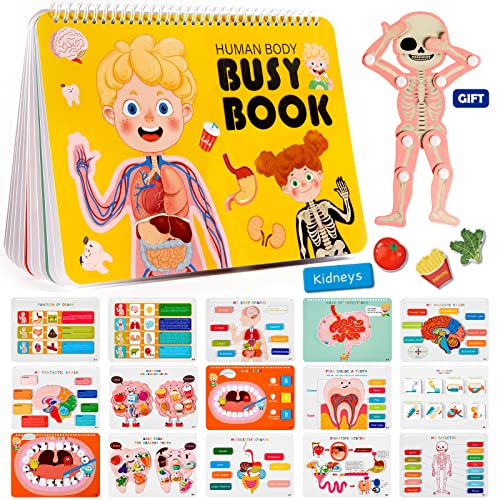
Freebear’s busy book emphasizes a deeper cognitive understanding of the body. It includes 15 pages across 5 major themes, plus a skeleton toy for tangible play. The content supports early math and literacy connections while reinforcing body awareness. The book’s design encourages homeschool-style interaction, helping children build communication skills and an explorative mindset through hands-on activities. It blends visual learning with tactile play to support multiple learning styles.
National Geographic Human Body Model
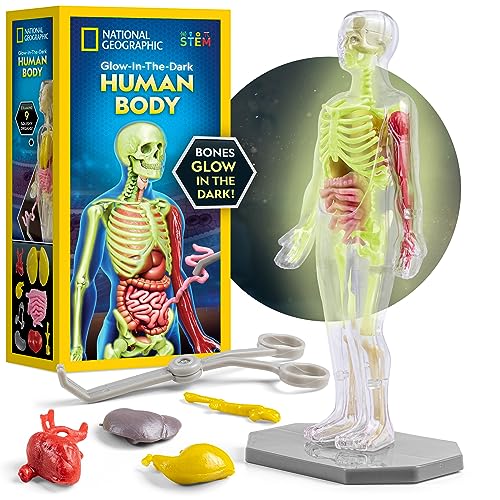
This 32-piece interactive model invites kids to remove and study key body parts. The kit includes 9 organs, 18 glow-in-the-dark bones, and variety of muscles. A 9″ shell and display stand make the model easy to showcase, while the included forceps help kids handle parts with a tactile-feel of realism. The Learning Guide provides accessible explanations and fact-filled context suitable for curious 8-year-olds and older. The glow-in-the-dark feature adds a memorable visual element to study sessions or Halloween-themed activities.
Human Body Anatomy Busy Book by BEMAXYE

BEMAXYE presents a 63-page Montessori-style activity book with removable cards, designed to promote memory, coordination, and cognitive skills. The illustrations are colorful and the text is written to support reading comprehension alongside science learning. The thick, waterproof paper ensures durability for everyday use in homes and classrooms. This option is well-suited for kids who prefer structured activities and repeated practice with physical manipulation of learning aids.
Buying Guide
Key purchase considerations help align selections with a child’s age, interest, and learning style:
- Age and complexity: For ages 4–6, look for books with large, colorful illustrations and simple explanations. For 7–8-year-olds, seek interactive elements that explain more complex anatomy.
- Hands-on vs. visual learning: Busy books provide tactile engagement, while models offer spatial understanding; combining both types supports multiple modalities.
- Durability: Consider hardcover or waterproof pages when targeting younger children who may handle books roughly or use them in classrooms.
- Reusability: Reusable activity cards and magnetic or hook-and-loop elements encourage repeated practice and longer-term use.
- Expansion potential: Some kits include extra components (skeletons, organs, or glow features) that extend learning beyond the initial pages.
- Safety and materials: Look for non-toxic materials and age-appropriate small parts to reduce choking risks for younger kids.
- Storage and cleanup: Consider items that are easy to store and quick to wipe clean after activities.
When choosing, balance educational goals with the child’s interest—whether they’re drawn to plaster-like models, storytelling-driven books, or hands-on activities that build motor skills while teaching biology. Teachers and parents can mix and match products to create a comprehensive, engaging exploration of the human body that reinforces science concepts across subjects.