For homeschooling children with ADHD, concrete, interactive math tools can help sustain attention, reinforce concepts, and build confidence. This guide highlights practical math manipulatives and games that align with ADHD learning styles—hands-on, fast-paced, and visually engaging. Each option emphasizes active participation, short activities, and clear feedback. Read on to compare top picks, how they support core math skills, and what to consider when choosing tools for an ADHD-friendly homeschool setup.
| Product | Brand | Key Benefit for ADHD |
|---|---|---|
| D-FantiX Magnetic Addition Multiplication Game Board | D-FantiX | Hands-on board with addition and multiplication activities; supports memory and social interaction. |
| Learning Resources MathLink Cubes | Learning Resources | Colorful, connectable cubes for counting, grouping, patterns, and visual math ideas. |
| Interactive 12×12 Multiplication Pop Board | HUAZHENQI-GH | Tactile pop-its for building multiplication fluency and focus without screens. |
| Preschool Learning Numbers Blocks (Montessori Style) | Laynertoys | Fine motor and early math practice with visual number blocks and cards. |
| Ogioxam Multiplication Flash Cards | Ogioxam | Multifaceted cards with dice for quick, game-based multiplication practice. |
Below, five selected products are explored with practical uses, how they support ADHD learners, and setup ideas for homeschool sessions that stay engaging and productive.
D-FantiX Magnetic Addition Multiplication Game Board

The D-FantiX magnetic board provides a compact, interactive way to practice addition and multiplication. The kit includes a magnetic board, two numbered dice, colorful player pieces, a suction spinner, two dry-erase markers, and a set of double-sided activity cards—plus a blank card for freestyle practice. For ADHD learners, structured short sessions work best: rotate through quick rounds of addition and multiplication, prompting students to explain the rules aloud as they manipulate numbers. The physical act of moving pieces and rolling dice helps tie abstract ideas to concrete representations, reinforcing memory of multiplication tables and arithmetic patterns. The board also encourages cooperative play, which can improve social skills and turn math into a collaborative challenge rather than a solo drill.
Key usage tips:
– Keep sessions under 15 minutes with clear, achievable goals (e.g., complete two rounds of addition).
– Use the dry-erase markers to record quick strategies or mistakes for later review.
– Pair students to foster peer learning and accountability, which can help sustain attention.
For parents and teachers, this tool supports differentiation: easier cards for beginners and more complex patterns for advanced learners, all while maintaining a tactile, visual approach that ADHD brains often respond to best.
Learning Resources MathLink Cubes

MathLink Cubes are a versatile set of 100 color-coded cubes designed to support foundational math skills. Students can physically count, group, and build patterns, aiding one-to-one correspondence, skip counting, addition, and subtraction. For ADHD learners, the cubes offer quick, repeatable activities that produce immediate, tangible results, which helps maintain focus. The cubes also support early geometry and measurement concepts through stacking and patterning, enabling multisensory exploration. Because these are easily categorized by color and quantity, caregivers can design short, varied tasks—such as “build to 10,” “show 15,” or “compare groups”—that sustain engagement while reinforcing accuracy and fluency.
Usage ideas:
– Use quick warm-ups: count to 20 with different color groups, then transition to simple addition.
– Build a pattern journal: record five different patterns using cubes to reinforce sequencing and pattern recognition.
– Integrate with writing: have students illustrate a word problem and use cubes to demonstrate the solution.
Interactive 12×12 Multiplication Pop Board
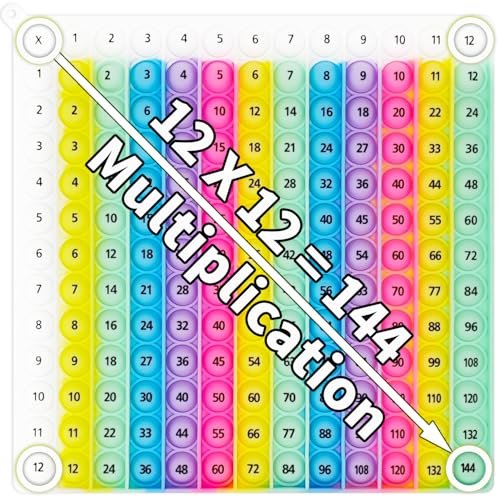
This pop board combines tactile play with multiplication practice across 1×1 to 12×12. By pressing bubbles to reveal answers, students engage in hands-on problem solving, which can be especially beneficial for ADHD learners who need frequent sensory feedback. The product supports both multiplication fluency and basic division, as students reverse problems (e.g., 8×9 = 72, 72 ÷ 9 = 8). It’s compact and portable, ideal for desk use, travel, or small-group activities. Teachers and homeschooling parents frequently use it for quick warm-ups, center rotations, or paired challenges, providing an engaging, low-screen alternative to digital learning tools.
Practical strategies:
– Start with a 5-minute warm-up to build momentum in each session.
– Use as a quick formative check: if a student can pop the correct answer consistently, progressively increase the range of numbers.
– Combine with flash cards for a blended approach that reinforces both speed and accuracy.
Preschool Learning Numbers Blocks (Montessori Style)

These Montessori-inspired number blocks and finger boards support early math readiness, making them suitable for younger siblings or as a foundation before formal arithmetic. The kit includes a wooden finger board, 13 numbered blocks, 8 flash cards, and a holder. For ADHD learners, the combination of tactile blocks with visual cards fosters hands-on exploration, patterning, and basic addition and subtraction. The structured materials help children translate numerical concepts into concrete actions, which can reduce anxiety around new math ideas and improve retention. Use them to build number sense, practice counting, and model simple equations with physical objects that students can manipulate and compare.
Implementation tips:
– Begin with counting practice, then move to simple addition using blocks.
– Use flash cards for quick recall checks, followed by hands-on modeling with blocks.
– Create short, focused stations to maintain engagement and prevent fatigue.
Ogioxam Multiplication Flash Cards

Ogioxam multiplication flash cards cover the 0–12 range, designed for 2nd to 4th-grade levels. The package includes a tactile element (a popper or dice options) to enrich learning through games, making it easier for ADHD students to stay engaged during practice. The cards present a straightforward front-and-back format, with a clear question on the front and the answer on the back, which supports independent study and quick self-checks. The kit also includes dice for gamified activities—an effective approach for short, dynamic sessions that reinforce procedural fluency and memory recall without overwhelming the learner.
Effective use ideas:
– Create quick rounds of 5 questions per session, adjusting difficulty as needed.
– Combine with a timer for a game-like pace that maintains focus.
– Encourage parent-child collaboration by taking turns generating problems and solutions.
Buying Guide: Key Purchase Considerations for ADHD-Friendly Math Tools
- Engagement style: Look for manipulatives that combine tactile action with visual cues—these tend to hold attention better for ADHD learners.
- Session length and structure: Choose tools that support short, frequent activities (10–15 minutes) with clear, achievable goals.
- Progression and differentiation: Favor resources with adjustable difficulty or multiple game modes to scale with growth and keep challenges appropriate.
- Portability and storage: Compact, lightweight options are helpful for on-the-go or small-space homeschooling environments.
- Multisensory learning: Prioritize tools that integrate touch, sight, and sound (e.g., pop boards, color-coded cubes) to reinforce memory and concept acquisition.
- Parental and teacher involvement: Select resources that support guidance via quick prompts, answer keys, or structured activities that facilitate meaningful parent–child interaction.
- Durability and safety: Check for sturdy construction and non-toxic materials, especially for younger children who explore with hands and mouths.
- Compatibility with curriculum goals: Ensure the chosen tools align with core math standards (counting, operations, place value, and fluency).