Answering the search for a financial planner organizer, this guide spotlights five undated, month-by-month budget planners designed to help you track income, expenses, debt, and savings. They’re ideal for beginners building daily budgeting habits and for small households seeking clear money management. Each pick offers different layouts, colors, and features to fit varied styles, from simple tracking to richer guidance. Below, compare who each product is best for, plus a brief buying table to help you pick at a glance.
| Product | Brand | Ideal For | Why It Stands Out |
|---|---|---|---|
| Budget Planner – Pink | Taja | New budgeters who want an easy layout and playful design | Undated calendar, bonus stickers, debt and bill trackers |
| SUNEE Budget Planner | SUNEE | Those who want color-coded pages and a full guidebook | Full-page monthly calendars, colorful tabs |
| Dow Janes Panda Planner Budget Planner | Panda Planner | Budgeters seeking collaboration with trusted planners | 1-year undated format, integrated monthly bill organizer |
| Soligt Purple Undated Budget Planner | SOLIGT | Budget beginners who like flexible categories | 12 pockets for receipts, customizable pages |
| LOAPEM Budget Planner (Green) | LOAPEM | On-the-go users needing a durable, all-in-one planner | 15+ inserts, durable PVC cover, 7.3”x10.15” size |
Budget Planner – Pink by Taja

This undated monthly budget book combines income, expense, savings, and goal tracking in one accessible format. Best for beginners who want a gentle, user-friendly layout with clear debt and bill trackers. The pink version emphasizes a cheerful approach to money management. A potential limitation is the absence of pre-printed dates, which requires user input to start marking months.
Budget Planner – Black by Taja
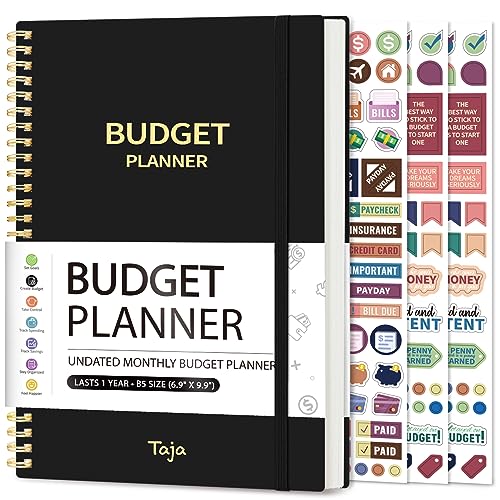
Designed for efficient budgeting, this undated planner emphasizes a streamlined monthly layout with bill trackers and goal sections. It suits those who want a professional look and straightforward tracking. Best for professionals or couples who prefer a sleek, distraction-free design. The undated format requires the user to set new months, which could slow start for some.
SUNEE Budget Planner – Black

Best for users who want a colorful, organized layout with a helpful guidebook. The full-page monthly calendars provide ample room for paydays, bills, and events. This planner is well-suited for those who want quick, at-a-glance budgeting and a structured entry path. A potential drawback is the need to refer to the guidebook for some methods; not ideal for those who prefer minimal instruction.
Soligt Purple Undated Budget Planner
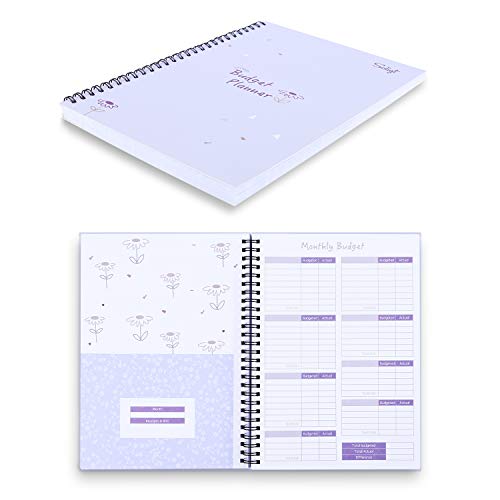
Best for planners who want flexible categories and built-in pockets. The 12 pockets support receipts, envelopes, and small notes, while the undated pages allow starting anytime. The purple design keeps things visually engaging. A limitation is that it may require more setup time to tailor categories to your life, especially for very tight budgets.
LOAPEM Budget Planner – Green
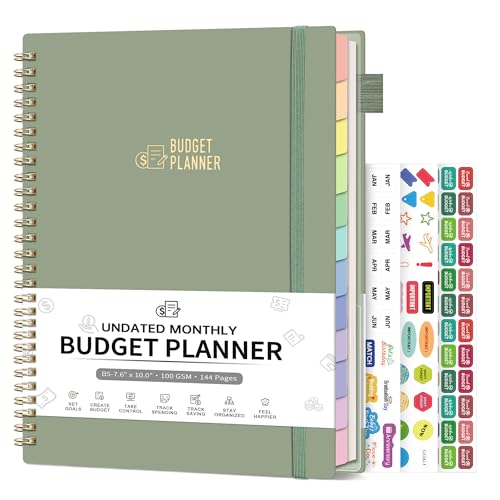
Best for daily writers who need durability and a broad set of inserts. The PVC cover and thick paper resist wear, and the 15+ inserts cover budgeting, debt, bills, savings, and more. Choose this for on-the-go budgeting and long-term planning. The heavier size might be bulkier for very small bags or pockets.
Buying Guide: How To Choose The Right Budget Planner
- Undated formats: Favor undated planners if you want flexible start times and ongoing budgeting without wasting pages.
- Monthly structure: Look for clear monthly calendars and dedicated sections for income, expenses, debt, bills, and savings to support consistent tracking.
- Layout and usability: A user-friendly layout with calendars, trackers, and color-coding helps you navigate quickly and stay organized.
- Durability and portability: Consider cover material (PVC or hardbound) and binding (spiral vs. bound) based on how you carry and use the planner daily.
- Additional features: Pockets, stickers, and tabs can improve organization for receipts and reminders; guidebooks add budgeting tips but require time to read.
- Size and weight: Larger formats offer more writing space but are less portable. Choose a size that fits your bag and writing style.
- Best for scenarios: For busy households, a robust weekly or monthly tracker with bill payment trackers is valuable. For beginners, a playful design with clear explanations can reduce intimidation.
Frequently Asked Questions
- What is an undated budget planner good for?
- Should I choose a planner with a guidebook?
- What size is best for daily budgeting on the go?
- Are sticker sheets only for decoration?
- Do I need a debt tracker?
- How important is durability?
It allows you to start budgeting anytime and customize months to your schedule, which can reduce waste and increase relevance.
A guidebook can provide budgeting tips and structure, especially for beginners or those seeking a learning boost.
A compact or medium-size planner (roughly 6–8 inches) travels easily in bags, while larger sizes offer more writing space at home or the office.
No. Sticker sheets can help denote paydays, goals, and reminders, aiding quick visual cues during budgeting.
Yes, a debt tracker helps monitor progress toward payoff goals, which can improve motivation and clarity in long-term budgeting.
Durability matters if you plan to carry the planner daily. A sturdy cover and quality paper prevent damage from frequent handling.