Exploring foundational and advanced bowing, shifting, and tone exercises helps violinists contribute expressive depth in an orchestra. This guide highlights respected method books and studies that target orchestral phrasing, tempo accuracy, and continuous sound production across positions. Each selection balances technical rigor with practical performance insights to support string players from intermediate to advanced levels.
| Product | Brand | Key Focus | Pages / Range |
|---|---|---|---|
| Introducing the Positions for Violin Volume 1 | Rubank Publications | Third & Fifth Position studies; shifting | 56 Pages |
| Hrimaly – Scale Studies for Violin | G. Schirmer, Inc. | Major and minor scales; finger dexterity | 40 Pages |
| Galamian/Neumann – Contemporary Violin Technique, Book 1 | Galaxy Music Corporation | Bow control; rhythm and tone development | — |
| School for Violin Technics – Henry Schradieck | G. Schirmer, Inc. | Left-hand technique; scale patterns | 128 Pages |
| Otakar Sevcik School of Bowing Technics, Op. 2, Book 1 | G. Schirmer, Inc. | Bowing technique; articulation | 32 Pages |
| Contemporary Violin Technique, Vol. 1 – Scales by Ivan Galamian | Schirmer | Comprehensive scale studies; advanced variations | 115 Pages |
| 101 Classical Themes for Violin | Hal Leonard | Repertoire and phrasing basics | 88 Pages |
Note: The following sections spotlight five selected titles most relevant to expressive orchestral technique, drawing on bow control, shifting, tone production, and rhythm. Each entry includes a direct link to the product page for quick reference.
Otakar Sevcik Bowing Technics Op. 2 — Book 1

Sevcik Op. 2 Book 1 presents foundational bowing techniques essential for orchestral articulation and phrasing. The study items focus on arc control, bow distribution, and dynamic contrast, supporting consistent tone across players from beginners through advanced. The concise page count makes it a practical add-on for weekly practice and ensemble preparations.
Key features: 32 pages; Violin; Bowing focus helps cultivate precise attack and smooth phrase shaping in ensemble settings.
School for Violin Technics — Schradieck

Schradieck’s School for Violin Technics compiles comprehensive left-hand technique and scale studies critical for phrasing accuracy and intonation in orchestral parts. The complete Books 1-3 provide a progressive pathway for technical development, combining precision with musical flexibility across positions and tempos.
Key features: 128 pages; Violin; Instrumentation tailored for progressive finger technique and scale familiarity.
Galamian/Neumann — Contemporary Violin Technique, Book 1
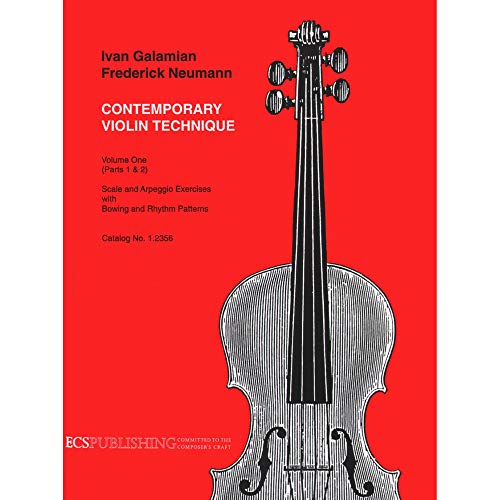
This Galaxy edition of Galamian and Neumann’s Contemporary Violin Technique offers an essential framework for modern violin playing. It emphasizes bowing patterns, rhythm, and tonal control, with the bowing and rhythm section designed as a pull-out component for focused practice. It is especially valuable for orchestral players seeking expressive versatility and reliable articulation.
Key features: Bowing and rhythm sections detachable; practical for ensemble work and in-depth technique study.
Hrimaly — Scale Studies for Violin

Hrimaly’s Scale Studies provide systematic major and minor scale work that reinforces intonation accuracy and finger dexterity across positions. This study material supports consistent intonation and smooth shifts, important for orchestral playing where ensemble alignment depends on precise scale knowledge and finger control.
Key features: 40 pages; Violin; Focus on major/minor scales and finger agility.
Contemporary Violin Technique, Vol. 1 — Scales

This volume by Ivan Galamian explores scales and geometric variations across three and four octaves, essential for advanced string players seeking precise intonation and rhythmical accuracy in orchestral contexts. The book’s depth makes it a core reference for establishing comprehensive tonal control and pedaling-like bowing consistency across the instrument’s range.
Key features: 115 pages; Detailed scale studies; Advanced rhythmic and interval variations.
101 Classical Themes For Violin

101 Classical Themes for Violin compiles familiar melodies and themes suitable for developing musical expression and phrasing. While primarily repertoire-based, it supports orchestral players in shaping musical lines, dynamics, and stylistic articulation—practical for recital preparation and ensemble auditions alike.
Key features: 88 pages; Violin; Repertoire-focused studies that reinforce expressive playing.
Buying Guide
When selecting materials to improve expressive techniques for orchestra violin, consider these factors:
- Position and Shift Work: Books like Sevcik Op. 2 and Rubank’s violin method address shifts and intonation. Choose levels that match your current technique and gradually increase difficulty.
- Bowing Technique and Tone: Works by Galamian and Schradieck emphasize bow control, tone production, and phrasing—crucial for orchestral cohesion.
- Scale Mastery: Hrimaly and Galamian scales volumes build left-hand agility and accurate intonation across keys and positions.
- Practicality and Format: Detachable bowing sections and compact pages support focused practice sessions and ensemble rehearsal integration.
- Repertoire and Expression: Repertoire-focused collections like 101 Classical Themes help translate technique into musical expression in a typical orchestra setting.
Consider combining a foundational technique book with a scale study and a repertoire-focused volume to cover bowing, shifts, intonation, and musical phrasing. For orchestral readiness, pairing a method focused on bowing with a robust scale study can yield balanced progress in both technique and tonal consistency across sections.