Finding engaging ESL resources for high school students can boost comprehension, vocabulary, and critical thinking. The following selections combine high-interest content with accessible language to support learners at varied proficiency levels. Each option offers practical activities, reproducible materials, and alignment with common standards to assist teachers and homeschool families alike.
| Product | Brand | Notes |
|---|---|---|
| Hi-Lo Nonfiction Passages for Struggling Readers: Grades 4–5 | Scholastic | High-interest, low-readability passages with comprehension questions |
| Skills for Success Spanish Workbook | Carson Dellosa Education | Supports bilingual learners with grammar and vocabulary practice |
| Mark Twain Forensic Investigations Workbook | Mark Twain Media | Critical thinking through crime-science scenarios |
| The 100 Series: Biology Workbook | Carson Dellosa Education | Science vocabulary and activities for high school |
| Instructional Strategies for Middle and High School | Routledge | Foundational teaching methods and classroom practices |
Hi-Lo Nonfiction Passages For Struggling Readers

This Scholastic title offers 80 high-interest, low-readability passages designed for learners who need simplified language without sacrificing engagement. Accompanying comprehension questions and mini-lessons target key reading strategies such as main idea, inference, and summarizing. Although labeled for grades 4–5, the accessible format is well-suited for high school ESL students seeking to build confidence before tackling more complex texts. Teachers can use the passages as a scaffold for vocabulary acquisition and guided discussion, or as weekly fluency practice. The concise passages pair well with targeted mini-lessons to reinforce critical reading skills.
Spanish Skills Workbook For Middle And High School
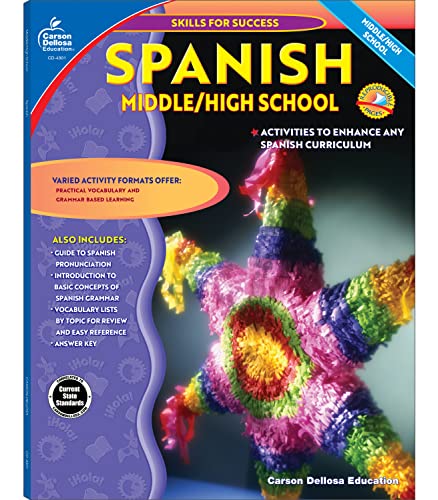
Carson Dellosa’s Skills for Success workbook focuses on parts of speech, grammar, and sentence construction, with practical activities tailored for middle and high school students. It supports bilingual or multilingual learners by emphasizing everyday Spanish vocabulary, including vocabulary lists, reproducible storybooks, a pronunciation key, and an answer key. With 128 pages, the workbook can be used as a supplement to a broader ESL curriculum or as a stand-alone practice resource. It helps students build sentence-level accuracy and foundational grammar skills essential for higher-level reading comprehension.
Mark Twain Forensic Investigations Workbook

The Forensic Investigations workbook from Mark Twain Media invites middle and high school students to apply science concepts to crime-solving scenarios. It emphasizes critical thinking, observation, and evidence interpretation. Most activities can lead to multiple plausible outcomes, encouraging discussion and collaborative reasoning. The included tasks cover interpretive handwriting, body language, and fingerprinting, among other activities. This resource serves as a practical bridge between reading comprehension and scientific literacy, motivating students to engage with texts through inquiry and analysis.
Biology Workbook: The 100 Series
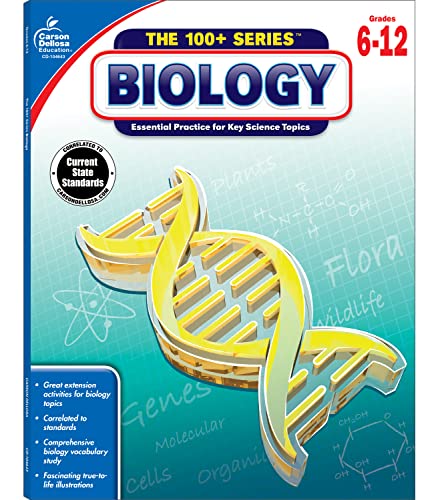
This Carson Dellosa Biology Workbook targets grades 6–12 and covers core topics such as matter, atoms, cells, genetics, elements, and bonds. It includes comprehensive biology vocabulary study and standard-correlated activities, making it a strong resource for expanding science-related reading comprehension and academic language. The workbook offers extension activities that can be used to support ESL learners in decoding scientific texts and participating in lab-based discussions. It functions well as a supplementary tool alongside classroom instruction or homeschooling curricula.
Instructional Strategies For Middle And High School

Routledge’s Instructional Strategies for Middle and High School details effective teaching methods and classroom practices. While not a traditional reading textbook, its guidance on lesson design, differentiation, and assessment supports ESL educators in creating accessible reading experiences. The book provides strategies for articulating objectives, scaffolding language, and promoting student discourse, all of which contribute to stronger reading outcomes for diverse high school learners. It is a valuable reference for teachers seeking evidence-based approaches to literacy instruction.
Buying Guide: Key Purchase Considerations
- Reading level alignment: Choose materials that provide gradual difficulty and clear supports such as glossaries, simplified texts, and annotated passages to accommodate varying ESL competencies.
- Content relevance: Prioritize topics that align with student interests and curriculum goals to maximize engagement and comprehension.
- Language support: Look for resources offering vocabulary lists, pronunciation guides, and structured comprehension questions to reinforce language development.
- Interdisciplinary connections: Select titles that connect reading with science, social studies, or language arts to build transferable literacy skills.
- Flexibility in use: Consider workbooks and activity sets that can be used independently, in small groups, or as whole-class supplements.
- Assessment potential: Favor materials with built-in questions, rubrics, or teacher guides to monitor progress and adjust instruction.
- Assessments of fairness and accessibility: Ensure content is free of overt bias and accessible to students with diverse backgrounds and needs.
- Durability and format: Paper-based resources are versatile for pencil-and-paper practice, but consider digital or reproducible options for long-term use.
To maximize outcomes, educators might combine Hi-Lo passages for guided reading, bilingual or vocabulary-focused workbooks for language development, and inquiry-based tasks from the forensic and biology titles to encourage active reading and critical thinking. Pairing these materials with explicit instruction in vocabulary strategies, summarizing, and inference can create a robust ESL learning plan for high school students.