Choosing the right emotions posters can help preschoolers name feelings, develop empathy, and build emotional regulation. This guide highlights five highly-rated options designed for classrooms or home learning spaces. Each poster set emphasizes clear visuals, simple language, and practical coping strategies suitable for early learners. Explore quick summaries and then deep-dives into each product to find the best fit for your classroom or therapy corner.
| Product | Brand | Key Benefit |
|---|---|---|
| BIZIBAFF Feelings Chart | BIZIBAFF | 16 emotions, durable laminated design |
| BEAWART Calming Corner Posters | BEAWART | Calm-down tools and mood regulation |
| Decorably 15 Social Emotions Poster | Decorably | Bright, easy-to-read, classroom-ready |
| Rovytix SEL Posters (2 Pack) | Rovytix | Multiple formats for home or school use |
| Distasio 9 Calming Corner Posters | Distasio | Focused calm-down and coping skills |
These selections cover a range of settings—from busy classrooms to cozy calm-down corners—while keeping language simple and visuals engaging. The products intentionally emphasize emotional literacy, regulation strategies, and practical activities that teachers and caregivers can implement right away.
BIZIBAFF Feelings Chart Poster for Kids

The BIZIBAFF poster supports emotional learning with 16 common emotions. Sized around 11.8×16.5 inches, it’s suitable for classrooms, daycares, or homes. The laminated paper construction offers durability for high-traffic spaces and easy cleaning after spills. Its vibrant colors and clear illustrations are designed to capture attention and support early conversation about feelings.
Use cases include circle time, back-to-school decor, and calming corners. The chart is ideal for social-emotional learning goals and developing communication skills in toddlers and preschoolers. It blends well with other classroom visuals and can be hung on bulletin boards or walls for quick reference during daily routines.
BEAWART Calming Corner Posters

BEAWART’s set focuses on self-regulation and emotional regulation through a calming corner concept. The posters are laminated and durable, designed to withstand classroom wear. They promote a cozy, safe space for discussing feelings and practicing coping strategies, such as breathing or mindful routines, during challenging moments.
Ideal for therapy offices or school settings where emotional health is a priority, these posters aim to reduce meltdowns by giving children concrete tools to identify and regulate emotions. The collection includes pocket-friendly visuals that pair well with other zones of regulation materials and talk-through activities.
Decorably 15 Social Emotions Poster

Decorably offers 15 vivid emotion posters designed for classrooms and hallways. Each 11×17-inch print uses premium paper with matte lamination to reduce glare and improve readability. The posters highlight a range of feelings and include practical steps for supporting mental well-being, making them a strong choice for teachers building a consistent SEL routine.
With bold visuals and concise wording, these posters are easy for young learners to scan. They work well in calming corners, along bulletin boards, or as daily reference during morning meetings and social-emotional check-ins. The set supports ongoing emotional literacy and classroom culture development.
Rovytix Emotion Posters (2 Pack)

Rovytix provides a two-pack of laminated posters tailored for SEL in homes and classrooms. These charts help kids recognize and express emotions, emphasizing age-appropriate strategies for coping. They support social skills, empathy, and resilience as children learn to navigate social interactions with peers and adults.
The included tools are designed to reinforce healthy communication, such as using simple phrases to name feelings and practice calming techniques. The 11×17 inch format offers clear readability, making them suitable for hallways, learning corners, and therapy spaces where visual cues are beneficial.
Distasio 9 Calming Corner Posters
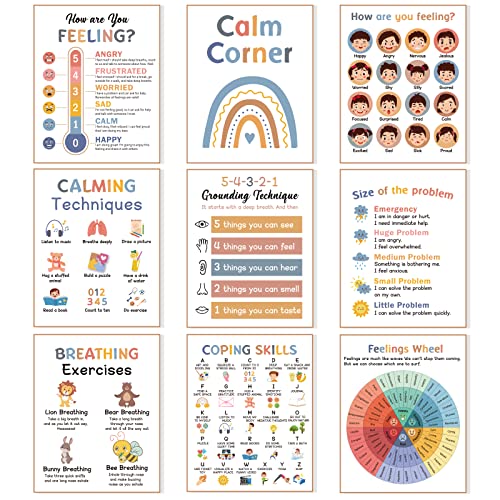
The Distasio calming corner set includes nine posters focusing on calm-down strategies, feelings charts, and coping skills. Sized for wall display, these 8×10 inch posters fit well in small spaces or as an orderly sequence within a calming area. They are designed to brighten learning spaces while providing practical steps for emotional regulation.
The kit supports self-regulation by offering clear visuals for recognizing emotions, paired with actionable techniques like breathing exercises and coping strategies. This makes it a solid choice for teachers and counselors aiming to establish a consistent calm-down routine across different classrooms or spaces.
Buying Guide
- Age-appropriate language: Look for posters with simple terms and bright, relatable images that match preschool vocabulary.
- Durability and maintenance: Laminated or sturdy cardstock posters resist tears and spills common in classroom settings.
- Range of emotions: A broad spectrum (from happy to anxious) helps children recognize nuanced feelings and build empathy.
- Size and placement: Larger posters are better for circle time or walls; smaller sets fit calming corners or bulletin boards.
- Practical coping tools: Posters that pair feelings with actionable strategies (breathing, talking, drawing) support regulation skills.
- Classroom integration: Choose sets that align with SEL goals, routines, and existing resources (like zones of regulation or mood meters).
- Versatility: Consider whether the posters work for both classroom learning and home reinforcement, enabling consistency across environments.
- Visual clarity: High-contrast colors and clear illustrations help young learners quickly identify emotions during moments of need.
- Maintenance plan: Decide how you’ll refresh or rotate posters seasonally to keep students engaged.
When selecting a set, consider your space, the number of students you serve, and how you’ll couple visuals with guided activities. Pairing posters with structured routines—like daily mood check-ins, circle-time discussions, and calm-down corner practice—can maximize impact. For diverse classrooms, ensure content is culturally inclusive and accessible to children with different learning needs.