Find the right DNA test to map your family history, connect with relatives, and explore origins. This guide highlights five top options, clarifying who each test is best for and why it stands out for family-history research. Ideal buyers include genealogy enthusiasts, new researchers building family trees, and users seeking deeper ethnic breakdowns or living-relative connections.
Summary table of chosen products:
| Product | Best For | Key Benefit | Notes |
|---|---|---|---|
| AncestryDNA | Family historians seeking broad relative matching | 3,600+ regions and extensive relative connections | Strong family-history ecosystem |
| FamilyTreeDNA Family Finder | Genealogy researchers needing advanced tools | Chromosome Browser and myOrigins Painter | Deep lineage tools |
| AncestryDNA + World Explorer Membership | Active genealogists with record access needs | World Explorer records in addition to DNA | Membership adds historic data |
| 23andMe Ancestry Service | Broad geographic ancestry and trait insights | 4,500+ regions with ancestry timeline | Trait reports add context |
| HomePaternity | Family tracing with paternity clarity | High-confidence paternity confirmation | Focus on paternal lineage |
AncestryDNA: Broad Ethnicity And Relatives

Best for: Buyers who want a comprehensive view of origins and the widest network of living relatives. AncestryDNA emphasizes a large database and easy-to-use matching tools that help you link to relatives and build a family tree over time. This kit is well-suited for beginners and seasoned genealogists alike who want clear ethnicity estimates and a straightforward activation process.
What stands out: The kit covers origins in over 3,600 places and emphasizes interactive connections to living relatives, making family history research more actionable. Data control is highlighted, allowing you to choose what to share and with whom. The six-week result window provides a predictable timeline for planning next steps in your genealogy work.
Limitations to note: Like most consumer DNA tests, results rely on existing databases. If your family’s ancestral population is underrepresented in the database, you may see broader or less precise regional results. Use alongside historical records for best results.
FamilyTreeDNA Family Finder
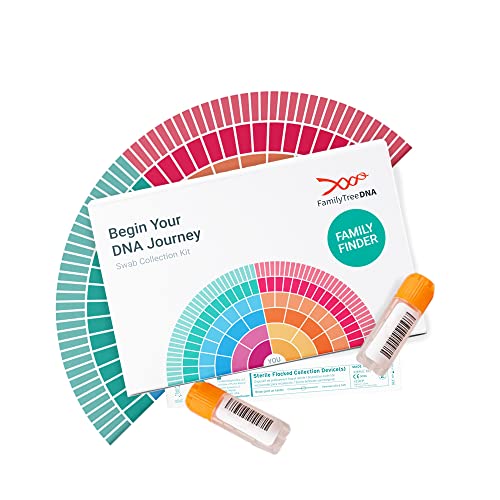
Best for: Researchers who want in-depth tools to explore genetic relationships and compare DNA segments. FamilyTreeDNA’s Family Matching and Chromosome Browser are particularly useful for building a detailed genealogical map and confirming connections across generations.
Why selected: This kit offers advanced features like chromosome painting to visualize ancestry segments and ancientOrigins to explore ancient roots. It supports sophisticated genealogy workflows by connecting you with relatives while visualizing how DNA fragments align with populations.
Caution: The platform’s strongest features are best utilized by users comfortable with genealogy workflows. Beginners may need time to learn the Chromosome Browser and interpret results. Consider pairing with historical records for a fuller picture.
AncestryDNA Genetic Test Kit + World Explorer
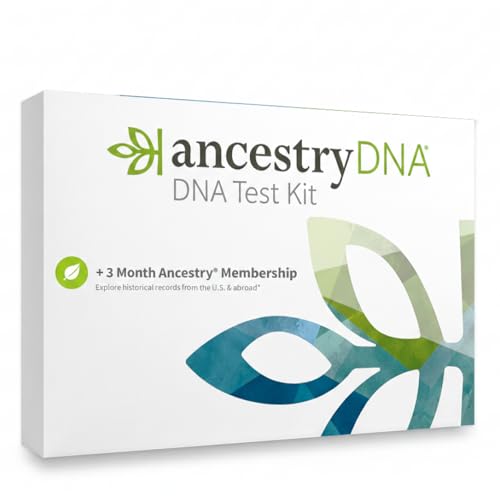
Best for: Genealogy enthusiasts who want immediate access to billions of historical records in addition to DNA-based family connections. The World Explorer membership enhances research by providing a vast archive for building family trees alongside genetic data.
Why selected: This option combines a top-selling DNA test with a three-month World Explorer membership. The membership can facilitate discoveries through record collections and historical context, helping to corroborate DNA findings with archival sources.
Limitation: The membership is redeemable during activation and may auto-renew, which requires careful billing awareness. Use the DNA results as a starting point and verify connections in records to minimize over-interpretation.
23andMe Ancestry Service
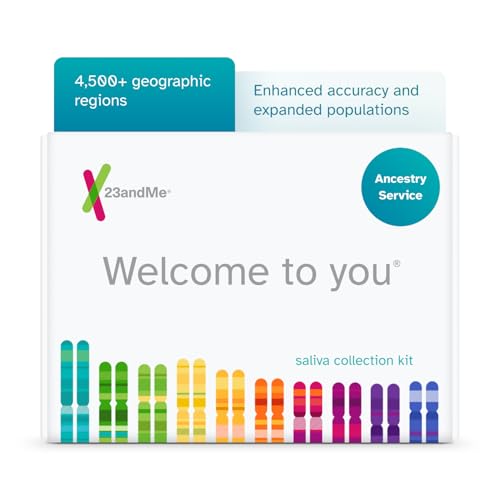
Best for: Researchers seeking a detailed geographic breakdown across thousands of regions and trait insights. 23andMe’s Ancestry Service provides a nuanced view of ancestral origins and historical migrations that complement genealogical research.
Why selected: It estimates ancestry across 4,500+ geographic regions and includes an Ancestry Timeline to situate relatives in time. The test also offers an optional DNA Relative Finder to expand your network, and trait reports provide additional personal context for family stories.
Caution: Results can highlight deep regional detail that requires careful interpretation and corroboration with records. Some users may encounter broad regional categories that need refinement through other sources.
HomePaternity DNA Paternity Test
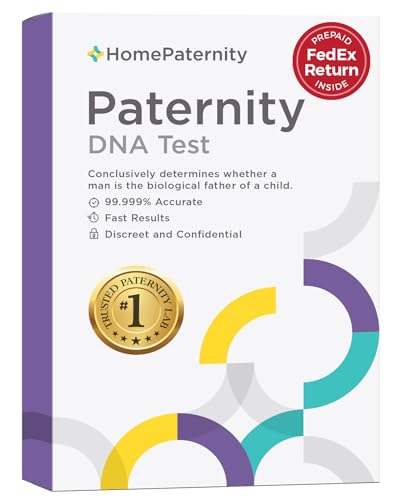
Best for: Buyers who want definitive paternal lineage clarity, useful in family-history workflows that require confirming parent-child relationships quickly.
Why selected: The test claims over 99.99% confidence with multiple markers and rapid results, aided by overnight returns. This makes it a practical choice when proving paternity is essential for constructing family history narratives that include paternal lines.
Caution: This test is specifically focused on paternity, not broader ancestry or relative matching. It should be used as part of a broader family-history strategy rather than a sole tool for genealogical research.
Buying Guide: Key Considerations For DNA Testing And Family History
What is your primary goal?
Decide whether you want to identify living relatives, understand ethnic origins, or corroborate family records with archival data. Ancestry-focused tests excel at relative matching and genealogical links, while tests with advanced tools help map chromosomes and ancient lineages.
How important are historical records and access?
Some options include access to billions of records (such as World Explorer memberships) that can dramatically accelerate family-history research. If records are a priority, prefer tests that pair DNA results with a robust archive.
How comfortable are you with data and privacy controls?
Look for tests that clearly state data-sharing choices. If you want full control over genetic data, choose providers that emphasize user consent and data privacy options.
What about regional representation?
Ethnicity estimates depend on reference populations. If your ancestry is underrepresented in a database, you may see broader or less precise regions. Using multiple tests can help triangulate results.
Time and cost considerations
Most DNA results appear within 4–8 weeks after sample submission. Some products bundle memberships or extra features; weigh ongoing membership costs against the value of continued research opportunities.
Which tests pair well for a robust family history?
Combining a dominant DNA-matching test (for relatives) with an archive-access option (historical records) often yields the most actionable family history. Consider using a chromosome-based tool for deeper ancestry visualization alongside traditional records.
Practical tips for getting the most from your results
- Activate and verify your kit promptly to avoid delays in processing.
- Keep a tree or family list to link DNA results to specific relatives you know.
- Use the Relative Finder or Chromosome Browser features to identify potential connections.
- Cross-check genetic findings with birth, marriage, and immigration documents.
- Regularly review updates as databases grow and reference populations expand.
FAQ
- Which test is best for finding living relatives? AncestryDNA and FamilyTreeDNA are strong choices because of their large databases and relative-matching tools.
- Can DNA results confirm specific ancestors or villages? Geographic region estimates can hint at origin areas, but confirmation usually requires archival records and family documentation.
- Do I need a membership to access records? Some tests offer optional memberships with extended access to historical records; evaluate if the extra cost aligns with your research goals.
- Is my data shared with others? Most providers offer data-sharing controls; review settings during activation to tailor privacy to your preference.
- Should I use more than one test? Yes, using multiple tests can provide complementary insights, especially for broader ethnicity estimates and diverse relative matches.
- How long after sending a sample will results appear? Most results are available within about six weeks, though timelines may vary by provider.