Whether you’re new to medical coding or expanding an established library, selecting the right reference can streamline study and daily work. This guide highlights five authoritative books and accessories that support coding accuracy, terminology, and rapid navigation through CPT, ICD-10, and HCPCS coding systems.
Summary of Selected Products
| Product | Core Benefit | Format |
|---|---|---|
| Medical Terminology: The Basics QuickStudy Laminated Reference Guide | Foundational terms and quick lookup | Laminate |
| Index Tabs for AMA CPT, ICD-10, HCPCS | Color-coded navigation for code books | Tabs, Laminated |
| Merriam-Webster’s Medical Dictionary | Reliable medical terminology reference | Paperback |
| Two-Sided Medical Coding Rotating Book Stand | Hands-free viewing for thick books | Bamboo stand |
| Additional notes | Supplementary tools and references | Various |
Medical Terminology: The Basics QuickStudy Laminated Reference Guide

The QuickStudy laminated guide provides a concise foundation for medical word formation, organ systems, and terminology sets. It includes sections on the human body, a glossary, synonyms, and common word-building rules that support faster learning for test prep and on-the-job coding tasks. The compact format makes it a convenient desk reference for students and professionals who need quick, reliable terminology checks while working with patient records or coding systems.
Index Tabs for AMA CPT Book, ICD-10 Code Book, HCPCS Level II Book
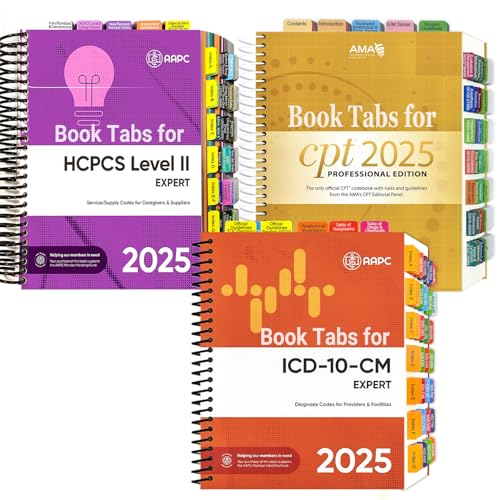
This color-coded tab bundle is designed to speed up navigation across CPT, ICD-10-CM, and HCPCS Level II references. It includes top and side tabs for clear section markers, plus an alignment card and page sheet that help maintain order in busy coding environments. The durable laminated material resists wear and makes it easier to annotate without damage, supporting quick lookups during audits or coding reviews.
Merriam-Webster’s Medical Dictionary, Newest Edition
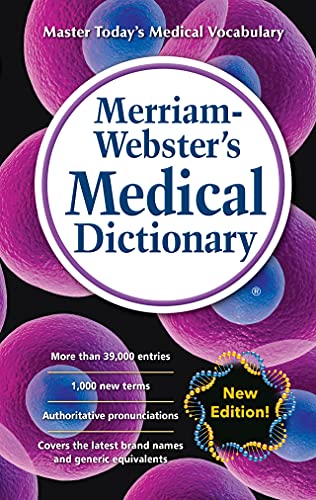
This mass-market paperback serves as a comprehensive linguistic resource, outlining medical terminology, drug names, and definitions with an emphasis on accuracy. The newest edition expands with 1,000 new words and senses, reflecting current practice in drug naming and brand-to-generic transitions. It’s a practical reference for coders who must verify terminology during documentation, coding entries, or patient communication notes.
Two-Sided Medical Coding Rotating Book Stand

This two-sided bamboo stand is tailored for thick medical coding books, providing a stable, large support base and a rotatable 360° viewing experience. The stand is lightweight, durable, and designed to accommodate thick stacks of codes or reference texts—ideal for study sessions, team reviews, and presentations. Its eco-friendly bamboo construction adds a touch of natural durability to office or classroom spaces, helping keep hands free for note-taking or highlighting important sections.
Buying Guide: Key Considerations For Medical Coding References
- Scope and alignment: Choose resources that align with your primary coding systems (CPT, ICD-10-CM, HCPCS). A combination of terminology guides and tabbed code books helps maintain consistency across documentation, audits, and billing workflows.
- Format and durability: Laminated quick-reference guides are ideal for fast lookups and frequent handling, while tabbed books expedite navigation. For classroom or office use, a sturdy book stand can reduce neck strain and improve collaboration.
- Terminology depth: A medical dictionary should cover current drug names, brand/generic equivalents, and new medical terms. Consider editions that reflect recent changes in drug naming and coding guidelines.
- Navigation aids: Color-coded tabs and clear alignment tools streamline search paths within multiple code books. Durable tabs prevent wear that can impede quick access during audits or coding reviews.
- Portability: Compact guides suit on-the-desk reference in clinics and education settings, while larger dictionaries add depth for complex coding questions. Assess how often you move between rooms or offices.
- Interoperability with study material: Pick resources that complement your training or daily tasks, including practice scenarios, glossaries, and cross-referenced terms to reduce lookup time.
- Update cadence: Medical coding evolves regularly. Prefer editions that indicate when updates were released and how current the terminology and codes are relative to your practice environment.
- Audience fit: For students, foundational terminology guides are crucial; for professionals, combination sets with code book tabs and durable references support faster, accurate coding and audits.
- Budget considerations: Balance essential references with supplementary tools (e.g., book stands) to maximize value without overloading your workstation with redundant materials.