Parents, educators, and caregivers seek reliable books that support early learning, literacy foundations, and practical pedagogy. This guide highlights five carefully chosen titles that align with child development milestones and classroom-ready strategies. Each entry explains who benefits most, how the book supports learning, and a practical caveat to consider before purchasing.
Summary of chosen products
- Alexander and the Terrible, Horrible, No Good, Very Bad Day — Best for emotional literacy and resilience in early readers.
- Dr. Seuss’s Beginner Book Boxed Set — Best for shared and independent reading routines to build phonemic awareness.
- School Zone Thinking Skills Workbook — Best for structured thinking, problem solving, and logic in preschool to kindergarten.
- Childrens Learn to Read Books Lot 60 — Best for diverse, guided reading practice across literacy levels.
- All titles are suitable for home use and classroom activities with adult guidance.
Alexander And The Terrible, Horrible, No Good, Very Bad Day

Brand: Atheneum Books for Young Readers
What it is best for: emotional literacy, perspective taking, and resilience in early elementary readers. This title helps children recognize common mood shifts and relate to a character’s feelings during tough days.
Why selected: The narrative provides concrete opportunities to discuss emotions, coping strategies, and problem solving in relatable scenarios. It supports guidance conversations that parents and teachers often facilitate during social-emotional learning (SEL) activities.
Limitations to know: The story centers on one child’s experience, so additional titles may be needed to cover a wider range of emotions and cultural contexts.
Dr. Seuss’s Beginner Book Boxed Set Collection

Brand: Random House Books for Young Readers
What it is best for: building phonemic awareness and early literacy through playful rhythm and rhyme. Ideal for shared reading and beginner readers learning to decode words.
Why selected: The set includes five enduring titles that are widely used for read-aloud sessions and independent reading time. Its format supports bonding and language development through repetition and humor.
Limitations to know: Some parents may want additional African American or diverse authors to broaden cultural exposure beyond classic Seuss titles.
School Zone Thinking Skills Workbook

Brand: School Zone
What it is best for: developing critical thinking, problem solving, and logic in preschool or kindergarten students. The workbook provides structured activities that complement early classroom learning.
Why selected: Its progressive exercises align with typical early cognitive development milestones, making it a practical supplement for guided practice at home or in small groups.
Limitations to know: It is workbook-based, so it requires adult direction for some activities; some tasks may be too advanced or too simple for certain students depending on their current level.
Childrens Learn to Read Books Lot 60
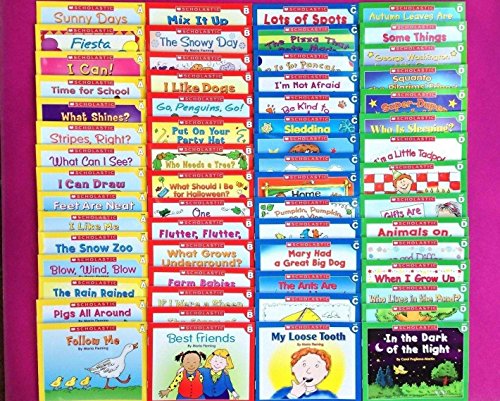
Brand: Scholastic
What it is best for: guided reading practice across multiple early literacy levels. The 60-book bundle provides a broad range of simple to more complex texts with reading strategies designed by specialists.
Why selected: This collection supports differentiated instruction by offering leveled readers that can be used for small-group instruction or independent practice, helping to scaffold literacy skills as students progress.
Limitations to know: The bundle contains many titles; organizing and assigning appropriate levels may require teacher or caregiver planning to maximize effectiveness.
Buying Guide
Key questions to guide your purchase:
- What learning goal do you have? Emotional literacy, phonemic awareness, or cognitive skills? Choose books that align with the target area.
- Who is the primary reader? Consider age, reading level, and whether the child benefits from read-aloud or silent reading experiences.
- Is there a need for a classroom-ready resource? Look for bundles or workbooks that support guided instruction and measurable activities.
- How much guidance is required? Some titles are self-contained; others work best with adult facilitation.
- Do you want variety or a focused theme? A boxed set offers consistency in style and tone; a varied bundle supports breadth of exposure.
Practical comparison at a glance
- Best for emotional literacy: Alexander And The Terrible, Horrible, No Good, Very Bad Day
- Best for shared reading and phonics: Dr. Seuss Beginner Book Boxed Set
- Best for thinking skills: School Zone Thinking Skills Workbook
- Best for broad early literacy practice: Scholastic Learn to Read Books Lot 60
FAQ
- What age group are these books suitable for? The selections span preschool to early elementary, with activities adaptable to different reading levels.
- Are these good for classroom use? Yes. Several items include structured activities and reading strategies that align with early literacy curricula.
- Should parents read aloud or let children read alone? Both; read-aloud supports comprehension and vocabulary, while independent reading builds fluency.
- Do these books address diverse perspectives? Some titles emphasize universal experiences; consider supplementing with diverse authors to broaden representation.