Helping children recognize, name, and manage their emotions is a vital skill for social success and well-being. The following five books provide interactive, age-appropriate ways to explore moods, regulate reactions, and develop empathy. Each title uses flip-book formats, scenes, or storytelling to make emotional learning tangible for toddlers, preschoolers, and early elementary students. This guide highlights how these tools support conversations at home, in classrooms, and during calm-down times.
Summary table of featured products:
| Product | Brand | Format | Key Benefit | Link |
|---|---|---|---|---|
| The Original Mood Flipbook for Kids | My Moods, My Choices | Laminate flipbook | 20 moods with positive action prompts; portable sizes | |
| Torlam Feelings and Emotions Book | Torlam | Flipbook chart | 10 scenes to analyze emotions; empathy development | |
| Maitys Feelings and Emotions Book | Maitys | Flip book | Engaging visuals; laminated pages; portable | |
| hand2mind Feelings Family Core Books | hand2mind | Series of five books | Core emotions through stories; calm-down corner focus | |
| Additional Roster | — | — | Varied formats for regulation and dialogue | — |
The Original Mood Flipbook For Kids
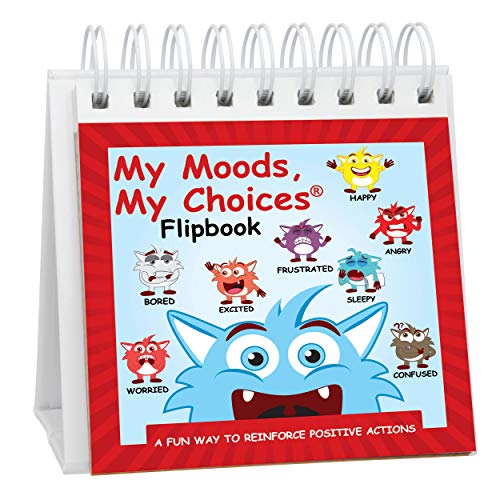
The Original Mood Flipbook for Kids offers a concise tool to help children identify and respond to 20 distinct moods. The revised design features new images and suggested actions, making it easier for kids to connect feelings with positive choices. Made with laminated pages and multiple sizes, the flipbook is durable for classroom and at-home use. It’s especially useful during transitions and calm-down routines, providing a quick visual reference for mood-matching and self-regulation. The built-in stand supports easy display for shared activities and teacher-led discussions.
Key elements include: a wide range of emotions from angry and bored to hopeful and worried, and the opportunity for kids to point to or flip to the corresponding mood and choose an action. The laminated format supports frequent handling and cleaning, which is valuable in group settings. This resource aligns with social-emotional learning (SEL) goals by illustrating how thoughts, feelings, and actions connect in everyday situations.
Torlam Feelings And Emotions Book

Torlam’s Feelings And Emotions Book is a social-emotional flip chart designed for classrooms and home use. It highlights 20 distinct feelings and includes 10 scenes that invite children to analyze character emotions and describe how they feel. By encouraging observation of facial expressions and emotional cues, the book supports empathy and recognition of others’ perspectives. It functions as a practical tool for teaching emotional regulation, helping kids connect their thoughts with feelings and behavioral choices in a colorful, engaging format.
Highlights include varied scenes to spark discussion, a focus on identifying emotions in others, and practical guidance for linking feelings to appropriate actions. The flip-chart style makes it easy for small groups to participate, and the durable design supports repeated use in busy environments. This resource is well-suited for preschool and early elementary learners who are building foundational SEL skills.
Maitys Feelings And Emotions Book

Maitys’ Feelings And Emotions Book centers on interactive, laminated pages with vibrant illustrations. This compact flip book supports quick mood identification and positive responses, making it a practical on-the-go learning tool for car rides, backpacks, and calm-down corners. The stand-up display feature keeps the book visible during group activities and conversations, supporting engagement and independence in recognizing emotions.
Designed to foster emotional growth, Maitys emphasizes self-expression and social skills through a guided approach to emotion management. It’s especially suitable for toddlers and preschoolers who benefit from tactile and visual learning experiences. The combination of portability, durability, and clear mood cues makes this book a versatile asset for at-home routines or classroom SEL centers.
Hand2mind Feelings Family Core Emotions Book Set

The Hand2mind Feelings Family Core Emotions Book Set extends SEL through a curated collection of five 24-page stories. Each book focuses on a core emotion—Happy, Sad, Angry, Scared, and Surprised—and uses storytelling to illustrate how feelings appear outwardly and feel inside. This set is designed for calm-down corners and classroom reading time, enabling family-based and school-based activities that reinforce emotional literacy. The format supports guided discussions, role-playing, and reflective journaling to deepen understanding of emotional regulation.
By pairing characters with relatable situations, the series invites children to articulate their own experiences and practice coping strategies. Educators and parents can leverage the stories to model healthy responses and to initiate conversations about daily emotional challenges, helping kids connect emotions to behavior in real-life contexts.
Buying Guide: Key Purchase Considerations
- Age and developmental readiness: Choose formats that match a child’s attention span and comprehension level. Flipbooks with simple cues work well for preschoolers, while classroom sets can serve early elementary students with more complex scenarios.
- Format and durability: Laminated pages, stand-up designs, and travel sizes are beneficial for frequent handling and varied settings. Consider whether the product will be used primarily at home, in the car, or in a classroom.
- Social-emotional learning goals: Look for resources that explicitly connect emotions to actions, empathy, and problem-solving. Materials that include discussion prompts or guided activities support deeper learning.
- Engagement and inclusivity: Visually diverse images and scenarios help children relate to the content. A mix of scenes and characters fosters broader emotional understanding and reduces stigma around different feelings.
- Portability and display options: Tools that can be easily displayed in a calm-down corner or car seat can be used on short breaks or transitions, reinforcing consistent practice of emotional regulation.
- Teacher and caregiver alignment: Resources that offer classroom-friendly activities, teacher notes, or family discussion tips help ensure consistent messaging across environments.
- Cost and value: Consider bundles or multi-book sets for broader coverage of core emotions, which can be more economical and versatile for group settings.
Selecting the right emotion-focused books involves balancing the child’s current needs with the intended context of use. Flip-book formats provide quick mood reference and action prompts, while story-based sets deepen comprehension through narrative arcs. For families and educators aiming to cultivate emotional intelligence, combining a portable mood guide with a more narrative collection can create a well-rounded SEL toolkit that supports learning across daily routines.