For families seeking engaging, development-focused tools, adapted books and sensory busy books offer hands-on learning aligned with autism-friendly goals. This guide highlights five practical options that emphasize fine motor skills, communication, and cognitive growth through interactive play. Each pick combines durable design, clear visuals, and bilingual or nonverbal learning cues to support diverse learning needs.
Below is a quick overview of the chosen products to help you compare at a glance. The table lists the product name and brand to simplify your browsing.
| Product | Brand |
|---|---|
| EDUMAETRIX Montessori Autism Sensory Educational Busy Book | EDUMAETRIX |
| Busy Book for Toddlers (12 Themes) Montessori Toys | iHarPro |
| Freebear Montessori Busy Book: Human Body | Freebear |
| Boczif Visual Communication Book | Boczif |
| Huijing Montessori Preschool Learning Busy Book | Huijing |
Each product section below provides a concise overview, key features, and how the design supports autistic learners. Links lead to Amazon product pages for more details and purchasing options. Images illustrate the visual cues and layout you can expect from each item.
EDUMAETRIX Montessori Sensory Busy Book

Elegant design with 16 themes and 32 play methods, this bilingual busy book integrates storage and a playboard for portable use. It comes as two books that can be split or bound together using a large O-ring, accommodating shared use or travel. The 160 stickers feature English and Spanish text, supporting bilingual development and reinforced language exposure. Montessori principles underpin hands-on, sensory-rich exploration that aligns with early learning goals and pragmatic life skills.
Busy Book for Toddlers (iHarPro)
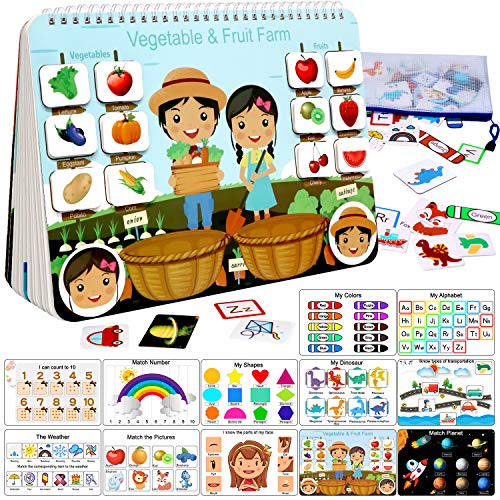
This premium busy book features 12 durable, double-layer laminated pages designed to withstand active use. With 12 themes—colors, letters, numbers, shapes, animals, and more—it supports early literacy, color perception, and cognitive development. The thickened pages are built to endure frequent handling, while the included activities promote fine motor skills, sequential thinking, and match-to-picture exercises relevant for ages 2-4.
Freebear Human Body Montessori Busy Book
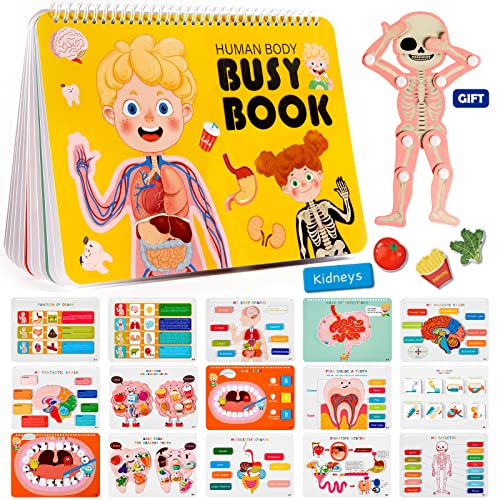
Designed to foster deeper body awareness, this busy book blends numeracy and literacy with 5 major themes centered on the human body. A skeleton toy accompanies the pages to spark kinesthetic exploration. The content supports holistic comprehension of body structure, which can aid social communication and practical daily living skills. Interactive pages encourage dialogue, observation, and guided exploration in homeschool or classroom settings.
Boczif Visual Communication Book

Nonverbal communication tools are central to this kit, featuring scene-specific cards for body parts, animals, transportation, and everyday categories. It functions as a visual support system to teach functional communication, with durable plastic cards designed for repeated use. The set supports label-building, sentence formation, and rapid icon-to-context associations, making it suitable for therapy and home learning environments alike.
Huijing Montessori Busy Book for Toddlers
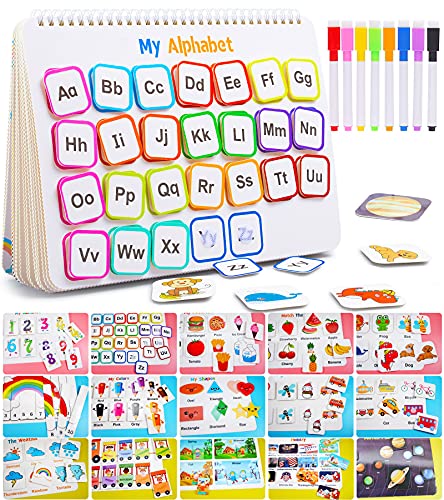
Huijing’s preschool activity binder offers tracing, coloring, and multiple learning pages designed for toddlers and early elementary ages. With 15 themes and drawing/writing pages, the book supports fine motor development, color and shape recognition, and early literacy. The inclusion of pens and an integrated activity flow can help maintain focus during therapeutic or structured play sessions.
Buying Guide: Key Considerations for Autism-Focused Busy Books
When choosing adapted books for autism, consider how the design supports sensory needs, communication, and routine. Here are essential differentiators to evaluate:
- Sensory Engagement: Look for tactile surfaces, color contrast, and varied textures to sustain interest without overstimulation. Books with interactive elements like flaps, zippers, and buttons can enhance motor planning.
- Language and Communication: Bilingual text or nonverbal cue cards help with language exposure and practical communication practice. Visual supports should align with common daily routines for easy transfer to real-world use.
- Durability and Safety: For frequent handling by young children, choose books with durable materials, reinforced bindings, and safety-tested components. Laminated pages resist wear and tear from saliva or moisture.
- Portability and Sharing: Detachable components and modular designs facilitate travel and multi-child use. Binder formats or two-book sets can be adapted for family routines or classroom settings.
- Therapeutic Alignment: Products that emphasize fine motor skills, spatial awareness, and social communication may better complement therapy goals. Look for clear visuals and predictable layouts to reduce cognitive load.
- Parental Involvement: Choose tools that invite caregiver participation—guided activities, suggested prompts, and structured play sequences can support parent-led routines and consistent practice.
Across these options, the common thread is structured, sensory-rich, and language-supportive design. Parents and caregivers should assess each book’s theme variety, page durability, and the ease of adapting activities to the child’s current abilities. When combined with routine practice, these resources can contribute to meaningful, enjoyable learning experiences for autistic children.